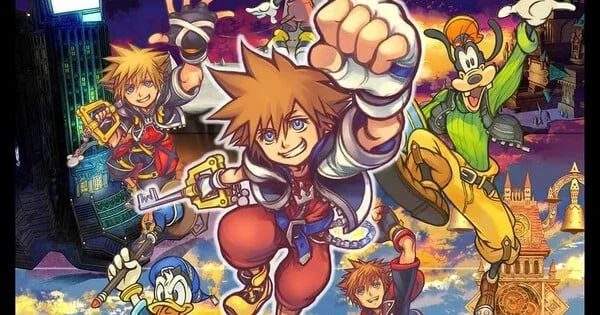
The latest video game sales data from Japan, covering the fiscal week of October 5 to October 11, 2026, reveals a significant shift in consumer hardware preference as the new generation of Nintendo hardware—referred to as the Switch 2—solidifies its foothold in the marketplace. According to the tracking data provided by Famitsu, Square Enix’s highly anticipated Kingdom Hearts Collection [I~III] has captured the top spot on the sales charts, signaling a strong performance for legacy titles repurposed for the new console architecture.
Market Dynamics and Software Performance
The debut of the Kingdom Hearts Collection [I~III] on the Switch 2 saw an impressive opening week, moving 23,411 units. This figure highlights the enduring popularity of the franchise within the Japanese market, where Square Enix continues to leverage its back catalog to drive early adoption of new hardware. Notably, the same collection also saw a release on the PlayStation 5, which occupied the fifth position on the charts with 6,261 units sold. The discrepancy between the Switch 2 and PlayStation 5 versions underscores the current market trajectory, where Nintendo’s latest platform is rapidly becoming the primary destination for multi-platform releases in the region.
The second position remains held by the persistent success of Nintendo’s Rhythm Heaven Groove, which added another 14,527 units to its massive lifetime total of 1,080,343 copies. This milestone, achieved just over three months after its July 2, 2026, release, cements the title as a quintessential evergreen product for the Nintendo ecosystem.
Bandai Namco’s Ace Combat 8: Wings of Theve, which debuted the previous week, continues to perform reliably in the third spot. With 13,801 units sold during this tracking period, the title has reached a cumulative total of 76,814 units. While some analysts initially expected higher velocity for the high-fidelity aerial combat simulator, its performance on the PlayStation 5 reflects a stable, dedicated enthusiast base that has remained loyal to the series throughout its transition into the current generation of hardware.
The Rise of New Hardware and Cross-Generation Strategy
The data highlights a broader trend: publishers are aggressively moving to support the Switch 2 with both new releases and enhanced ports. CAPCOM’s Dragon’s Dogma 2: Dark Arisen saw a simultaneous release across both Switch 2 and PlayStation 5. The Switch 2 iteration outperformed its PlayStation 5 counterpart, selling 7,314 units compared to 5,099 units. This suggests that Japanese gamers are increasingly prioritizing the portability and hybrid nature of the Nintendo platform even for titles that are traditionally associated with more powerful, static home consoles.
This shift is further evidenced by the presence of several older titles that have been ported or remastered for the Switch 2. For instance, the remaster of Dynasty Warriors 3 Complete Edition, published by Koei Tecmo, is currently performing well across platforms, with the Switch 2 version moving 2,758 units, adding to its total of 14,442. Furthermore, the inclusion of D3Publisher’s Earth Defense Force 5 at seventh place with 5,237 units demonstrates that even mid-tier publishers are finding success by ensuring their software is compatible with the Switch 2’s launch library.
Chronology of Recent Software Market Trends
The Japanese gaming landscape has experienced a period of transition since the mid-summer of 2026. The following timeline outlines the key market events leading up to this week’s rankings:
- June 5, 2026: Mario Kart World and The Legend of Zelda: Tears of the Kingdom see continued circulation, reinforcing the "long-tail" sales strategy that Nintendo has mastered.
- July 2, 2026: Rhythm Heaven Groove launches, eventually surpassing the one-million-unit threshold within 100 days.
- July 23, 2026: Splatoon Raiders is released, quickly becoming a fixture in the top ten charts.
- September 17, 2026: Fire Emblem: Fortune’s Weave hits the market, maintaining a steady presence in the top ten rankings over the subsequent weeks.
- October 1, 2026: Koei Tecmo releases the remastered Dynasty Warriors 3, targeting the nostalgia-driven demographic.
- October 8, 2026: The release of the Kingdom Hearts Collection, Dragon’s Dogma 2: Dark Arisen, and Earth Defense Force 5 creates a "burst" of software movement, effectively resetting the top of the charts.
Comparative Data Analysis
When analyzing the distribution of sales, it is evident that Nintendo’s publishing arm remains the dominant force. Out of the top 20 titles, Nintendo acts as the publisher or primary distributor for a significant portion of the list, including Mario Kart World, which has now reached an astonishing 3,047,358 units. This title serves as a benchmark for platform health, indicating that the Switch 2 is successfully retaining the user base established during the previous hardware cycle.
In contrast, third-party publishers like Microsoft (via Nippon Microsoft) continue to find a niche. Minecraft remains a staple of the Japanese market, currently sitting at 4,289,453 total units sold. The recent release of Minecraft Dungeons II has also managed to capture 15,048 units, proving that spin-off titles in established franchises maintain a captive audience regardless of the hardware generation.
Implications for the Japanese Gaming Industry
The current market data suggests several critical implications for the future of the industry in Japan:
- Portability as a Priority: The success of multi-platform games like Dragon’s Dogma 2 on the Switch 2 suggests that developers must prioritize the optimization of their engines for the Switch 2’s specific hardware constraints if they wish to capture the largest share of the Japanese market.
- The Resurgence of Legacy Franchises: The Kingdom Hearts Collection’s performance indicates that Japanese consumers are highly receptive to high-quality re-releases. Publishers with extensive back catalogs—such as Square Enix, Capcom, and Koei Tecmo—are likely to continue this trend, focusing on "complete editions" and "remastered" content to pad their fiscal calendars.
- Hardware Transition Speed: The rapid drop-off in sales for older, non-upgraded titles, combined with the quick uptake of Switch 2 versions of new releases, points to a faster-than-anticipated transition from the original Switch to its successor. Retailers are clearly shifting shelf space to accommodate this change.
Official Industry Stance
While neither Nintendo nor Square Enix has issued a formal statement regarding these specific weekly figures, industry analysts note that the figures are consistent with the "software-first" strategy observed in recent earnings calls. During the last quarterly briefing, representatives from major Japanese publishers emphasized the importance of "cross-generational availability" as a means of mitigating the risks associated with the high cost of modern game development. By launching games on both the legacy platform and the new Switch 2, publishers are effectively doubling their addressable market size, a strategy that seems to be paying dividends in the current reporting period.
Future Outlook
As we move toward the final quarter of 2026, market analysts expect to see an increase in the release of "holiday-centric" software. Titles like the aforementioned Fire Emblem: Fortune’s Weave and the evergreen Mario Kart World are expected to see a surge in sales as the shopping season approaches. The industry is closely watching whether the supply of the Switch 2 can keep pace with the software demand. If hardware availability remains stable, we may see a record-breaking year for software unit sales, provided that the current momentum in third-party support continues to hold.
The data provided by Famitsu serves as a clear indicator that while global markets may be volatile, the Japanese domestic market remains highly specialized, favoring franchises with long-standing history and platforms that offer flexibility. As Nintendo continues to integrate its new hardware into the mainstream, the coming weeks will be vital in determining whether the Switch 2 can sustain its lead over the PlayStation 5, or if the market will eventually settle into a more balanced, multi-console equilibrium. For now, the narrative is clear: the Japanese consumer has spoken, and they are ready for the next chapter of gaming, provided it includes their favorite classic titles on a modern, portable device.