TV Tokyo and Plott studio’s anime to stream vertical shorts in November, main episodes next spring

In a significant pivot for traditional broadcast media, TV Tokyo has officially announced a strategic collaboration with the digital-native production studio Plott to produce Mecha Samurai, a bold new anime project designed specifically for the social media age. This initiative marks a milestone for TV Tokyo, as it represents the network’s first major anime production conceptualized entirely around streaming and social media distribution rather than traditional terrestrial broadcasting. The project will debut with a series of vertical shorts in November, followed by a pre-season pilot on YouTube, with the full main series scheduled for a spring 2027 release.
A New Frontier for Traditional Media
For decades, TV Tokyo has been a cornerstone of the global anime industry, responsible for distributing some of the most iconic series in history. However, the decision to partner with Plott—a powerhouse in the short-form web anime sector—signals a recognition that audience consumption habits are shifting rapidly toward short-form, mobile-first content. Plott, which boasts an impressive track record of over 900 million monthly views across its YouTube channels and a cumulative total exceeding 24 billion views, brings the necessary expertise to navigate the high-velocity environment of platforms like TikTok, Instagram, and YouTube.

The collaboration represents a synergistic merger of legacy production values and modern algorithmic content delivery. By utilizing Plott’s existing infrastructure, which supports a massive base of 14 million subscribers, TV Tokyo is positioning itself to capture a younger demographic that primarily interacts with intellectual property through fragmented, viral content rather than scheduled television programming.
Creative Direction and Narrative Premise
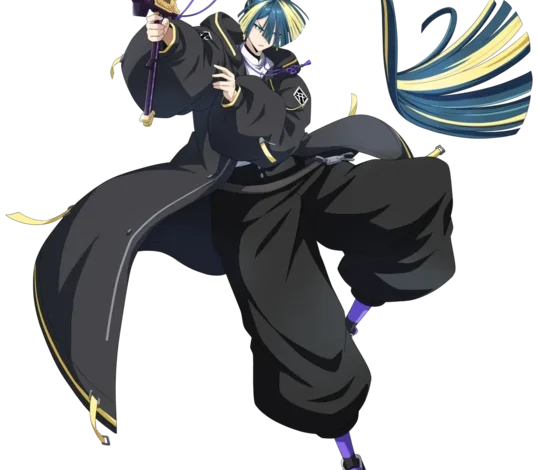
The project features a high-profile creative pedigree, most notably the involvement of Hiroyuki Takei, the acclaimed creator of Shaman King. Takei has been tasked with drafting the original character designs, providing a level of visual prestige that will likely attract long-time anime fans to the project. The graphic design duties are being handled by the studio TO2KYO2, ensuring a modern, polished aesthetic that fits the high-energy premise of the show.
The narrative of Mecha Samurai is described as an "unorthodox samurai action" story set in a contemporary version of Japan. The world is under siege by "Yokai," a clever play on the traditional Japanese term for ghosts, redefined here as mechanical entities manifesting from a trans-dimensional breach known as the "Demon Gate." The protagonist, Chiaki Kuzumi, is a young man tasked with defending humanity. He wields a legendary katana named "Benitora," which is imbued with the very mechanical essence of the Yokai he destroys.

Character Profiles and Cast Announcements
The official website for the project has confirmed a diverse cast of characters, each equipped with specialized weaponry designed to combat the mechanical threat. The confirmed cast members include:
- Kentarō Mashiro as Chiaki Kuzumi: The central protagonist, a young man chosen by the Benitora blade.
- Riona Yamashita as Sana Fujimiya: Hailing from the prestigious Fujimiya family, she is characterized as an energetic gamer who utilizes the "Tsukutsuku Denden" katana. Her weapon grants her the unique ability to command "Tsukumogami," spirits that dwell within common household appliances.
- Ayumu Mizukami as Kiyoharu Obana: A pragmatic and mercenary-minded fighter who wields "Murakumo," a gun-shaped katana. His character adds a layer of conflict to the team dynamic due to his refusal to perform tasks without financial compensation.
- Ayumu Mizukami as Kaoru Rindō: Mizukami will also voice the special instructor at the samurai training institute where the protagonists hone their skills.
- Masaaki Mizunaka: Confirmed as an additional voice actor for the series.
Strategic Timeline and Distribution Model
The project is set to roll out in three distinct phases, reflecting a modern "agile" approach to anime distribution:
- Phase One (November 2): The launch of vertical-format short episodes across YouTube, X (formerly Twitter), Instagram, and TikTok. These clips are designed to capitalize on the high engagement rates of short-form vertical video platforms.
- Phase Two (November 20): The release of a "pre-season" episode on YouTube. This serves as a litmus test for audience engagement and a way to build momentum ahead of the full series release.
- Phase Three (Spring 2027): The premiere of the main series, which will formalize the narrative arc introduced in the shorts.
This staggered rollout is designed to build a dedicated community long before the main series premieres, mitigating the risks typically associated with launching new intellectual property in a saturated market.

Plott’s Growing Influence in the Industry
Plott has firmly established itself as a leader in the web-anime space. Their portfolio includes successful adaptations such as Teikō Penguin and Konketsu no Karekore. The company has also demonstrated a penchant for rapid development, having recently launched Rakuraku Hanten in September and the Tengu Tōsen project in July, the latter being a collaboration with Bandai Namco Entertainment.
The studio’s recent announcement that it intends to move into the over-the-air television anime market starting next year, with three short anime series, suggests that Plott is not merely satisfied with dominating digital spaces. By partnering with a titan like TV Tokyo, Plott is effectively bridging the gap between web-native content and traditional broadcast, a move that could disrupt the current anime production hierarchy.
Implications for the Anime Industry
The collaboration between TV Tokyo and Plott offers a compelling case study for the future of the medium. For the past decade, the anime industry has struggled to effectively monetize the interest of Gen Z and Gen Alpha, who often prioritize shorter, platform-native content over 24-minute episodic formats.

By leveraging the "Short Anime" model, TV Tokyo is acknowledging that the traditional production cycle—which often takes years from conception to air—may be too rigid for the modern attention economy. Furthermore, the use of social media as the primary distribution channel for the initial "pre-season" content allows for real-time audience feedback, which can inform the production of the main series. If Mecha Samurai achieves the success that the production committee clearly anticipates, it is highly likely that other major Japanese networks will follow suit, potentially leading to a paradigm shift where digital shorts become the primary incubator for future long-form anime franchises.
The financial model of such projects, supported by high-volume viewership and potential social media advertising revenue, provides an alternative to the traditional committee-based funding model that has long defined the industry. As the line between "YouTuber" content and "Professional Studio" output continues to blur, projects like Mecha Samurai represent the vanguard of a new, highly integrated media landscape.
With high-profile talent like Hiroyuki Takei involved and the operational backing of one of Japan’s most influential networks, Mecha Samurai is poised to be one of the most closely watched experiments in the industry for the 2027 fiscal year. Whether this project succeeds in converting short-form viewers into long-form fans remains to be seen, but the structural shift it represents is already a reality.