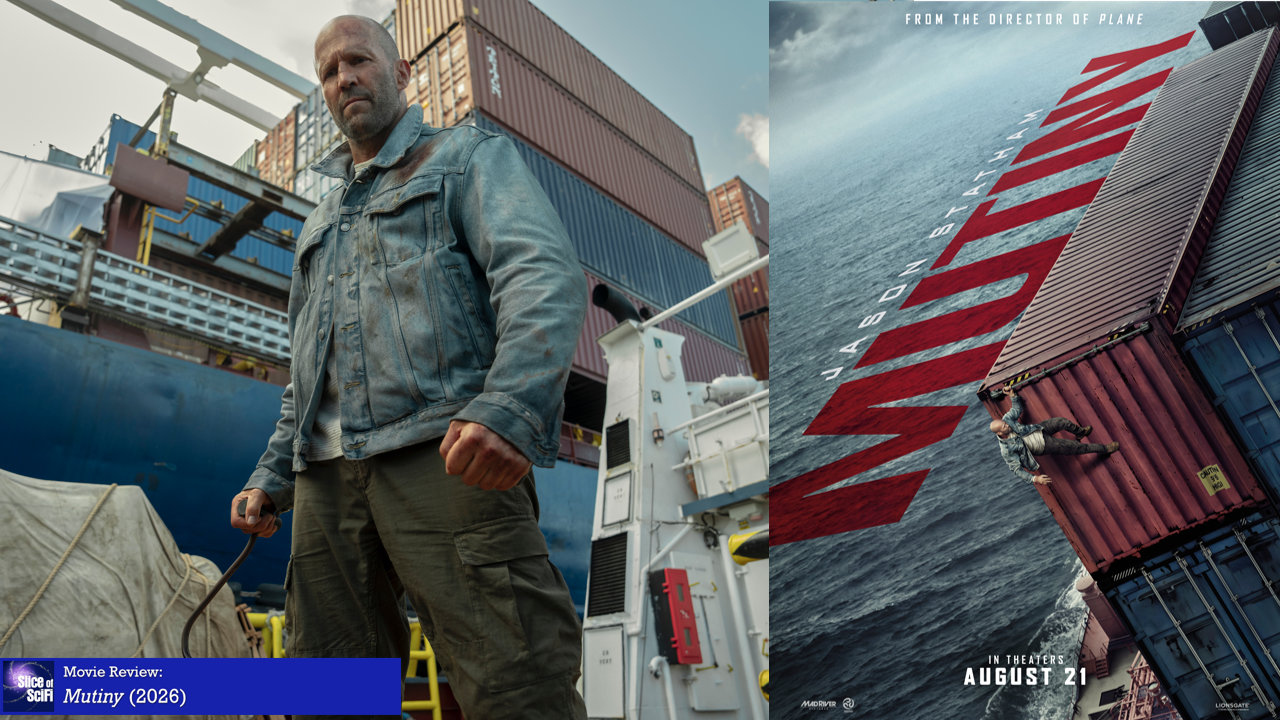
The contemporary landscape of high-octane action cinema has long relied on the reliable, gravity-defying star power of British actor Jason Statham. In the feature film Mutiny, directed by Jean-François Richet and written by the screenwriting duo Lindsay Michel and J.P. Davis, Statham returns to familiar territory, portraying a calculated, pragmatic operative thrust into a high-stakes conspiracy on the high seas. Distributed to appeal to fans of hard-boiled thrillers, the 95-minute production eschews sprawling narrative subplots in favor of a lean, direct trajectory centered on maritime warfare, industrial espionage, and personal retribution.
Alongside a robust international ensemble featuring Annabelle Wallis, Roland Møller, and Adrian Lester, Mutiny positions itself as a focused genre piece that blends traditional hand-to-hand combat with claustrophobic set design. The narrative structure, while anchored in well-trodden tropes of betrayal and wrongful framing, offers a precise breakdown of corporate corruption intersecting with modern human trafficking rings operating across international maritime routes.
Chronology of the Conspiracy
The sequence of events in Mutiny begins with an abrupt, unexplained vehicular collision on a metropolitan thoroughfare, setting an unsettling tone before the primary narrative takes shape. The audience is quickly introduced to Cole Reed, played by Jason Statham, who is operating in a private security capacity for a wealthy shipping tycoon, Tibu Campallo, portrayed by Ramon Tikaram, and his reluctant son, Kameron, played by Chaneil Kular. The family is in the final stages of liquidating and selling their extensive family shipping enterprise.
Upon arriving at the Campallo family estate in Bangkok, Thailand, the immense scale of their wealth is contextualized, alongside the underlying domestic friction regarding the younger Campallo’s lack of interest in continuing the family business. A celebratory evening follows, marked by Tibu presenting Reed with a commemorative watch and welcoming him symbolically into the family fold. Concurrently, a shadowy antagonist, Jaran Daniles, played by Simon Kluth, orchestrates maneuvers designed to derail the impending sale of the shipping conglomerate.
The plot accelerates the following day during a transit split. While Kameron departs via an alternate vehicle, Reed and the elder Campallo encounter a heavily armed roadblock. The vehicle is subjected to an ambush executed with automatic weaponry, resulting in the fatal shooting of Tibu Campallo. Amidst the chaos, Reed secures an identification badge from one of the neutralized assailants, tracing the insignia to a cargo vessel named the Artemis. Leveraging this discovery, Daniles initiates a coordinated frame-up, issuing an All Points Bulletin (APB) designating Reed as the primary suspect in the billionaire’s murder.
Parallel to these developments, Angie Ellis, portrayed by Annabelle Wallis, is stationed in a Bangkok hotel room following an extended maritime haul. Eager to return to Los Angeles to meet court-mandated custody schedules concerning her daughter, Ellis receives an unsolicited directive: she must immediately report as a third mate aboard the Artemis, with non-compliance resulting in immediate professional termination. Reluctantly, she accepts the assignment.
Infiltration and Discovery Aboard the Artemis
Disguised as a routine maritime crew member, Reed successfully breaches security and boards the Artemis. Descending into the subterranean cargo hold, he investigates muffled sounds emanating from a sealed shipping container. Upon breaking the industrial lock, Reed uncovers an illicit human trafficking operation, revealing dozens of individuals held captive against their will.
Ellis independently descends to the cargo hold for routine inspections, temporarily crossing paths with a concealed Reed. Confronted with the human cargo, Ellis immediately recognizes the severity of the violation and escalates the crisis to the ship’s master, Captain Marko Madsen, played by Roland Møller. Unbeknownst to Ellis, the ship’s senior officers and primary crew are active participants in the international criminal conspiracy.
Madsen lures Ellis into his quarters under the guise of contacting terrestrial law enforcement. Recognizing the duplicity when Madsen turns his back, Ellis successfully flees the cabin, navigating the vessel’s superstructure to reach the bridge. There, she transmits an emergency distress signal intercepted by a United States Navy vessel operating in the Andaman Sea, commanded by a captain portrayed by Adrian Lester.
Before the distress transmission can be fully logged and acted upon, Madsen intercepts Ellis, subdues her, and manually cancels the communication feed. To mitigate the breach, Madsen fabricates an explanation to the responding naval vessel, claiming a junior crewmate inadvertently activated the emergency transponder while spotting an approaching fishing boat. Given the coordinates within the remote Andaman Sea, the Navy commander initiates an independent tactical intelligence assessment to verify the anomaly, setting the stage for a converging confrontation between maritime criminals, rogue operatives, and official naval assets.
Production and Technical Execution
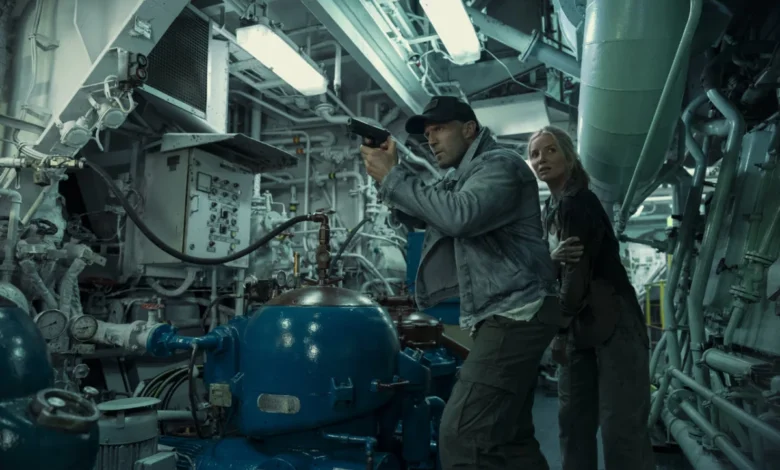
Clocking in at a brisk 95 minutes, Mutiny relies on deliberate pacing designed to eliminate narrative padding. Director Jean-François Richet, working from Michel and Davis’s screenplay, utilizes the physical constraints of the cargo ship to construct an atmosphere of escalating peril. The cinematography capitalizes on tight corridors, industrial stairways, and metallic bulkheads to heighten the psychological claustrophobia of the setting.
Stunt choreography takes advantage of the marine environment, incorporating non-traditional exterior transit routes across the ship’s superstructure. Weaponry utilized throughout the encounters reflects the pragmatic nature of maritime settings, moving beyond standard firearms to include improvised tools and industrial equipment intrinsic to cargo operations.
The inclusion of the United States Navy subplot provides a strategic counterweight to the intense hand-to-hand combat aboard the Artemis. Adrian Lester portrays the naval commander with a focus on procedural accuracy and ethical duty, contrasting sharply with Roland Møller’s commanding yet volatile portrayal of Madsen, who anchors the villainous faction driving the criminal enterprise.
Character Dynamics and Performance Analysis
Statham’s performance in Mutiny diverges slightly from his traditionally invincible action archetypes by emphasizing a grounded, pragmatic approach to grief and retribution. His character’s historical context—marked by the past death of his father and his protective rapport with the Campallo family—provides an emotional anchor for the ensuing violence. Rather than acting out of blind fury, Reed executes his objectives with calculated precision.
Annabelle Wallis delivers a counter-performance as Angie Ellis, establishing an autonomous, capable protagonist from her introduction. Eschewing the trope of the reluctant action participant, Ellis displays professional competence and moral clarity, driven by distinct personal motivations including maternal obligations and humanitarian concern for the smuggled victims.
Broader Implications for the Action-Thriller Genre
Mutiny represents a continuation of mid-budget, high-concept action filmmaking tailored for targeted streaming and theatrical audiences. By concentrating narrative tension within a single, isolated location, the production maximizes its resource allocation toward practical stunt work, set design, and focused pacing.
While the film adheres closely to genre formulas regarding corporate greed, betrayal, and lone-wolf justice, its technical competence and committed performances by Statham, Wallis, and Møller distinguish it within contemporary action-thriller catalogs. The resolution of the narrative ties together the initial corporate conspiracy, the murder of Tibu Campallo, and the dismantling of the trafficking ring, delivering a structured conclusion to a high-stakes maritime conflict.