The landscape of modern horror is poised for a significant shift as Don Mancini, the visionary creator behind the legendary Child’s Play franchise, prepares to pivot his focus back toward feature-length cinema. Following a successful three-season run of the critically acclaimed Chucky television series on USA Network and Syfy, recent reports confirm that Mancini has signed with the Independent Artist Group (IAG). This strategic career move is explicitly tied to the development of a new iteration of the Chucky film franchise, marking a potential return to the medium that first introduced the world to the Lakeshore Drive serial killer trapped in a plastic toy’s body.
The transition from small-screen episodic storytelling back to feature films represents a pivotal moment for a franchise that has remained remarkably consistent under Mancini’s stewardship for nearly four decades. Since the inception of the series in 1988, Mancini has served as the primary creative force, having penned the screenplay for every entry in the original canon, excluding the 2019 standalone remake. His shift toward the Independent Artist Group suggests a broader professional mandate, as he seeks to balance his legacy as the architect of the Chucky universe with an expanded portfolio of original film and television projects.
A Chronology of the Child’s Play Legacy
To understand the weight of this development, one must examine the longevity of the Chucky franchise. The saga began with Tom Holland’s 1988 film Child’s Play, which introduced audiences to Charles Lee Ray, a murderer who utilizes voodoo to transfer his soul into a "Good Guy" doll. The film was a breakout success, grossing over $44 million worldwide against a $9 million budget—a substantial return on investment that cemented the character’s place in the horror pantheon.
The subsequent decades saw a series of sequels that shifted in tone, ranging from the straight slasher aesthetic of Child’s Play 2 (1990) and Child’s Play 3 (1991) to the meta-commentary of Bride of Chucky (1998) and the dark, satirical turn of Seed of Chucky (2004). Mancini took over the director’s chair starting with Seed of Chucky, asserting complete creative control over the franchise’s trajectory.
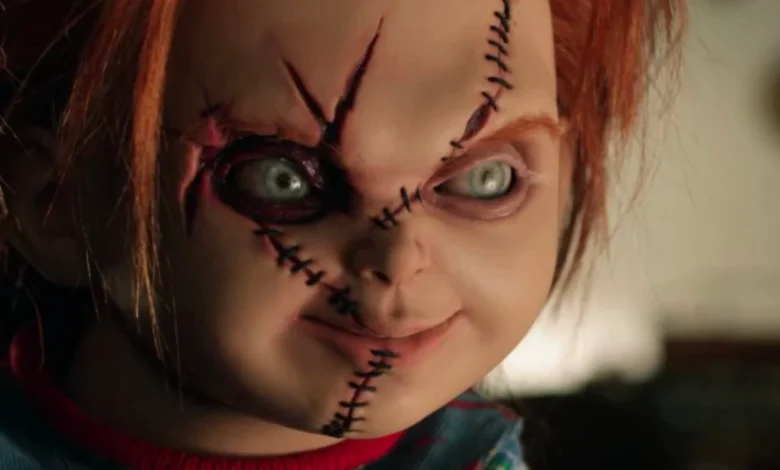
In 2013, the franchise underwent a tonal reset with Curse of Chucky, a film that stripped away some of the campier elements of the previous entries in favor of a return to psychological horror. This was followed by Cult of Chucky in 2017, which further expanded the series’ lore by introducing the concept of multiple dolls existing simultaneously. This narrative complexity laid the essential groundwork for the Chucky television series, which debuted in 2021. By successfully bridging the gap between legacy sequels and a modern episodic format, Mancini proved that the character remains viable across different mediums and demographic segments.

Supporting Data and Industry Context
The horror genre has seen a massive resurgence in the last decade, driven by a combination of legacy sequels (often referred to as "requels") and high-concept original properties. Franchises such as Halloween, Scream, and The Exorcist have all returned to theaters with varying degrees of financial success. However, the Chucky franchise is unique in that it has largely avoided the "reboot" cycle that plagues other intellectual properties. By maintaining a single, continuous timeline for thirty-six years, Mancini has created a rare continuity in genre film that fosters deep loyalty among the fanbase.
According to industry analysts, the "horror economy" remains one of the most stable segments of the film market. Low-to-mid-budget horror films frequently outperform blockbuster tentpoles in terms of return on investment. With the Chucky series having already established a dedicated audience on cable and streaming platforms, a transition to a theatrical release is viewed by analysts as a low-risk, high-reward move. The brand equity of Chucky, often cited alongside icons such as Freddy Krueger and Michael Myers, provides a built-in marketing advantage that few other horror properties can claim.
Strategic Implications of the Independent Artist Group Partnership
The move to the Independent Artist Group is not merely a change in representation; it is a signal of intent regarding the scale and scope of Mancini’s future projects. The IAG is known for its ability to package talent-driven projects that bridge the gap between independent creativity and major studio distribution. By focusing on a "new iteration" of the franchise, Mancini is signaling that he is not merely looking to produce another direct-to-video sequel, but rather a project with the production value and narrative scale required for a theatrical rollout.
From a production standpoint, this shift provides Mancini with the resources to elevate the practical and visual effects that have defined the franchise. The Chucky series utilized a sophisticated blend of animatronics and puppetry, a hallmark of the franchise that Mancini has championed throughout his career. Bringing this level of technical craft back to a theatrical environment suggests that the upcoming project will likely lean into the cinematic strengths that a television budget cannot always accommodate.
The Evolution of the Character
Don Mancini’s longevity as a screenwriter and director is an anomaly in Hollywood. Most horror franchises see a revolving door of creators, which often leads to inconsistent tone and narrative drift. Mancini’s refusal to relinquish control has ensured that the character’s "voice"—a unique mixture of sardonic wit, slasher-movie brutality, and genuine character evolution—has remained intact.
Over the years, Chucky has evolved from a simple supernatural antagonist into a complex character who reflects the anxieties of the era in which he appears. The television series, for example, successfully integrated themes of identity, technology, and suburban malaise, proving that the character could be adapted for modern sensibilities without losing his "Good Guy" roots. This adaptability is the primary reason the franchise has endured for nearly four decades.

Broader Impact on the Horror Genre
The potential return of Chucky to the big screen serves as a case study for how legacy horror franchises can thrive in the streaming era. The success of the television series created a new entry point for younger viewers, while simultaneously rewarding long-term fans with deep-cut references and the return of legacy characters such as Tiffany Valentine and Andy Barclay.
If the upcoming film project is successful, it could provide a blueprint for other long-running franchises to follow: using television as a laboratory for character development before "eventizing" the property for a theatrical return. Furthermore, the focus on a "new iteration" suggests that Mancini is interested in exploring the potential for the franchise to evolve beyond its established conventions, potentially introducing new characters or settings while maintaining the core mythology that fans expect.
As the industry looks toward the next phase of the Chucky saga, the focus will undoubtedly turn to the specifics of the production—who will produce the film, how it will be distributed, and where it fits within the existing timeline. However, for the present, the news of Mancini’s commitment to a new cinematic chapter is a significant development for genre cinema. It reaffirms the status of the Child’s Play universe as a foundational pillar of horror and underscores the importance of creator-led storytelling in an era often dominated by corporate-mandated intellectual property management.
For now, the details remain under wraps, but the industry expectation is that the next iteration of Chucky will aim to recapture the cultural impact of the original 1988 film while leveraging the expanded universe that Mancini has cultivated since 2017. As the project enters the development phase, the focus will remain on whether this next chapter can provide the same level of innovation that has allowed a doll with a plastic heart to remain one of the most enduring figures in the history of cinema.
Related posts: