Director Kevin Lewis Infuses Holiday Subversion into Satirical Horror With Christmas at the Kringles

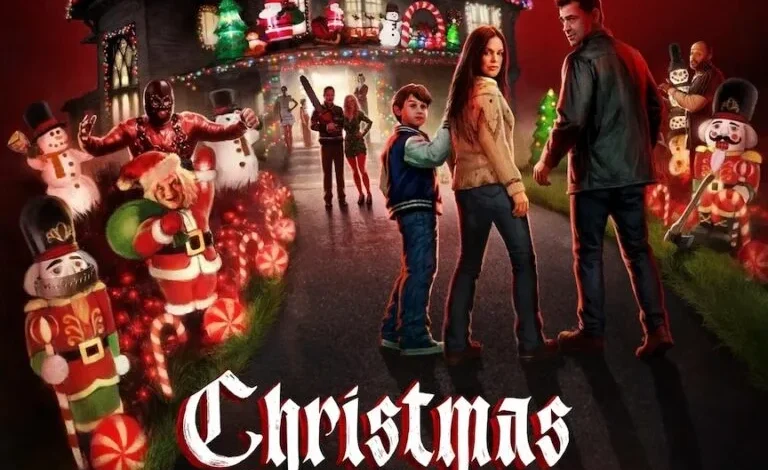
Director Kevin Lewis, widely recognized for his work guiding Nicolas Cage through a surreal, homicidal animatronic nightmare in the 2021 cult feature Willy’s Wonderland, has returned to the genre with a distinctively festive twist. His latest directorial effort, Christmas at the Kringles, is currently playing in theaters nationwide courtesy of Briarcliff Releasing. Written by Zack Imbrogno, the satirical horror-comedy applies a dark, subversive lens to the traditional holiday season, a concept Lewis has affectionately categorized internally as “Willy’s Wonderland 2.0.”
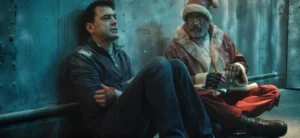
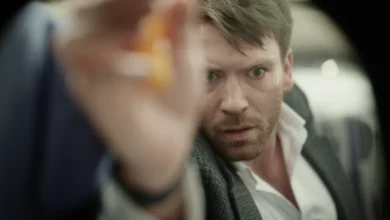
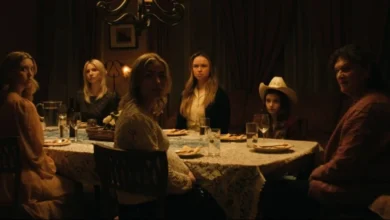
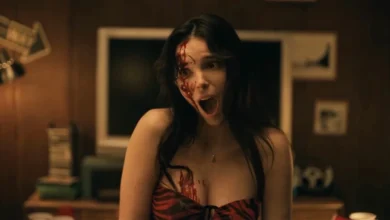
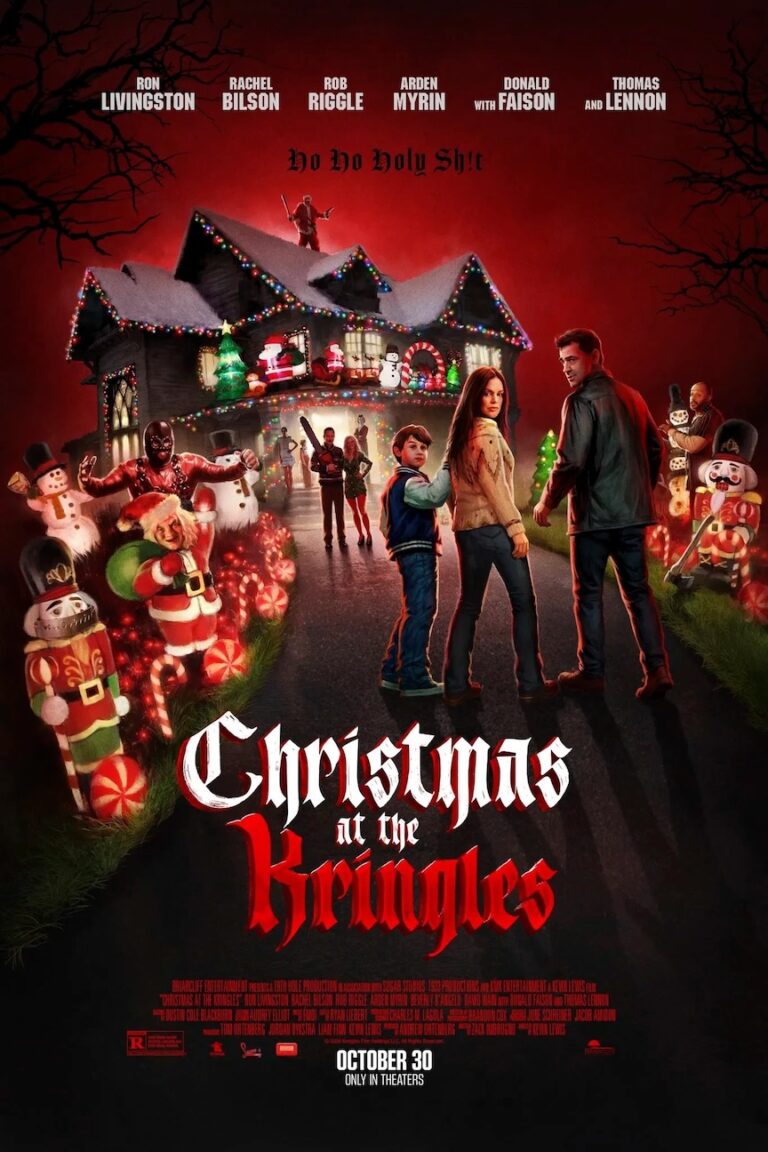
The film features an ensemble cast anchored by Ron Livingston and Rachel Bilson as Mark and Julie Severson. The narrative follows the couple as they relocate to a seemingly idyllic suburban neighborhood, only to find themselves living next door to Nick and Carol Kringle—portrayed by Thomas Lennon and Arden Myrin. The Kringles are year-round proponents of Yuletide cheer, whose residence serves as a blinding spectacle of permanent holiday lights, lawn displays, and aggressive neighborly hospitality. As the Kringles attempt to forcibly integrate the Seversons into their relentless holiday routine, the situation escalates into a high-stakes survival ordeal. Mark is ultimately forced to enlist the aid of “Drunk Santa,” a rogue and battle-hardened Christmas warrior played by Rob Riggle, to extract Julie and their son Bobby (Jack Jewkes) from the Kringles’ clutches.
Development History and Creative Genesis
The journey of Christmas at the Kringles to the silver screen spans several years. Lewis has noted that the script by Imbrogno remained in his possession for roughly four years before principal photography commenced. Having shared DNA with the gonzo, high-energy terror of Willy’s Wonderland, Lewis immediately recognized the project’s potential to marry broad comedy with visceral genre elements.
In conceptualizing the film’s approach to the holiday season, Lewis drew upon a mixture of fond childhood memories and the domestic chaos of modern parenthood. Referencing past nostalgic milestones—such as unwrapping classic Kenner Star Wars action figures—alongside the contemporary realities of orchestrating family holiday traditions, Lewis described the film as a cinematic exorcism of his own holiday frustrations. These inspirations ranged from scaling rickety ladders to mount Christmas angels at the risk of bodily injury to navigating the commercialized expectations of family photo sessions and endless viewings of seasonal television programming.
The production ultimately assembled a roster of comedic and dramatic talent, including Beverly D’Angelo—famed for her role in the quintessential National Lampoon’s Vacation franchise—as Mama K. According to Lewis, casting the principal roles mirrored the serendipitous process behind Willy’s Wonderland. Securing Ron Livingston for the role of Mark Severson early in the development pipeline established a solid foundation for the remaining ensemble, which also features guest appearances and supporting turns from David Wain and Donald Faison.
Production Design and Visual Aesthetic
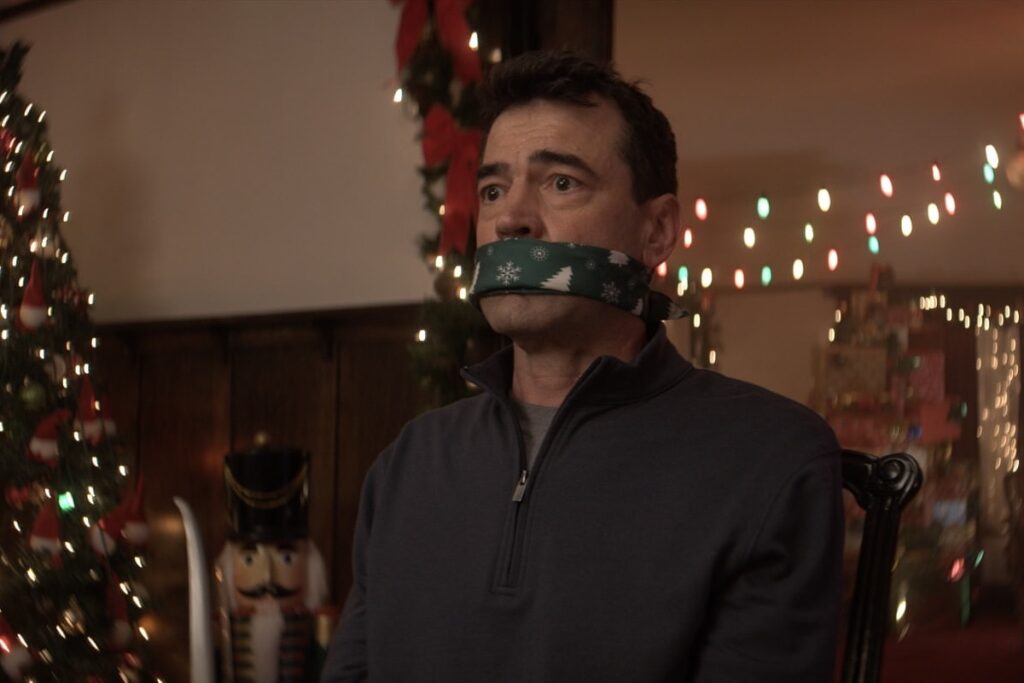
Achieving the dense, suffocating atmosphere of the Kringle residence required an exhaustive approach to production design. Led by production designer Charlie Lagola and director of photography Brandon Cox, the crew curated an environment intended to visually overwhelm the audience. Weeks prior to principal photography, the art department scoured local estate sales and specialty suppliers to acquire an excess of nutcrackers, illuminated displays, and traditional holiday ephemera.
The deliberate maximalism of the frame was designed to reflect the obsessive nature of the antagonists. Producer Andrew Ortenberg advocated for a distinct commitment to practical set decoration, ensuring that the film functioned authentically as a Christmas picture rather than relying strictly on nominal holiday window dressing.
Lewis orchestrated a deliberate tonal shift as the narrative progresses, transitioning the visual grammar from a comedic, whimsical style to a more rigid, suspense-driven horror framework. The opening acts utilize dynamic camera movements, including swift pans and direct character interactions with the lens, to evoke a comic-book sensibility. As the characters become trapped within the inner sanctum of the Kringle home during the second half, the visual language shifts toward static, locked-off framing to amplify tension and unease.
Improvised Dialogue and Collaborative Execution
A significant portion of the film’s comedic timing relies on unscripted contributions from its cast. While the overarching narrative beats remained strictly adhered to, Lewis encouraged extensive improvisation on set, resulting in alternate takes that varied wildly from the scripted dialogue.
This improvisational freedom created substantial challenges during the post-production editing phase. Drawing parallels to author Stephen King’s famous literary advice regarding editorial ruthlessness—specifically the maxim to “kill your babies”—Lewis acknowledged the difficulty of discarding humorous alternate takes in favor of narrative cohesion. Memorable unscripted references, such as specific historical and cinematic allusions delivered by Thomas Lennon, ultimately survived the editorial process to define the film’s rapid-fire comedic rhythm.
Collaborative oversight extended to the production and executive producer teams, which included industry veterans Andrew Ortenberg, Tom Ortenberg, and Jordan Dykstra of Briarcliff Releasing. Lewis maintained an open dialogue with the production backers, incorporating spontaneous creative suggestions from the crew during filming while maintaining the overarching vision of a comic-book horror-comedy.
Evolution of Holiday Subversion in Cinema
The release of Christmas at the Kringles arrives at a unique juncture for holiday-themed horror. Historically, cinematic deconstructions of the Christmas season have frequently courted controversy and public backlash. Landmark releases such as Bob Clark’s 1974 slasher Black Christmas and Charles E. Sellier Jr.’s 1984 controversial feature Silent Night, Deadly Night met with significant protests and censorship battles upon release. Similarly, Joe Dante’s 1984 horror-comedy Gremlins tested the boundaries of parental expectations surrounding family-friendly holiday entertainment, largely due to Phoebe Cates’ notoriously dark monologue regarding the holiday season.
In recent years, however, audience reception toward genre hybrids has shifted notably. Modern additions to the subgenre, ranging from violent holiday slashers like Terrifier 3 to comedic horror entries, have enjoyed broader cultural acceptance with diminished public outcry.
Lewis attributes this shift to general audience desensitization and an increased appetite for structural playfulness with cherished cultural touchstones. Rather than pursuing the extreme body horror or severe slasher elements characteristic of harder-edged genre entries, Lewis positioned Christmas at the Kringles within a more accessible stylistic bracket, comparing its tonal balancing act to the fantastical, macabre aesthetic of Beetlejuice. By aiming for a comic-book horror approach that blends heartfelt family dynamics with supernatural stakes, the production sought to preserve the underlying warmth traditionally associated with holiday entertainment while systematically turning its conventions upside down.
Strategic Theatrical Release Timing
Opting for a theatrical rollout on October 30 via Briarcliff Releasing places Christmas at the Kringles directly at the intersection of two distinct commercial seasons. By premiering the feature immediately ahead of Halloween, the distribution strategy leverages the peak period for theatrical horror viewership.
Simultaneously, the film capitalizes on the accelerating commercial timeline of the retail sector, where holiday displays routinely appear in stores directly following October 31. This dual-market positioning allows the production to function concurrently as a timely horror release and a vanguard entry for the winter holiday season, bridging the gap between fright-focused audiences and holiday-season moviegoers.