The release of the official teaser trailer for Luca Guadagnino’s upcoming biographical drama Artificial has officially established the film as a cultural touchstone for the current technological era, drawing immediate and deliberate comparisons to David Fincher’s 2010 masterwork, The Social Network. Set for a wide theatrical release in American theaters on January 8, 2027, the NEON-distributed film chronicles the meteoric rise of OpenAI, the explosive public debut of ChatGPT, and the dramatic internal boardroom coups that punctuated the early years of the generative artificial intelligence boom.
With a screenplay penned by former Saturday Night Live writer Simon Rich and a star-studded cast featuring Andrew Garfield as OpenAI Chief Executive Officer Sam Altman, Artificial aims to deconstruct the modern tech mogul archetype. The narrative framework focuses heavily on Altman’s sudden ascension to global prominence, the commercialization of artificial intelligence, and the friction between technological accelerationists and safety-focused researchers. By casting Garfield—an alumnus of The Social Network—Guadagnino deliberately bridges two distinct eras of digital transformation, positioning the generative AI revolution as the ideological and cultural successor to the social media gold rush of the late 2000s.
Main Facts and Narrative Scope
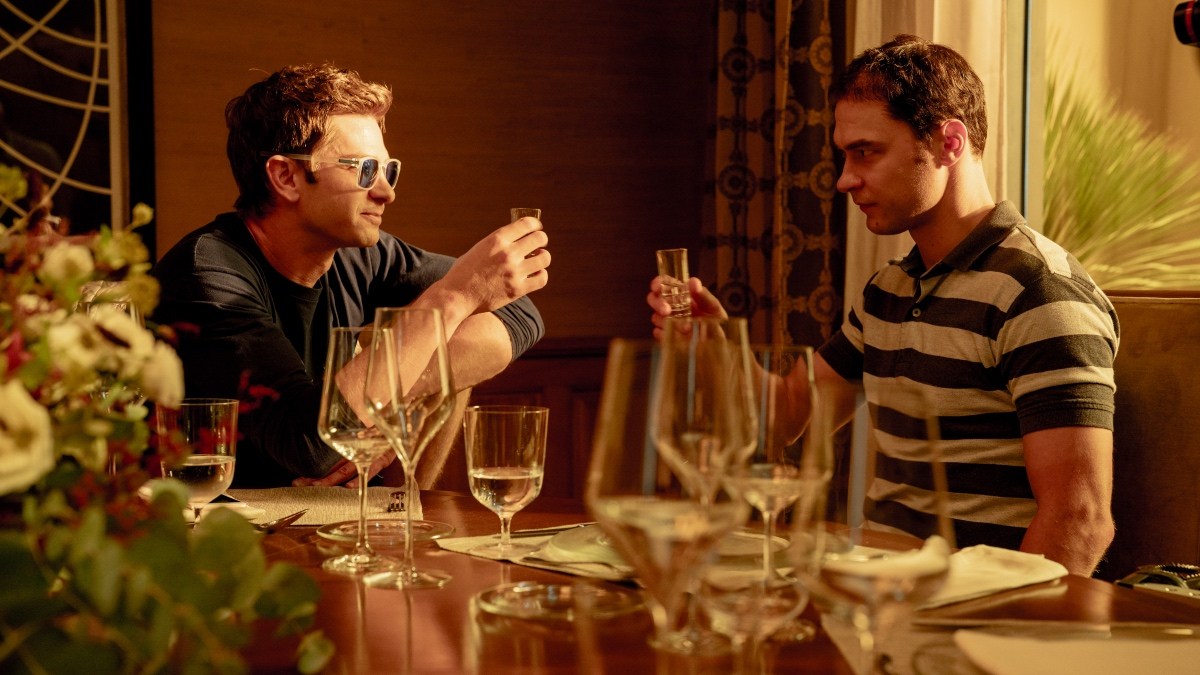
The newly released footage provides audiences with a distinct tone, blending high-stakes corporate maneuvering with sequences evocative of modern tech-industry excess. The teaser opens with OpenAI co-founder Ilya Sutskever, portrayed by Anora breakout star Yura Borisov, attempting to explain the foundational mechanics of the organization’s neural networks. Altman is depicted casually dismissing the technical complexity, pulling off his signature sunglasses, flashing a smile, and declaring, “I’m not a scientist.”
This interaction sets the stage for a narrative arc that contrasts the dense, academic origins of machine learning with the aggressive marketing and commercialization that followed. The trailer quickly transitions into a rapid-fire montage depicting Altman orchestrating lavish, high-society gatherings reminiscent of cinematic portrayals of Wall Street excess. These celebratory scenes are counterbalanced by sobering warnings from industry detractors. Actor Jason Schwartzman appears as an unkempt tech doomsayer, vocalizing anxieties regarding the unchecked acceleration of artificial intelligence development without adequate safety protocols or ethical guardrails.
The ensemble cast reads as a who’s who of contemporary cinema and media representation. Monica Barbaro and Cooper Hoffman feature prominently as key OpenAI executives navigating the volatile corporate landscape, while veteran actor Mark Rylance steps into the role of computer scientist and cognitive psychiatrist Geoffrey Hinton, often referred to as one of the "Godfathers of AI" due to his foundational work on deep learning and subsequent warnings regarding existential risks. Comedian and actor Ike Barinholtz rounds out the prominent Silicon Valley figures, taking on the role of billionaire entrepreneur Elon Musk.
Chronology of the OpenAI Boardroom Drama
To understand the narrative foundation of Artificial, one must examine the actual timeline of events that catapulted OpenAI from a boutique non-profit research laboratory into a trillion-dollar commercial juggernaut. Founded in December 2015 as an open-source research organization backed by prominent figures including Altman, Musk, Greg Brockman, and Sutskever, OpenAI initially positioned itself as a counterweight to corporate monopolies on artificial intelligence, dedicated to ensuring AGI (Artificial General Intelligence) would benefit all of humanity.
The landscape shifted fundamentally in November 2022 with the public launch of ChatGPT. The chatbot achieved unprecedented viral adoption, acquiring over 100 million active users in just two months and setting the record for the fastest-growing consumer application in history. This milestone triggered a massive influx of capital, anchored by a multi-billion-dollar partnership with Microsoft, which fundamentally altered the organization’s corporate structure by introducing a capped-profit model.
The internal tensions depicted in Guadagnino’s film likely draw heavily from the dramatic events of November 2023. In a sudden and stunning move, OpenAI’s board of directors abruptly ousted Sam Altman as CEO, citing a lack of consistent candor in his communications with the governing body. The firing ignited a chaotic five-day corporate crisis. Driven by immense pressure from major investors led by Microsoft, coupled with a near-unanimous employee revolt—wherein over 700 of OpenAI’s 770 staffers threatened to resign and join Microsoft unless Altman was reinstated—the board capitulated. Altman returned to the helm, resulting in the eventual departure of several key safety-focused board members and researchers, including Sutskever.
Supporting Data and Industry Context
The commercial backdrop against which Artificial is being released underscores the massive economic and social stakes of the generative AI sector. According to market data compiled throughout 2024, 2025, and 2026, global enterprise spending on artificial intelligence infrastructure has surpassed hundreds of billions of dollars, with semiconductor manufacturing, data center construction, and power grid expansions operating at unprecedented capacities.
However, this financial boom has run parallel to intense regulatory scrutiny and public skepticism. Studies on consumer trust in emerging technologies indicate a widening gap between corporate messaging—which frequently promotes AI as an infallible panacea for productivity and scientific advancement—and public apprehension regarding workforce displacement, intellectual property theft, data privacy violations, and the dissemination of sophisticated synthetic misinformation.
In the film’s narrative, these real-world tensions are personified through confrontations where critics challenge Altman over the reliability of large language models. Characters within the teaser note that the technology frequently hallucinates facts, fabricates data, and introduces systemic risks that outpace the industry’s ability to govern itself. Yet, much like the characterizations found in Aaron Sorkin’s script for The Social Network, the cinematic portrayal of Altman shrugs off institutional warnings in pursuit of rapid scale and market dominance.
Implicit Parallels and Cinematic Commentary
By employing Andrew Garfield in a leading role that directly evokes memories of The Social Network, Guadagnino and writer Simon Rich offer a pointed meta-commentary on the cyclical nature of technological disruption. In 2010, Fincher’s film permanently altered public perception of Mark Zuckerberg and Facebook, reframing the creation of the world’s largest social media platform not as a triumphant geek-makes-good story, but as the byproduct of social isolation, personal grievances, and an aggressive disregard for interpersonal ethics.
While The Social Network did not immediately dismantle Facebook’s operational dominance, it succeeded in stripping away the utopian veneer initially cultivated by Silicon Valley public relations teams. It established a cynical, analytical framework through which the public views tech founders: brilliant, socially detached individuals whose blind faith in their own innovations frequently externalizes risks onto society at large.
Artificial appears designed to execute a parallel cultural intervention for the artificial intelligence era. As AI tools transition from experimental novelties embedded in search engines to foundational infrastructure governing finance, healthcare, law enforcement, and creative industries, public discourse has struggled to keep pace. By dramatizing the internal politics, ego clashes, and philosophical schisms of OpenAI, the film forces audiences to confront the human frailties driving technologies often marketed as objective and omniscient.
Broader Impact and Implications
The release of Artificial arrives at a critical juncture for the film industry and corporate media. Studios themselves have increasingly integrated generative AI tools into pre-production, visual effects, and script analysis, making a major Hollywood feature that critiques the AI elite an exercise in reflexive self-awareness. Furthermore, the film’s distribution by NEON—a studio known for prestige, director-driven cinema—indicates an expectation of awards-season traction, suggesting that the cultural conversation surrounding artificial intelligence has matured enough to sustain complex, satirical, and critical cinematic examination.
As audiences await the wide theatrical release on January 8, 2027, industry analysts suggest that Artificial could fundamentally shape public skepticism toward generative AI models, much as its thematic predecessor did for social networking. Whether the film will prompt regulatory shifts or merely cement the modern tech entrepreneur as the definitive antihero of the 21st century remains to be seen. Nevertheless, as the promotional campaign for Artificial rolls out, it delivers a clear message to the architects of the artificial intelligence revolution: much like their predecessors in social media, they are destined to make a few enemies along the way to 500 million users.