The Ten Most Defining Moments of Sir Patrick Stewart as Captain Jean-Luc Picard Over 35 Years

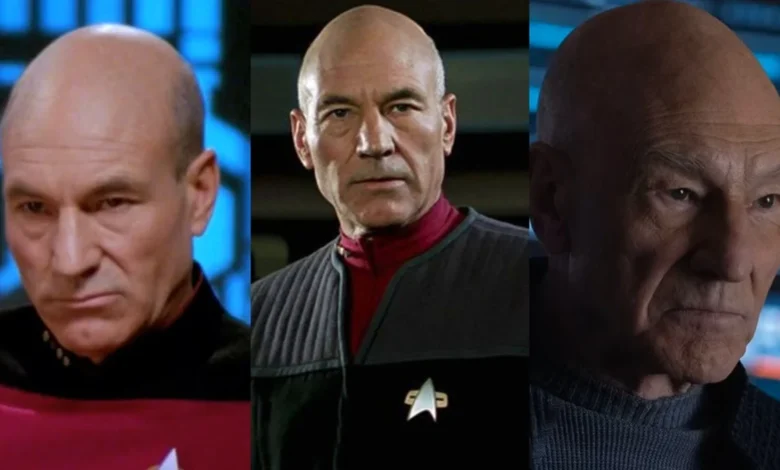
For more than three decades, Sir Patrick Stewart’s portrayal of Captain Jean-Luc Picard has served as the intellectual and moral cornerstone of the Star Trek franchise. Since his debut in 1987, Stewart has transformed the character from a stiff, authoritative Starfleet commander into a deeply layered human being, grappling with existential crises, the weight of command, and the evolution of his own morality. As the franchise expanded from television into feature films and modern streaming platforms, Stewart’s performances have remained a benchmark for science fiction acting. This retrospective examines ten pivotal moments in the character’s history, tracing the evolution of Jean-Luc Picard from the early days of The Next Generation to the final, reflective chapters of the Picard series.

A Chronology of Command: From the Enterprise-D to the USS Titan
The character of Jean-Luc Picard was initially conceived by Gene Roddenberry as a stark departure from the swashbuckling archetype of James T. Kirk. Over the course of seven seasons of The Next Generation (TNG), four feature films, and three seasons of Star Trek: Picard, the character’s timeline reflects a progression from cold professionalism to profound vulnerability.
In 1988, The Next Generation found its footing with the second-season episode "The Measure of a Man." The episode serves as a seminal legal drama within the Star Trek canon, where Picard defends the sentient rights of his android officer, Lieutenant Commander Data. This moment established Picard as the moral conscience of the Federation, proving that the series could tackle complex philosophical questions regarding artificial intelligence and human rights.
As the series progressed, the narrative stakes grew. The 1990 episode "Sarek" showcased the psychological toll of diplomatic duty, while "Family," also in 1990, provided a rare glimpse into Picard’s domestic trauma following his assimilation by the Borg—a plotline that redefined the character’s relationship with his own humanity. By 1992, the show reached its zenith with "The Inner Light," an episode that allowed Stewart to play a man living an entire alternative life, solidifying the character’s reputation for emotional depth.
The Philosophical and Moral Framework of Picard’s Leadership
Picard’s leadership style is defined by his commitment to the "Prime Directive" and the sanctity of truth. In the season five episode "The First Duty," Picard serves as a mentor figure forced to discipline a protégé, Wesley Crusher. The scene remains one of the most cited examples of the "authoritative lecture" trope, where Picard emphasizes that a uniform does not grant a person the right to obscure the truth.

This commitment to integrity is further explored in the season four episode "The Drumhead." In this narrative, which acts as an allegory for McCarthyism, Picard stands as the final barrier against a political witch hunt aboard the Enterprise. His monologue regarding the erosion of freedom—"The first speech censured, the first thought forbidden, the first freedom denied, chains us all irrevocably"—is frequently analyzed in political science circles for its relevance to contemporary democratic discourse.
The Evolution of Conflict: Borg Assimilation and Trauma
The most significant event in the character’s life remains his assimilation by the Borg Collective, a trauma that persisted for decades. In the 1996 film Star Trek: First Contact, this trauma manifests as a vengeful pursuit, often described by critics as Picard’s "Ahab moment." The film showcases Stewart’s ability to portray a man pushed to his breaking point. His line, "The line must be drawn here, this far, no further," represents a critical breakdown in his characteristic composure, illustrating the thin line between a diplomat and a warmonger when faced with existential threats.
This theme of unresolved trauma was revisited in the final season of Star Trek: Picard (2023). In the episode "Imposters," Picard faces Ro Laren, a former subordinate who had previously betrayed him. The confrontation is not merely a tactical standoff; it is a reckoning with past failures in leadership. When Picard tells her, "You broke my heart," the scene strips away the captain’s uniform, revealing the aging man beneath who is still haunted by the choices of his crew members.
Technical Analysis of Stewart’s Performance
Patrick Stewart’s approach to Picard is rooted in his extensive background with the Royal Shakespeare Company. His ability to deliver complex, verbose dialogue with clarity and gravitas has been a hallmark of the series. Linguistic analysis of his speeches in "The Inner Light" or "The Measure of a Man" reveals a mastery of cadence and pacing that keeps viewers engaged even during long, expository monologues.
In "Where Silence Has Lease," Stewart turned a standard sci-fi dialogue about the nature of death into a meditation on the unknown. By elevating the script, Stewart transformed what could have been a forgettable exchange into a defining piece of dialogue that many fans have cited as a foundational influence on their own perceptions of mortality.
Official Reception and Industry Impact
The portrayal of Picard has earned significant accolades, including multiple Emmy and Golden Globe nominations for Stewart. The character’s longevity is a testament to both the writing staff of Star Trek and Stewart’s refusal to allow the character to remain static.
Former Star Trek producers have often noted that the "Picard style" of leadership influenced the production culture of the franchise. By portraying a captain who sought dialogue over force, the series set a standard for "enlightened" leadership that has been echoed in subsequent iterations of the franchise, including Star Trek: Discovery and Star Trek: Strange New Worlds.
Broader Implications and Cultural Legacy
The character of Jean-Luc Picard transcends the medium of television. The "four lights" sequence from the 1992 episode "Chain of Command, Part II" has become a cultural touchstone, appearing in memes and political discourse as a symbol of resilience against authoritarian gaslighting. The scene, which depicts Picard refusing to yield to the physical and psychological torture of a Cardassian interrogator, serves as an academic case study in psychological resistance.
Furthermore, the "Inner Light" finale, in which Picard must reconcile his current life as a Starfleet captain with the decades of memories from a life he never actually lived, highlights the show’s capacity for profound human storytelling. The episode’s message—to "make now always the most precious time"—has been adopted by many as a life philosophy, proving the long-term impact of fictional narratives on real-world behavior.
As of 2024, the entire catalog of The Next Generation and the Picard series remains available on Paramount+. The continued availability of these episodes ensures that new generations of viewers can analyze the growth of a character who, over 35 years, has become one of the most recognizable and respected figures in global popular culture. The arc of Jean-Luc Picard remains a rare example of a character allowed to age, evolve, and ultimately find peace, mirroring the real-world maturation of the actor who portrayed him.