Mark H. Rapaport’s provocative new film, "Godhead," has emerged as a standout at the recent Fantasia International Film Festival, delving into complex themes of faith, shame, and the profound, often challenging, legacy of religious upbringing. The film, which premiered to an engaged audience, marks Rapaport’s return to the festival after his debut feature, "Hippo," garnered attention in 2023. Like its predecessor, "Godhead" navigates controversial and deeply personal subject matter, including pedophilia, incest, religious extremism, and sexual assault. However, the film’s power lies not in shock value but in its philosophical depth, tender emotional resonance, and striking visual artistry.
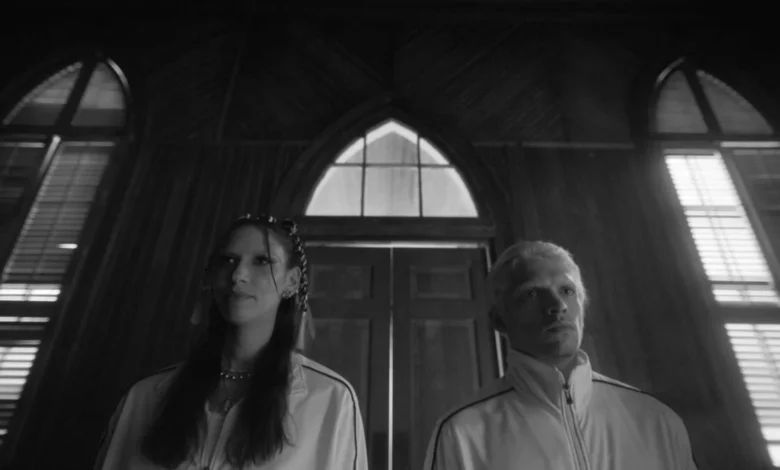
The narrative unfolds in a stark, ambiguous setting within the American South, where a weary priest, portrayed by Al Warren, finds himself confronted by an unsettling pair of fraternal twins. Clad in identical white tracksuits and sneakers, reminiscent of cult iconography, the twins introduce themselves as Firstborn, played by Sarah Coffey, and Secondborn, with Kimball Farley reprising a role following his performance in "Hippo." Their stated mission is extraordinary: one of them claims to be the Holy Spirit, and they implore the priest to act as an impartial arbiter to discern the divine sibling before dawn. The chosen individual is destined for an ultimate sacrifice, a shooting that will facilitate their ascension to heaven and the fulfillment of the "Godhead," a symbol tattooed crudely on their palms.
Initially, the priest dismisses the twins’ claims as a misguided or cruel prank. His skepticism is palpable as he challenges their unusual request, suggesting they resolve their spiritual dilemma through self-inflicted action in the solitude of the woods. However, the twins’ inability to carry out such an act themselves forces the priest into an unwanted role, thrusting him into a profound spiritual reckoning that compels him to confront long-buried personal demons.
A Stylistic Fusion: From Southern Gothic to Lynchian Surrealism
"Godhead" masterfully blends elements of Southern Gothic storytelling with a distinctly Lynchian surrealism, creating a cinematic experience that is both unsettling and mesmerizing. The film’s aesthetic echoes the literary tradition of authors like Flannery O’Connor, known for her exploration of grotesque characters and the often-violent manifestations of faith in the American South. This grounded, almost bleak, realism is then subverted by a pervasive sense of the uncanny, drawing parallels to the dreamlike, unsettling atmosphere cultivated by filmmaker David Lynch, particularly in works like "Eraserhead." Fans of such idiosyncratic filmmaking will find ample artistic kinship in "Godhead’s" audacious visual and thematic choices.
Visual Mastery: The Luminous Monochrome
A significant contributor to the film’s impact is its breathtaking cinematography. Shot in luminous black-and-white by William Babcock, "Godhead" possesses a visual clarity that amplifies its thematic weight. The stark contrasts and nuanced shadows lend a timeless, almost ethereal quality to the proceedings. Kimball Farley, in particular, commands the screen. His striking appearance – characterized by bleached platinum blonde hair, similarly bleached eyebrows, and large, dark eyes – is rendered with an angelic softness by Babcock’s lens. This visual treatment imbues his character with a potent ambiguity, whether he is depicted in moments of quiet intensity or in the midst of volatile action. The cinematography effectively captures the potential divinity or profound distress of a character grappling with an extraordinary claim.
Performances: Anchoring the Audacious Narrative
The commitment of the entire cast to Rapaport’s challenging material is a cornerstone of "Godhead’s" success. Each actor fearlessly inhabits their roles, navigating the complex emotional and thematic landscape with conviction. However, it is Kimball Farley who serves as the film’s emotional and thematic anchor. His portrayal of Secondborn is deeply compelling, drawing the audience into the character’s internal world. The chemistry between Farley and Sarah Coffey as the fraternal twins is palpable. From their initial appearance, there’s an unspoken tension, a suggestion that their presented mission masks a deeper, more disturbing truth. The initial reveal of this secret is met with a predictable, yet effectively executed, narrative turn. It is the subsequent revelation, however, that elicits a powerful and visceral reaction from the audience, described as a collective gasp followed by uncomfortable laughter, indicative of the film’s capacity to provoke both shock and a disquieting recognition.
![‘Godhead’ Plunges Viewers into a Stunning, Unsettling Examination of Fanaticism, Faith, and Forgiveness [Fantasia Review]](https://www.dreadcentral.com/wp-content/uploads/2026/07/GH_Still_6-1200x675.jpg)
Theological and Philosophical Ambiguities
"Godhead" is a film designed to linger, posing questions that resonate long after the credits roll. As viewers departed the screening, overheard conversations in the lobby revealed a shared struggle to fully grasp the film’s multifaceted messages. Themes of human worthiness for forgiveness, the potential for beauty to emerge from profound evil, and the elusive nature of right and wrong are explored without definitive answers. Mark H. Rapaport intentionally leaves some of these theological and philosophical inquiries unresolved, inviting ongoing interpretation and debate. Even in the process of reviewing the film, the implications of "Godhead’s" more disturbing elements remain subjects of contemplation.
Broader Context and Festival Significance
The screening of "Godhead" at the Fantasia International Film Festival underscores the event’s reputation for showcasing bold, independent cinema that pushes artistic boundaries. Fantasia, held annually in Montreal, has become a crucial platform for genre films and auteur-driven projects, attracting filmmakers and audiences eager to explore narratives that diverge from mainstream sensibilities. Rapaport’s previous film, "Hippo," also premiered at Fantasia, establishing a precedent for his willingness to tackle challenging themes within the festival’s receptive environment. The enthusiastic reception for "Godhead" suggests a growing audience appreciation for films that engage with complex psychological and spiritual issues, even when presented through unconventional means.
The festival’s programming often reflects current cultural conversations, and "Godhead’s" exploration of religious trauma and the search for meaning in a world grappling with moral ambiguity resonates deeply. The film’s success at Fantasia can be seen as an indicator of a broader cinematic trend towards introspective and thematically rich storytelling, even within the realm of genre cinema.
Implications and Enduring Impact
"Godhead’s" impact extends beyond its festival debut. The film’s ability to provoke thought and discussion speaks to its success in engaging audiences on an intellectual and emotional level. The unresolved nature of its central questions encourages viewers to engage in critical self-reflection. The film doesn’t offer easy catharsis; instead, it presents a complex tapestry of human experience, forcing viewers to confront uncomfortable truths about themselves and the world around them.
For many, the film may serve as a catalyst for processing personal experiences, particularly those related to religious upbringing. The reviewer’s personal reflection, noting a potential need to work through religious trauma, highlights the film’s power to resonate on a deeply personal level. This introspective quality, combined with its striking imagery and powerful performances, ensures that "Godhead" is not merely a film to be passively consumed but one that demands active engagement and contemplation.
While not a conventional "comfort movie," "Godhead’s" enduring power lies in its artistic merit and its capacity to inspire re-watches and continued exploration of its thematic depths. Mark H. Rapaport has delivered a work that is both profoundly disturbing and undeniably beautiful, solidifying his position as a filmmaker unafraid to confront the complexities of the human psyche and the enduring questions of faith and existence. The film’s artistic achievements, coupled with its willingness to engage with sensitive and challenging subject matter, position "Godhead" as a significant and memorable contribution to contemporary cinema. The film’s exploration of the intersection of faith, identity, and trauma offers a powerful, albeit unsettling, reflection on the human condition, leaving an indelible mark on those who experience it.