Heart of the Beast highlights the bond between dog and man in rugged survival drama

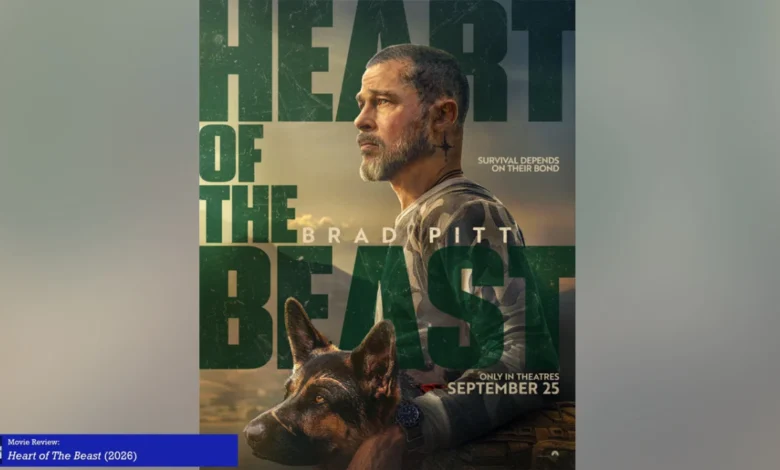
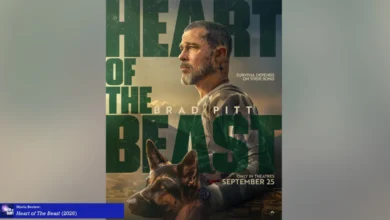
The cinematic landscape of wilderness survival dramas has welcomed a compelling new entry with the release of Heart of the Beast, a feature-length survival adventure film directed by David Ayer and written by Cameron Alexander. Anchored by powerful lead performances from Hollywood veteran Brad Pitt and a quartet of canine actors, the film explores the profound psychological and physical connection between a human and an animal navigating extreme isolation. While the narrative framework relies on familiar tropes within the survival-adventure genre, the production distinguishes itself through its examination of canine post-traumatic stress disorder (PTSD), the invisible wounds carried by military veterans, and an intense visual portrayal of the harsh backcountry.
Main Facts and Production Overview
At its core, Heart of the Beast tells the story of James Belmont, a retired Special Forces operative portrayed by Brad Pitt, and his battle-scarred German Shepherd, Odin. Odin is brought to life on screen by four related canine actors: Uber, Ryker, Hondo, and Zika. The film’s narrative engine is driven by their struggle to endure the unforgiving wilderness after a catastrophic plane crash strands them far from civilization.
Distributed under the heavy-hitting collaboration of a seasoned production team, the film features a supporting cast that includes J.K. Simmons as an enigmatic and talkative backcountry wanderer named Watkins, and Anna Lambe as Amber, a motorist whose discovery of the wandering dog serves as a framing device for the picture’s central narrative. Despite being set deep within the rugged expanse of Alaska, principal photography actually took place amid the equally dramatic and verdant landscapes of New Zealand. This cinematic sleight-of-hand succeeds in fooling even keen-eyed viewers, supported by state-of-the-art cinematography, digital visual effects, and meticulous editing.
Chronology of the Narrative
The film utilizes a narrative framing device, opening on a stretch of remote highway where motorist Amber brings her truck to a sudden halt upon spotting a large German Shepherd standing directly in the road. A supertitle flashes across the screen, establishing a flashback: "A week earlier."
The setting shifts to the vast expanse of Alaska. A Cessna pontoon aircraft glides gracefully over snow-capped mountain peaks and lush green summer valleys before touching down smoothly on a pristine alpine lake. Disembarking from the aircraft are James Belmont and his loyal companion, Odin, whose battle-worn face and prosthetic foreleg immediately hint at a strenuous past.
The early days of their expedition showcase a harmonious coexistence with nature. James tracks a moose through the scope of his rifle but ultimately lowers the weapon, choosing peace over a kill. Later, the duo engages in fishing, with Odin actively participating and successfully securing their meal.
As the days progress, the narrative reveals the profound history connecting the two. James is a decorated Special Forces veteran who completed harrowing tours in Afghanistan and Iraq, an experience punctuated by recurring flashbacks. Crucially, the film depicts Odin as a retired military service dog suffering from parallel psychological trauma, illustrating that the scars of combat affect working animals just as deeply as their human handlers.
The isolation is briefly interrupted by the arrival of Watkins, played by J.K. Simmons. Professing an affection for the quiet solitude of nature, Watkins paradoxically chatters incessantly, following James and Odin back to their campsite for an overnight stay. By the following morning, Watkins departs, rowing a large canoe into the early morning mist, never to reappear in the narrative.
Dark clouds soon gather, signaling an impending meteorological crisis. James swiftly dismantles the campsite and loads the Cessna. Navigating through severe, turbulent weather, James manages to pilot the aircraft above the cloud layer into temporary safety. However, tragedy strikes when James experiences a sudden, debilitating heart attack, clutching his left arm in agony before losing consciousness.
Without a pilot, the aircraft plummets, clipping tree branches before crashing into a lake. Odin is violently ejected through the passenger-side door during the descent. Regaining consciousness just in time, James finds an air pocket, escapes the submerged fuselage, and frantically searches for his dog. He locates an uninjured, though unconscious, Odin, successfully reviving him.
Driven by necessity, James dives back into the frigid waters of the lake to salvage cargo boxes from the wreckage. Sifting through the remnants, he compiles a functional survival pack containing a map and a compass. With civilization miles away, James and Odin embark on a grueling journey on foot across treacherous terrain.
Cinematic Technique and Technical Execution
Director David Ayer and his crew have crafted a visually arresting picture that relies heavily on atmospheric tension and visual storytelling rather than exposition. Because the central relationship features a human and a canine, the scarcity of traditional dialogue places an immense burden on the physical chemistry between Pitt and his animal co-stars. Industry critics have noted that this non-verbal communication is executed with remarkable success, establishing an authentic, palpable bond that anchors the audience’s emotional investment.
The film’s cinematography captures the majestic, primeval scale of nature, utilizing sweeping long shots of sprawling valleys and towering mountain ranges juxtaposed against intimate, grounded moments between man and dog. Even night sequences are richly illuminated, highlighted by digital visual effects depicting mesmerizing auroras lighting up the night sky.
Given that production took place in New Zealand rather than North America, encounters with local wildlife—including menacing wolves, a formidable bear, and a towering moose—were entirely realized through digital artistry and sophisticated editing. The composition of high-tension sequences, such as a harrowing river descent, a dramatic plane crash, and a vicious wolf attack, demonstrates elite editing and rhythmic pacing, lending a visceral authenticity to the characters’ struggles.
Character Analysis and Casting Choices
Brad Pitt delivers a grounded, physically committed performance as James Belmont. To prepare for the strenuous demands of the role, Pitt underwent a rigorous physical training regimen, which is reflected in his authoritative movement and convincing portrayal of a former elite soldier. His nuanced performance successfully conveys the quiet anguish of PTSD, creating a poignant and believable dynamic with Odin.
Conversely, the inclusion of J.K. Simmons as Watkins generated mixed reactions among early reviewers. Simmons plays a talkative drifter whose presence serves primarily to draw James into brief exposition regarding his military past before vanishing from the plot entirely. While Simmons delivers a characteristically energetic performance, some critics have questioned the narrative necessity of the character, speculating whether his casting was influenced by creative alliances forged during previous collaborations, such as Damien Chazelle’s critically acclaimed drama Whiplash.
Plausibility and Suspension of Disbelief
While Heart of the Beast succeeds as a visceral action-adventure picture, certain narrative and physical hurdles strain credulity. The film asks audiences to accept that a man suffering a severe myocardial infarction, subsequent near-drowning, and repeated physical trauma from violent river rapids can maintain the stamina required to navigate an unforgiving wilderness. Furthermore, an intense sequence in which James and Odin fend off a pack of wolves stretches realistic survival outcomes, even when factoring in James’s specialized military training.
Despite these over-the-top cinematic embellishments, the emotional core of the film remains intact. Younger or highly sensitive viewers should note that the picture contains intense, heart-wrenching sequences—such as a wildlife predation scene involving a baby moose—that underscore the brutal realities of nature.
Broader Impact and Military Working Dog Advocacy
Beyond its value as a thrilling piece of entertainment, Heart of the Beast makes a significant cultural contribution by casting a spotlight on the lives of military working dogs (MWDs). In recent years, animal advocacy groups and veterans’ organizations have increasingly focused on the psychological toll experienced by dogs deployed in combat zones.
Working dogs in active military service frequently encounter high-stress environments characterized by improvised explosive devices, gunfire, and extreme operational tempos. Upon retirement, many of these animals exhibit symptoms analogous to human Post-Traumatic Stress Disorder, including hypervigilance, anxiety, and avoidance behaviors. By humanizing Odin’s psychological struggles and placing them on equal footing with James’s trauma, the film fosters greater public awareness regarding the lifelong care, rehabilitation, and honorable retirement that military working dogs require.
Conclusion
Heart of the Beast delivers a solid, highly engaging cinematic experience that successfully marries high-stakes adventure with deep emotional resonance. Bolstered by committed lead performances, stunning cinematography, and a timely thematic focus on the invisible wounds borne by both soldiers and their canine companions, the film carves out a respected space within the modern survival-adventure genre.