Bridging Generations of G-Funk: Kalan.FrFr Headines Historic Celebration at Long Beach VIP Records Presented by FX

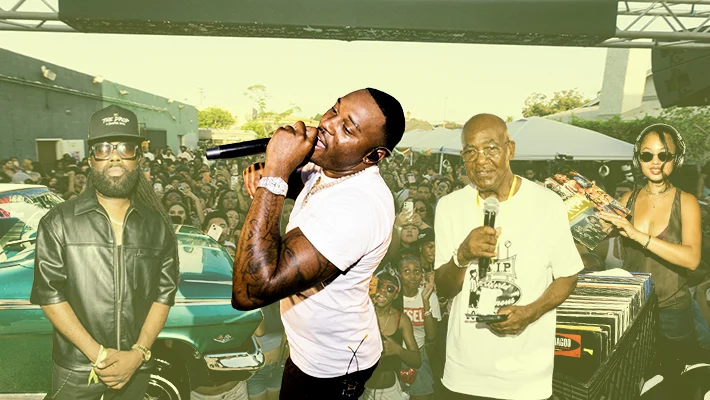
Long Beach, California — The historic intersection of Pacific Coast Highway and Martin Luther King Jr. Avenue in Long Beach buzzed with a palpable sense of cultural nostalgia and modern energy this past weekend. Crowds lined the asphalt for blocks, flanking the curb with pristine, candy-painted lowriders fitted with wire wheels and hydraulics—a quintessential tribute to Southern California automotive subculture. Inside the hallowed walls of the World Famous VIP Records, music enthusiasts, industry insiders, and neighborhood residents gathered for an exclusive headlining performance by West Coast hip-hop torchbearer Kalan.FrFr.
Presented by FX in conjunction with their promotional campaign for The Drop: A Snowfall Saga, the event functioned as much more than a routine album release party or promotional concert. It was a carefully curated cultural excavation, designed to honor the deep, foundational lineage of West Coast hip-hop while spotlighting the genre’s dynamic contemporary evolution. For an afternoon, the legendary record shop transformed into a living museum, paying homage to the architects of G-Funk and passing the torch to the new guard of West Coast artists who continue to shape the global sonic landscape.
Historical Context: The Genesis of G-Funk at VIP Records
To fully understand the gravity of the event, one must examine the storied history of VIP Records. For contemporary music consumers, record shops are often viewed simply as retail spaces for vinyl and compact discs. However, during the late 1980s and early 1990s, VIP Records operated as a vital cultural sanctuary and creative incubator for the youth of Long Beach.
Founded and operated by Kelvin Anderson, the store became a legendary cornerstone of the local community. Recognizing the scarcity of safe, creative outlets for young people navigating the turbulent socioeconomic landscape of inner-city Los Angeles and Long Beach during the crack epidemic and the height of the gang era, Anderson made a fateful decision. He converted the backroom of the record shop into an impromptu music production studio.
That modest backroom served as a safe haven where neighborhood kids could channel their anxieties, ambitions, and artistic frustrations into music, effectively keeping them away from street violence and trouble. It was within those four walls that an embryonic version of West Coast rap history was forged. A young Cordozar Broadus—known to the world as Snoop Dogg—alongside his cousins Calvin Broadus (producer Daz Dillinger), Ricardo Brown (Daz’s brother), and collaborators Stanley Kirk Burrell and others, frequented the shop. Most notably, Snoop Dogg, alongside his cousin Nate Dogg (Nathaniel Hale) and childhood friend Warren G (Warren Griffin III), formed the legendary rap trio 213.
It was inside the VIP Records backroom studio that 213 cut their very first demo tapes. Those primitive recordings eventually caught the attention of Dr. Dre, who had recently departed N.W.A and was embarking on his solo career with Death Row Records. The rest, as they is documented in hip-hop history: the G-Funk era was born, characterized by whining synthesizers, heavy basslines, slow-rolling rhythms, and soulful P-Funk samples that dominated the global charts throughout the 1990s. Consequently, hosting a major cultural event at VIP Records represented a profound full-circle moment for the neighborhood—a physical manifestation of honoring the past to inspire the future.
Atmosphere, Production, and Community Engagement
The curation of the weekend’s event reflected meticulous attention to historical detail and community integration. The exterior of the venue was flanked by vintage lowriders, serving as a visual bridge between the Golden Era of West Coast hip-hop and current street culture. Inside, the walls were adorned with rare, vintage photographic prints captured by renowned lensman Mike Miller, whose iconic imagery documented the rise of West Coast hip-hop royalty during its most formative years.
To anchor the event in authentic local culture, organizers enlisted beloved culinary staples from the region. Catering was provided by South Los Angeles institution Woody’s BBQ, alongside Glizzy Street Dogs, feeding the massive crowds that braved hours of waiting in the Southern California sun.
The sonic landscape of the day was expertly managed by legendary DJ Hed, whose deep knowledge of West Coast musical history kept the audience engaged and energized between sets. The atmosphere was charged with communal pride, acting as a living tribute to the resilience and cultural export of the region.
Chronology of Performances and Musical Highlights
As the afternoon progressed, the event transitioned from a historical exhibition into a high-energy live music showcase. DJ Hed’s seamless mixing warmed up the audience, preparing them for a series of surprise appearances and musical masterclasses.
A major highlight of the afternoon occurred when André Troutman, creative director and close collaborator of Kanye West, took to the stage. Troutman brought his virtuosic talk-box mastery to the forefront, delivering a soul-stirring live rendition of Tupac Shakur and Dr. rejuvenate-classic "California Love." The crowd erupted into communal chorus, bridging the gap between East and West, past and present.
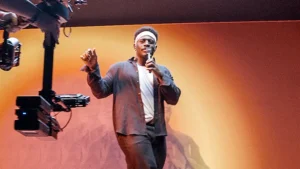
However, the undisputed focal point of the day was Kalan.FrFr. Representing the contemporary vanguard of West Coast lyricism and melody, Kalan stepped onto the makeshift stage to deafening applause. Known for his genre-bending fusion of melodic R&B sensibilities and hard-hitting street rap, Kalan delivered a performance that explicitly acknowledged his predecessors while staking his claim as a leader of the current generation.
His set spanned fan-favorites and high-energy anthems, driving the crowd into a frenzy. Observers noted the symbolic resonance of Kalan performing in a venue where foundational artists like Snoop Dogg and Nate Dogg once recorded their earliest demos. The performance served as a living testament to the continuity of the West Coast sound—demonstrating that the artistic lineage established over three decades ago remains vibrant, evolving, and culturally dominant.
Promotional Partnerships and Broader Industry Implications
The event was produced and sponsored by FX in support of The Drop: A Snowfall Saga, a companion project to the critically acclaimed television drama series Snowfall, which chronicled the crack cocaine epidemic in Los Angeles during the 1980s. By aligning the series with the historical epicenter of G-Funk culture, FX successfully bridged historical storytelling with contemporary entertainment marketing.
The synergy between the television narrative—which explores the socio-political underpinnings of the era that birthed modern West Coast hip-hop—and a live concert at VIP Records highlights a growing trend in entertainment marketing: immersive, place-based historical activations. Rather than relying solely on traditional digital advertising, networks are investing in community-centered cultural events that resonate authentically with regional audiences and hip-hop purists alike.
Furthermore, the event tied into broader promotional initiatives, including Kalan.FrFr’s participation in the documentary How LA Found Its Sound, an audiovisual deep-dive into the geographic and cultural conditions that birthed the distinctive West Coast sonic palette. Both the documentary and The Drop: A Snowfall Saga are currently streaming on Hulu, expanding the reach of this weekend’s localized celebration to a global digital audience.
Analysis: The Enduring Legacy of West Coast Regionalism
Industry analysts and cultural historians point to events like the VIP Records showcase as crucial counterweights to the increasingly homogenized global music market. In an era where streaming algorithms and digital distribution often flatten regional distinctions, localized celebrations of cultural heritage reinforce the importance of place in artistic development.
The historical trajectory of West Coast hip-hop has always been inextricably linked to its physical geography—from the cruising culture of Crenshaw Boulevard and the Pacific Coast Highway to the backroom studios of independent record shops. By returning to VIP Records, artists and corporate partners alike acknowledged that the authenticity of hip-hop culture is rooted in community infrastructure.
Kelvin Anderson’s original vision for VIP Records—providing a physical safe space for creative youth—paved the way for multi-platinum careers and global cultural dominance. As artists like Kalan.FrFr continue to draw inspiration from these foundational spaces, the cycle of mentorship and regional pride remains unbroken.
Ultimately, the weekend’s gathering in Long Beach was much more than a promotional concert for a streaming network or a rising rap star. It was a reaffirmation of community resilience, a celebration of musical innovation, and a powerful reminder that the heartbeat of West Coast hip-hop continues to echo strongly from the very neighborhoods where it was born.