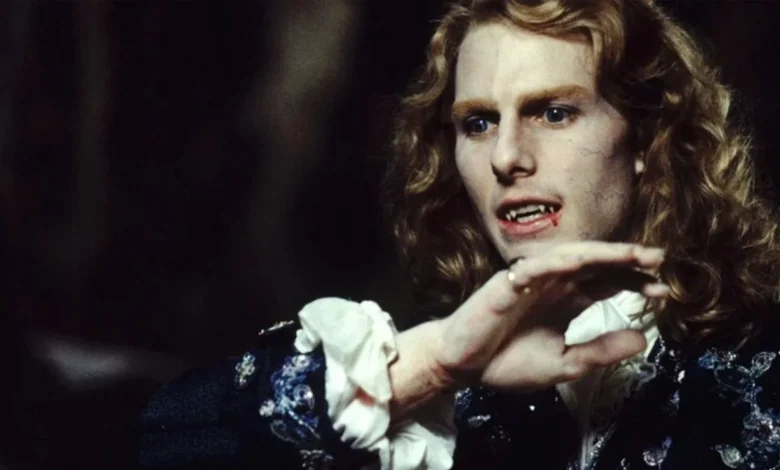
When the 1994 film adaptation of Anne Rice’s Interview with the Vampire arrived in theaters, it navigated a gauntlet of public scrutiny that few films of the era experienced. Despite intense fan skepticism regarding the casting of Tom Cruise as the titular vampire Lestat de Lioncourt, the film secured critical acclaim and became a significant financial success for Warner Bros. It earned over $223 million at the global box office against a production budget of approximately $60 million, effectively proving that gothic horror could function as a high-grossing blockbuster. Following this triumph, the studio immediately sought to capitalize on the momentum by commissioning a sequel based on Rice’s second novel, The Vampire Lestat. While that project ultimately failed to materialize with the original cast, recent revelations from director Neil Jordan have provided the first concrete details regarding the narrative path the sequel would have taken, had it moved forward under his guidance.
The Evolution of the Project and the Creative Divide
In the years following the 1994 release, the prospect of a direct sequel became a subject of immense speculation within the film industry. The primary obstacle to a swift production was the reluctance of Tom Cruise to return to the role, combined with the complexities of adapting a source material that shifted drastically in tone from the somber, introspective nature of Interview with the Vampire to the more flamboyant, epic scope of The Vampire Lestat.
Neil Jordan, who directed the first installment, was tasked with drafting a screenplay for the follow-up. In a recent disclosure to media outlets, Jordan clarified his creative stance, noting that he held significant reservations regarding the "rock star" persona that defines the later chapters of the novel. By the time of the publication of The Vampire Lestat in 1985, Rice had transformed her protagonist into a global musical icon, a development that resonated with the burgeoning MTV culture of the 1980s. Jordan, however, found this imagery incompatible with the atmospheric, historical gravitas he had established in the first film.
Instead of focusing on the spectacle of a vampiric rock concert, Jordan’s script intended to ground the narrative in the origins of the character. He sought to emphasize the 18th-century French upbringing of Lestat, exploring his early years, his introduction to the Commedia dell’arte, and the harrowing, visceral experience of his initial transformation into an immortal.

Chronology of the Lost Narrative
To understand the scope of Jordan’s proposed film, one must look at the structural choices he aimed to implement. The script was designed to function as a bridge between the existing film’s continuity and the broader history of the vampire lore established in Rice’s novels. The proposed timeline can be broken down into three distinct segments:
- The Historical Foundation: The majority of the screenplay would have been dedicated to the 18th-century French sequences. This would have provided the audience with the "backstory" of Lestat—a period of his life that was largely absent from the first film. By focusing on his struggle against poverty and his eventual encounter with the "strange man" who changed him, Jordan intended to humanize a character often perceived as a villain.
- The Framing Device: A crucial element of the script was the continuation of the interaction between Lestat and the interviewer, Daniel Molloy. The film would have utilized a "road trip" structure, moving from New Orleans toward Los Angeles. This was a direct expansion of the final moments of the 1994 film, where a resurrected Lestat confronts a terrified Molloy in the backseat of his car.
- The Synthesis: By utilizing the road trip as a framing device, Jordan hoped to allow Lestat to recount his long life to Molloy. This would have served as an expository tool, bridging the gap between the 18th-century flashbacks and the modern-day setting of the late 20th century.
Supporting Data and Industry Context
The 1994 production of Interview with the Vampire is widely considered a benchmark for gothic cinema. With a total domestic gross of $105 million and a strong international performance, it cemented the "vampire prestige" subgenre. The failure to secure a direct sequel in the late 1990s meant that the property languished in development hell for years.
When Warner Bros. finally released a sequel in 2002, titled Queen of the Damned, it was a critical and commercial disappointment. Produced for $35 million, it garnered only $45 million worldwide and was panned for its significant departures from the source material and its lack of continuity with the Jordan film. Crucially, Queen of the Damned leaned heavily into the rock star aesthetic that Jordan had explicitly sought to avoid. This stark contrast highlights the fundamental disagreement between the creative vision of the original director and the eventual direction taken by the studio.
The Implications of the "Undead Road Trip"
The narrative approach envisioned by Jordan carries significant implications for how modern audiences interpret legacy sequels. In the current media landscape, where established intellectual properties (IP) are frequently revisited, the idea of a "legacy sequel" that respects the tone of an original work is highly valued. Jordan’s plan to use the road trip as a vehicle for storytelling would have allowed for a more intimate, character-driven experience, focusing on the psychological erosion of Molloy and the manipulative charisma of Lestat.
By ignoring the "rock star" elements for the bulk of the runtime, the film would have remained thematically consistent with the 1994 adaptation. It would have positioned Lestat not as a performer, but as a chronicler of his own ancient, tragic existence. From an analytical perspective, this suggests that the film would have been a character study rather than an action-heavy spectacle, a choice that might have prevented the dilution of the brand that occurred with later, less successful adaptations.

Broader Impact on the Vampire Mythos
The decision by Warner Bros. to move away from Jordan’s script eventually led to the rights being held by other entities, culminating in the recent AMC television adaptation of The Vampire Chronicles. The AMC series has taken a different approach, embracing the entirety of Rice’s source material, including the rock star persona, and updating the timeline to reflect contemporary sensibilities.
However, the revelation of Jordan’s script serves as a vital piece of cinematic history. It illustrates that there was a tangible path to a "legacy" version of the franchise that could have preserved the aesthetic and tonal continuity of the 1994 film. While the opportunity to see Tom Cruise, Christian Slater, and Neil Jordan reunite for such a project has long since passed, the existence of this screenplay confirms that the vision for a more grounded, historical exploration of Lestat was not just a theoretical possibility—it was a fully conceptualized project that, had it been greenlit, might have fundamentally altered the trajectory of the gothic horror genre at the turn of the millennium.
In retrospect, the primary takeaway is the tension between studio expectations—often focused on marketable, high-concept hooks like the "rock star vampire"—and the filmmaker’s desire to explore the internal mythology of the character. Jordan’s refusal to embrace the MTV-era aesthetic reflects a deeper understanding of the character’s origins, suggesting that the most compelling version of Lestat was perhaps not the one on stage, but the one sitting in the backseat of a car, quietly recounting centuries of isolation, transformation, and loss to a captive audience. The "undead road trip" remains one of the great "what-ifs" of 90s cinema, a testament to a vision that favored character history over the fleeting trends of the era.