Saw II: Flesh and Blood and the complex history of the Saw franchise in interactive media

The upcoming release of Saw: Genesis, a new video game title helmed by Bloober Team, has refocused industry attention on the long-standing efforts to translate the visceral, trap-heavy horror of the Saw film franchise into interactive experiences. As developers prepare to debut this new entry, it is necessary to examine the historical trajectory of the brand’s gaming ventures, specifically the 2010 release Saw II: Flesh and Blood. By analyzing the mechanics, narrative structure, and critical reception of previous iterations, stakeholders can better understand the challenges inherent in adapting the Jigsaw killer’s morality-driven puzzles for a digital audience.
The Chronology of Saw in Gaming
The Saw franchise, which launched in 2004 under the direction of James Wan and Leigh Whannell, quickly became a cultural phenomenon, redefining the "torture porn" subgenre of horror. Given the franchise’s emphasis on intricate mechanical traps and psychological manipulation, a transition to video games appeared logical.
The first attempt, titled Saw: The Video Game, was developed by Zombie Studios and released in 2009 by Konami. It established a precedent for third-person survival horror, tasking players with navigating the Jigsaw killer’s elaborate death traps. Following its commercial performance, Zombie Studios moved forward with a direct sequel, Saw II: Flesh and Blood, released in 2010 for the PlayStation 3 and Xbox 360.
Set chronologically between the events of the first and second motion pictures, the narrative centers on Michael Tapp, the estranged son of Detective David Tapp, a character famously portrayed by Danny Glover in the original 2004 film. The premise involves Michael’s investigation into his father’s death, which inevitably leads him into a series of lethal scenarios orchestrated by Jigsaw and his various apprentices. This period marked a peak in the franchise’s attempt to expand its universe across multiple media platforms, though the gaming output struggled to match the critical acclaim of the early film entries.
Mechanics and Design Philosophy
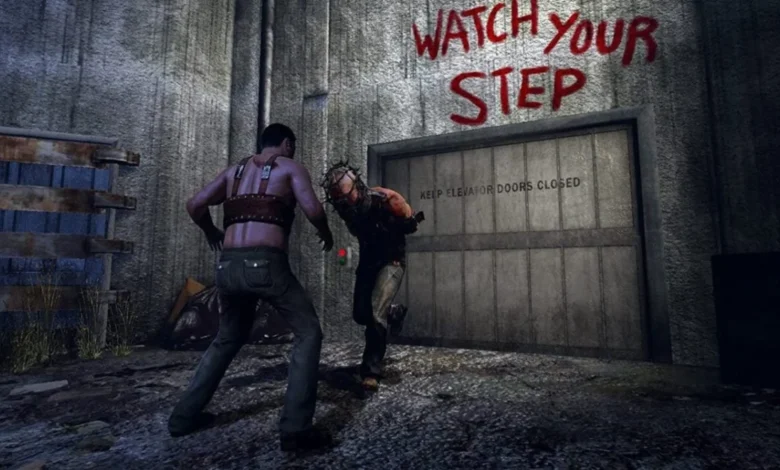
Saw II: Flesh and Blood functioned as a third-person survival horror game with a heavy emphasis on environmental puzzle-solving and quick-time events (QTEs). The gameplay loop forced players to navigate grim, industrial environments—ranging from dilapidated hotels to abandoned factories—while managing a limited inventory and executing complex mechanical interactions under pressure.
One of the most distinct design choices was the combat system, which relied heavily on QTE-based interactions. While intended to simulate the frantic, high-stakes nature of the films, the execution was often cited as rigid. The game also required players to make moral choices regarding the survival of non-player characters. These "life or death" scenarios mirrored the film series’ core philosophical conceit: the idea that victims must prove their "will to live" through extreme sacrifice.
A notable, if divisive, narrative twist involved the game’s prologue. Players initially control a character named Campbell, a drug-addicted individual whose choices carry permanent consequences for the protagonist, Michael. It is eventually revealed that the two narratives are interconnected, with Campbell’s decisions directly dictating the trajectory of Michael’s fate. This branching path design allowed for multiple endings, incentivizing replayability—a common tactic in the 2010s gaming landscape to extend the longevity of shorter, linear experiences.

Critical Reception and Commercial Performance
Upon its release, Saw II: Flesh and Blood faced significant critical backlash. While some fans of the franchise appreciated the adherence to the lore and the inclusion of iconic traps, the broader gaming press was largely unforgiving. Critics pointed to technical limitations, such as inconsistent frame rates, repetitive puzzle design, and an over-reliance on QTEs that felt uninspired compared to the emerging standards of the survival horror genre at the time.
Review aggregators at the time reflected a consensus that the game failed to capture the tension of the film series. Publications argued that the transition from a passive viewing experience to an active one stripped the traps of their psychological weight, turning them into mundane chores rather than moments of terror. The poor reception of the title ultimately stalled the momentum of the Saw gaming brand, leading to a long hiatus for the property in the interactive space.
The Bloober Team Pivot: A New Era
The announcement that Bloober Team—a studio renowned for its psychological horror pedigree, including the Silent Hill 2 remake and Blair Witch—is developing Saw: Genesis represents a significant shift in strategy. Bloober Team has carved a niche for itself in "walking simulator" and atmospheric horror, focusing on narrative depth and psychological tension rather than traditional combat or simplistic QTEs.
The implication for the franchise is clear: the industry is attempting to move away from the trap-heavy, action-oriented gameplay of the Zombie Studios era in favor of a more nuanced, narrative-first approach. By leveraging a developer known for high-fidelity environmental storytelling, the stakeholders behind Saw: Genesis are signaling a desire to elevate the intellectual property (IP) to align with modern standards of prestige horror gaming.
Broader Implications for Licensed Horror
The history of Saw in video games serves as a cautionary tale for film-to-game adaptations. Historically, licensed horror games have struggled to reconcile the "sensation" of the film with the "agency" of the player. When the player has too much control, the helplessness—the hallmark of the Saw experience—is often lost. Conversely, if the game is too restrictive, it fails to engage as a piece of interactive software.
The broader implications are that horror franchises require more than just aesthetic fidelity to be successful in the digital sphere. They require a mechanical loop that reinforces the themes of the source material. If Bloober Team can successfully integrate the moral ambiguity and claustrophobic dread of the Saw universe into a modern engine, it could revitalize the brand and prove that the franchise remains relevant in an increasingly crowded horror market.
Looking Toward the Future
As the industry prepares for the release of Saw: Genesis, the metrics for success will likely be measured by the game’s ability to balance fan expectations with modern gameplay mechanics. The failures of 2010 provided a blueprint for what to avoid, specifically the pitfalls of over-reliance on repetitive mechanics and the shallow implementation of branching narratives.
Official statements regarding the new project have remained sparse, maintaining a sense of mystery consistent with the franchise’s marketing style. However, the involvement of a studio with a proven track record in the genre suggests a departure from the "tie-in" model that defined the previous decade. Whether Saw: Genesis can achieve the critical success that eluded its predecessors remains to be seen, but the shift in development talent indicates that the franchise is entering a new, more serious phase of its existence. The lessons learned from the struggle of Saw II: Flesh and Blood will undoubtedly serve as the foundation upon which the next chapter of the Jigsaw legacy is built.