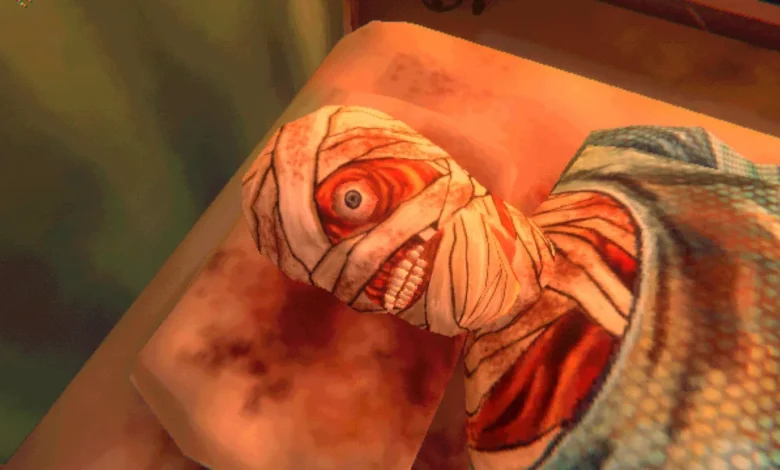
Sony Pictures has officially announced a new cinematic collaboration to adapt the critically acclaimed indie horror video game Mouthwashing, tasking filmmaker Karyn Kusama with directing the project. The production will be bolstered by the involvement of genre veteran Scott Derrickson, who is set to produce the film alongside his partners at the Crooked Highway banner, C. Robert Cargill and Vince Cheng. This project marks a significant expansion of Sony’s recent strategic focus on high-concept horror, following the studio’s successful partnerships with visionary directors in the genre space.
The announcement arrives on the heels of a rapid development cycle for the property. Released in 2024 by developer Wrong Organ and publisher Critical Reflex, Mouthwashing quickly established itself as a standout title within the psychological horror subgenre. Its transition from a digital experience to a major motion picture highlights the growing trend of prestige studios acquiring successful independent games that demonstrate a strong narrative and aesthetic identity.
A Proven Creative Team
The selection of Karyn Kusama as director indicates a clear tonal direction for the adaptation. Kusama, whose filmography includes the cult classic Jennifer’s Body and the tense, slow-burn thriller The Invitation, has demonstrated a consistent ability to navigate themes of psychological isolation and social breakdown.
The screenplay for the adaptation is being penned by the writing duo of Matt Manfredi and Phil Hay. Their collaboration with Kusama is long-standing; the trio previously worked together on The Invitation, a film widely cited for its precise pacing and claustrophobic atmosphere. By reuniting this specific creative team, Sony appears to be prioritizing a character-driven approach to the source material, ensuring the film maintains the unsettling, visceral nature of the original game.
Scott Derrickson’s involvement as a producer further underscores the studio’s commitment to genre integrity. Known for his work on Sinister and The Black Phone, Derrickson’s expertise in balancing supernatural elements with grounded emotional stakes aligns with the narrative structure of Mouthwashing. His production company, Crooked Highway, has become a reputable force for elevating horror projects, and his oversight is expected to provide the necessary framework to translate the game’s abstract, often hallucinatory, visual language into a coherent cinematic experience.

Narrative Context and Source Material
At its core, Mouthwashing follows the crew of the Tulpar, a space freighter that becomes stranded following a catastrophic crash on a remote asteroid. The narrative is defined by extreme isolation, the rapid depletion of critical life-support supplies, and the gradual disintegration of the crew’s social structure.
The game is widely lauded for its "Overwhelmingly Positive" reception on platforms such as Steam, where it garnered praise for its unique art style, narrative depth, and the manner in which it explores the psychological toll of impending death. Unlike traditional survival horror titles that rely on jump scares, Mouthwashing is noted for its focus on character trauma and the surreal nature of its reality. The transition to film presents a challenge in maintaining the game’s "trippy" and disorienting perspective, but the involvement of a director known for psychological tension suggests that the production team aims to preserve this distinctive atmosphere.
Chronology of Development
The path to this adaptation has been remarkably swift:
- 2024: Mouthwashing is released on PC, receiving widespread critical acclaim for its writing and psychological horror elements.
- October 2026: Initial industry reports surface regarding a potential film adaptation of the property.
- Mid-October 2026: Sony Pictures officially confirms the acquisition and development of the film, naming Karyn Kusama as director.
- Late October 2026: Simultaneous to the film announcement, the title sees a multi-platform release on PlayStation 5, PlayStation 4, Nintendo Switch, Xbox Series X|S, Xbox One, and Xbox on PC, significantly expanding the game’s reach and audience ahead of the film’s production.
The rapid succession of these events suggests that Sony is synchronizing its cross-media strategy to maximize the property’s visibility. By releasing the game on all major consoles at the same time the film is being greenlit, the studio is effectively building an integrated ecosystem for the brand, ensuring that audiences are familiar with the source material well before the film reaches production.
Market Implications and Industry Trends
The decision to adapt Mouthwashing is part of a broader shift in Hollywood, where studios are increasingly looking to the indie gaming scene for intellectual property that possesses strong artistic merit rather than just mass-market commercial name recognition. The success of recent adaptations, such as the Resident Evil franchise, has validated the strategy of empowering auteur directors to take creative liberties with game source material.
By hiring a filmmaker like Kusama—who has extensive experience in both film and television, including directing episodes of the acclaimed series Yellowjackets and The Terror—Sony is positioning Mouthwashing as a "prestige horror" project. This approach mirrors recent successes where low-budget, high-concept horror films have outperformed their production costs, proving that audiences are increasingly drawn to projects that prioritize tone and psychological depth over generic action tropes.

Furthermore, the involvement of the Crooked Highway team suggests a lean, efficient production model. By keeping the core creative team tight and relying on established partnerships, the studio likely intends to maintain tight control over the film’s budget and vision, mitigating the risks typically associated with big-budget adaptations.
Broader Impact on the Horror Genre
The adaptation of a niche, highly psychological game into a feature film signals a maturation in how gaming IP is treated by major studios. For years, video game adaptations were criticized for attempting to replicate the mechanics of gameplay, often to the detriment of narrative flow. Modern adaptations, however, are increasingly focusing on the "spirit" of the game—its themes, its setting, and its emotional impact—rather than its specific interactive systems.
Mouthwashing, with its limited cast and contained setting, is perfectly suited for this transition. The story of five crew members in a freighter is a classic trope, but the game’s execution—which involves shifting timelines, unreliable narrators, and existential dread—offers a rich template for a high-quality psychological thriller.
As the industry observes this project, the success of the film will likely hinge on the creative team’s ability to translate the game’s abstract, non-linear storytelling into a format that works for a general cinema audience. With the support of Sony and the proven pedigree of the Kusama-Manfredi-Hay trio, the project is positioned to become a benchmark for how indie horror games can be successfully elevated to the screen.
In conclusion, the development of the Mouthwashing film represents a calculated and promising venture for all parties involved. By marrying a critically lauded indie horror narrative with a proven creative team capable of handling complex, dark subject matter, the project is well-positioned to resonate with both existing fans of the game and a broader audience seeking high-quality, atmospheric horror. As production moves forward, industry observers will be watching closely to see how this team navigates the transition from the interactive medium to the silver screen, marking yet another milestone in the evolving relationship between gaming and cinema.