Paramount and Warner Bros. Discovery Merger Postponed Until June 2027 Amidst Legal Challenges

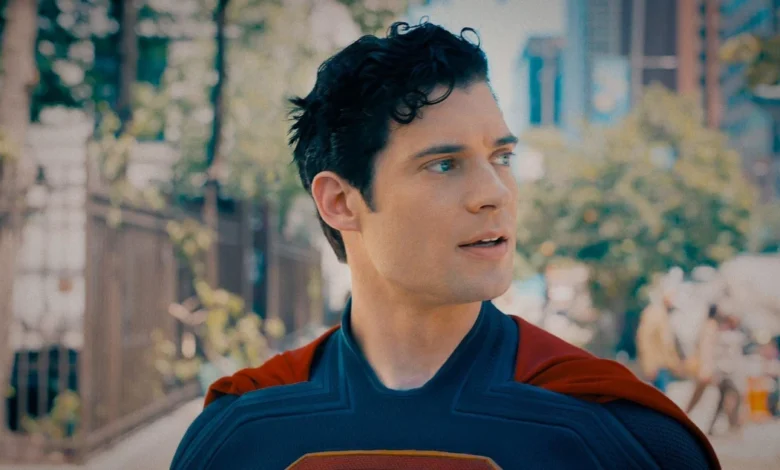
The proposed mega-merger between media giants Paramount Global and Warner Bros. Discovery (WBD) has encountered a significant roadblock, with both companies agreeing to postpone the transaction until at least June 1, 2027. This delay, formally announced in a federal court filing, comes as a direct consequence of ongoing lawsuits filed by the powerful Writers Guild of America (WGA) and a coalition of state attorneys general, which are currently being vetted for their merit. The extended timeline introduces a fresh wave of uncertainty for employees, investors, and particularly for the highly anticipated cinematic slate of DC Studios, including James Gunn’s upcoming Superman sequel, Man of Tomorrow.
Unpacking the Postponement: Legal and Financial Ramifications
The decision to push back the merger date stems from a critical stipulation involving a "ticking fee" that would have penalized Paramount Global with a staggering $7 million per day for failing to close the deal by an initial deadline of September 30th. Given the complexity and expected duration of the legal challenges, meeting this aggressive deadline was deemed impossible. The federal court filing explicitly states, "The transaction at issue in State of California and Writers Guild shall not close, be consummated, or otherwise be completed and Defendants will not take any steps, directly or indirectly, to integrate or consolidate their operations pursuant to the Transaction until the earlier of (1) five days after the merits determination in these matters, or (2) June 1, 2027."
This language is crucial, as it indicates that while June 1, 2027, serves as an ultimate hard stop for the current postponement, the merger could theoretically proceed much sooner if the courts rule in favor of Paramount and WBD, finding the lawsuits to be without merit. A favorable legal outcome could see negotiations and integration efforts resume just five days after such a determination. However, the American judicial system is often characterized by its deliberative pace, suggesting that the full 2027 delay is a distinct possibility.
Background: The Impetus for Consolidation in a Shifting Media Landscape
The discussions between Paramount Global and Warner Bros. Discovery are not isolated incidents but rather symptomatic of a broader trend of consolidation sweeping through the entertainment industry. In an era dominated by intense competition from streaming giants like Netflix and Disney+, traditional media conglomerates face immense pressure to achieve greater scale, streamline operations, and consolidate intellectual property to remain competitive. Both Paramount Global, led by Shari Redstone’s National Amusements, and Warner Bros. Discovery, under CEO David Zaslav, have been grappling with significant debt burdens and the challenging economics of the direct-to-consumer streaming model.
Paramount, in particular, has been a focal point for potential acquisitions and mergers for some time. Before the WBD talks, there were widely reported discussions with Skydance Media, led by David Ellison, which ultimately fell apart. Other entities, including Apollo Global Management, had also reportedly expressed interest in various Paramount assets. These ongoing overtures highlight the perceived vulnerability and strategic importance of Paramount’s extensive library of content and diverse portfolio of assets, which include Paramount Pictures, CBS, MTV, Comedy Central, Nickelodeon, and the Paramount+ streaming service.
Warner Bros. Discovery, itself a product of the merger between WarnerMedia and Discovery, Inc. in 2022, has been aggressively pursuing cost-cutting measures and a strategy focused on maximizing the value of its vast content library, which spans Warner Bros. film and television studios, HBO, CNN, and the Max streaming service. The potential combination of these two entities promised significant synergies, including the potential for substantial cost savings through overlapping operations, enhanced bargaining power with advertisers and distributors, and a formidable combined content library capable of competing with any rival.
A Chronology of Merger Talks and Legal Challenges
The path to this postponement has been fraught with complex negotiations and increasing legal scrutiny:
- Late 2023: Initial reports surface regarding high-level discussions between David Zaslav of WBD and Shari Redstone regarding a potential merger. These talks were initially exploratory but quickly gained traction.
- Early 2024: Details begin to emerge about the structure of a potential deal, including the possibility of a non-cash transaction or a complex asset exchange. The market reacts with mixed signals, reflecting both the potential benefits and the significant regulatory hurdles.
- Spring 2024: The Writers Guild of America (WGA) publicly voices concerns and subsequently files a lawsuit. The WGA, fresh off a historic strike that highlighted issues of compensation, AI, and industry consolidation, argues that a merger of this magnitude would further reduce competition for writers, stifle creative opportunities, and concentrate undue power in the hands of fewer employers. Their lawsuit alleges potential antitrust violations and harm to the labor market.
- Mid-2024: A coalition of state attorneys general follows suit, filing their own legal challenges. These lawsuits typically focus on broader antitrust concerns, potential harm to consumers through reduced choice or increased prices for streaming services, and the impact on local economies where these studios operate. Specific concerns often include vertical integration, market dominance, and the potential for anti-competitive practices in content licensing and distribution.
- September 30th (Original Deadline): This date was initially set as a target for the merger’s completion, a deadline that became increasingly untenable as legal challenges mounted. The "ticking fee" mechanism was likely put in place to incentivize a swift resolution or compensate Paramount for delays.
- Today (Federal Court Filing): Both Paramount Global and Warner Bros. Discovery formally commit to the postponement until June 1, 2027, or five days after a merits determination on the lawsuits, whichever comes first. This formalizes the delay and sets a new, albeit contingent, timeline for the proposed merger.
- July 9, 2027: This is the current release date for Man of Tomorrow, placing the film’s theatrical debut perilously close to the merger’s potential new closing window.
Legal Hurdles: A Deep Dive into Antitrust and Labor Concerns
The lawsuits by the WGA and state attorneys general represent formidable obstacles. The WGA’s legal action underscores a growing concern within labor unions regarding the impact of corporate consolidation on workers’ rights and economic stability. Their arguments likely center on:
- Reduced Buyer Power: Fewer major studios mean fewer potential buyers for scripts and creative talent, potentially driving down compensation and limiting opportunities for writers.
- Standardization and Creative Control: Fears that consolidation could lead to more standardized content, fewer niche projects, and less creative freedom as merged entities prioritize broad appeal and cost efficiency.
- Intellectual Property Rights: Concerns over how a merged entity might manage and exploit existing and future intellectual property, impacting creators’ long-term financial interests.
On the regulatory front, the state attorneys general are likely employing traditional antitrust arguments under federal and state laws. Their primary concerns would include:
- Market Concentration: The merger would create an even larger player in an already consolidated media landscape, potentially leading to reduced competition in film production, television programming, and streaming services.
- Consumer Harm: Less competition could translate to fewer content choices, higher subscription prices, or a degradation of service quality for consumers.
- Vertical Integration Concerns: Both companies own production studios, distribution networks, and streaming platforms. A merger could lead to preferential treatment for their own content, disadvantaging independent producers and smaller distributors.
- Innovation Stifling: Reduced competition can lead to less incentive for innovation in content creation and technology.
The legal process for vetting these claims for merit is exhaustive, involving extensive discovery, expert testimony, and potentially protracted court battles. The outcome will depend heavily on how courts interpret current antitrust laws in the context of the rapidly evolving digital media ecosystem.

Financial and Corporate Strategy in Limbo
The $7 million-per-day "ticking fee" is a stark illustration of the financial stakes involved. While the postponement saves Paramount from immediately incurring this fee, the delay itself carries significant opportunity costs. For Paramount, it means continued uncertainty, potentially hindering its ability to make long-term strategic investments or divest non-core assets. For WBD, it delays the realization of anticipated synergies and the potential for a stronger competitive position.
Both companies must now navigate an extended period of strategic limbo. This could force them to re-evaluate their independent strategies. Paramount might intensify efforts to find alternative buyers for specific assets or explore partnerships to bolster its financial position. WBD might double down on its current strategy of debt reduction and optimizing its Max streaming service, perhaps looking for smaller, less scrutinized acquisitions or partnerships. The market reaction to the postponement is likely to be mixed, with some investors relieved by the avoidance of immediate regulatory headaches, while others may be concerned by the prolonged uncertainty and the potential for the deal to collapse entirely.
The Shadow Over DC Studios and Man of Tomorrow
Perhaps one of the most visible impacts of this merger delay, particularly for popular culture enthusiasts, falls squarely on DC Studios and its ambitious new cinematic universe, spearheaded by James Gunn and Peter Safran. The Superman sequel, Man of Tomorrow, is currently slated for a July 9, 2027 release date, putting its debut just weeks after the earliest potential closing date of the merger.
This temporal proximity creates a significant "looming shadow" over the film. While Paramount and WBD would undoubtedly want to protect Man of Tomorrow‘s performance—given that the Superman franchise is a cornerstone of DC Studios’ and Warner Bros.’ long-term merchandising and content strategy—the timing could prove awkward. James Gunn, the cast (including David Corenswet as Superman, Nicholas Hoult as Lex Luthor, and Lars Eidinger as Brainiac), and the production team would likely face incessant press questions about the merger’s implications during the film’s promotional tour. Such external corporate drama could distract from the creative vision and the narrative of the film itself, potentially influencing public perception.
Man of Tomorrow is not just any superhero sequel; it is positioned as a critical second chapter for the new DCU. Following the perceived underperformance of Supergirl (as noted in the original article, implying a previous DCU film featuring the character), the pressure on Man of Tomorrow to reaffirm the DCU’s viability on the big screen is immense. The film is set to feature an expanded roster of DC heroes, including Milly Alcock’s Supergirl, Xolo Maridueña’s Blue Beetle, and the return of the "Justice Gang" from the first film (Nathan Fillion’s Green Lantern, Edi Gathegi’s Mister Terrific, and Isabela Merced’s Hawkgirl). A successful launch is paramount to building momentum for the interconnected universe.
Should the merger proceed close to the film’s release, it could introduce uncertainty regarding creative control, future budgetary allocations, and the overall strategic direction of the DCU. While Gunn and Safran have been granted significant autonomy, a new corporate structure could inevitably lead to shifts in priorities or oversight, even if subtle. Fan anxiety surrounding major studio mergers is well-documented, often fueled by fears of content rationalization, franchise reboots, or changes to beloved properties.
Broader Industry Context: The Scrutiny of Mega-Mergers
The delay of the Paramount-WBD merger is also indicative of a broader trend of increased regulatory scrutiny on mega-mergers across various industries, particularly under the current U.S. administration. Antitrust enforcers at the Department of Justice (DOJ) and the Federal Trade Commission (FTC) have signaled a more aggressive stance against consolidation, citing concerns about its impact on competition, consumer welfare, and labor markets. Recent high-profile challenges, such as the FTC’s opposition to the Microsoft-Activision Blizzard deal (though it eventually closed after concessions), highlight this renewed focus.
The entertainment industry, with its unique blend of cultural influence and economic power, is a frequent target for such scrutiny. The proposed merger between Paramount and WBD touches upon nearly every facet of media: film production, television networks, news, sports, and streaming. Its potential implications for content diversity, pricing, and employment are therefore far-reaching.
Conclusion: A Waiting Game with High Stakes
The postponement of the Paramount Global and Warner Bros. Discovery merger until at least June 1, 2027, marks a significant pause in what would have been one of the largest media consolidations in recent history. Driven by the formidable legal challenges posed by the Writers Guild of America and state attorneys general, this delay injects considerable uncertainty into the strategic plans of both companies.
While the "ticking fee" mechanism is temporarily averted, the prolonged limbo carries its own set of challenges, from continued financial uncertainty for Paramount to strategic stagnation for WBD. For the dedicated fanbase of DC Studios, the timing is particularly precarious, casting a potential shadow over the critical launch of Man of Tomorrow. The outcome of the ongoing legal battles will not only determine the fate of this specific merger but will also send a powerful signal about the future of media consolidation and the extent to which antitrust and labor concerns will shape the entertainment landscape for years to come. All eyes will remain on the federal courts as they deliberate on the merit of these pivotal lawsuits.