Unwrapping the Terror: New Suburban Holiday Thriller Blends Festive Cheer with High-Stakes Survival Horror

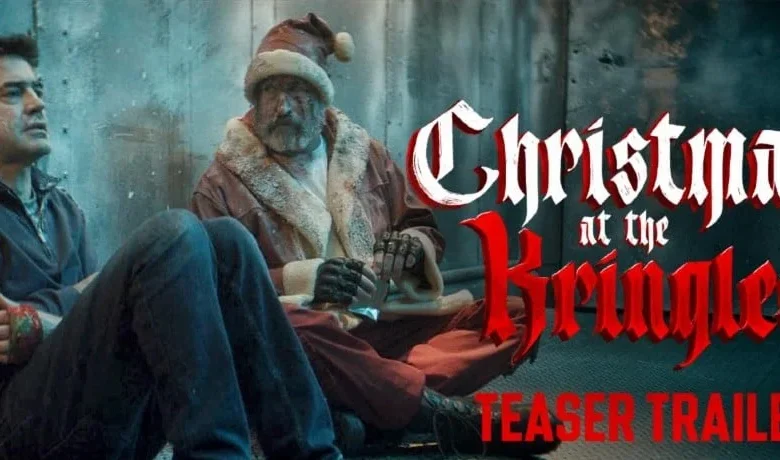
The intersection of suburban domesticity and extreme psychological horror has long served as fertile ground for cinematic exploration, but a forthcoming feature-length project is poised to push the boundaries of holiday-themed genre entertainment. The narrative centers on the Severson family, who relocate to a seemingly idyllic suburban neighborhood in pursuit of a peaceful, fresh start. However, their domestic tranquility is almost immediately challenged by their next-door neighbors, the Kringles, whose commitment to the Christmas holiday extends far beyond traditional seasonal parameters. The Kringles celebrate Christmas 365 days a year, an eccentric lifestyle choice that initially registers as quaint or mildly eccentric before rapidly deteriorating into a deeply unsettling psychological trap. As parents Mark and Julie Severson observe their young son developing an increasingly intense and uncharacteristic attachment to the Kringle household, tensions mount. The situation culminates in a heated confrontation, prompting Mark to venture next door to retrieve his family, only to uncover a sinister conspiracy: the Kringles are systematically working to hypnotize and indoctrinate their neighbors. What ensues transforms the domestic drama into a high-octane, life-or-death rescue mission, featuring Mark alongside an unexpected ally—a rogue, battle-hardened Santa Claus—engaged in an action-packed fight for survival.
Main Facts and Production Overview
The project, which has recently garnered significant attention following the release of its official promotional teaser trailer, represents a unique fusion of dark psychological thriller tropes and explosive action choreography. Helmed by an independent creative team specializing in genre-bending cinema, the film taps into a growing consumer appetite for subversions of traditional holiday tropes. While conventional holiday cinema typically relies on sentimentality, romance, or lighthearted comedy, this production embraces the macabre, utilizing the forced cheer and relentless commercial iconography of year-round Christmas celebrations as a vehicle for suspense.
At its core, the film examines the vulnerability of modern suburban families seeking community and acceptance, only to fall victim to predatory isolation tactics disguised as hospitality. The casting of the central characters—the cautious Seversons, the deceptively cheerful Kringles, and the enigmatic, ass-kicking iteration of Saint Nicholas—has been designed to ground the fantastical elements in high-stakes dramatic reality. Industry analysts note that blending horror and action within a recognizable seasonal framework is a calculated strategy to capture both the traditional holiday viewing demographic and dedicated horror-action enthusiasts.
Chronology of the Narrative Arc
To fully understand the trajectory of the film’s plot, critics and audiences have looked closely at the sequence of events outlined in the official production synopsis and promotional materials. The narrative unfolds across several distinct phases, each escalating the tension and transforming the genre tone from mundane drama to outright survival horror.
Phase one establishes the Severson family’s relocation. Seeking a quiet environment away from the pressures of urban life, Mark and Julie Severson purchase a home in a picturesque, seemingly cooperative suburb. The early scenes focus on the mundane realities of unpacking, adjusting to new routines, and attempting to integrate into the local community.
Phase two introduces the disruption. The Kringles are introduced not as hostile interlopers, but as overly welcoming neighbors whose lives are completely consumed by Christmas decorations, carols, and festivities regardless of the calendar month. Initially, Mark and Julie attempt to humor the behavior, viewing it as harmless eccentricity. However, the tone shifts as the psychological manipulation becomes apparent. The Kringles begin exerting a powerful, hypnotic influence over the neighborhood children, most notably the Seversons’ son, who becomes increasingly detached from his parents and psychologically dependent on the Kringle household.
Phase three marks the inciting incident of the action narrative. Following a tense verbal exchange regarding their son’s welfare, Mark decides to confront the Kringles directly on their own turf. Entering the meticulously decorated house after dark, he uncovers the horrifying reality: the festivities are a facade masking a cult-like operation designed to brainwash and subjugate the neighborhood through hypnotic indoctrination.
Phase four constitutes the climax and resolution, shifting the narrative entirely into survival mode. Trapped and outmatched by the cultists, Mark forms an unlikely alliance with a rogue, heavily armed figure embodying a gritty, uncompromising version of Santa Claus. Together, they execute a high-stakes, action-packed rescue mission to extract Mark’s family and dismantle the Kringles’ operation before the indoctrination becomes irreversible.
Supporting Data and Genre Trends in Holiday Horror
The release of this project arrives at a time when the horror-comedy and holiday-horror subgenres are experiencing a substantial commercial renaissance. Over the past decade, studios and independent filmmakers alike have discovered that audiences are increasingly receptive to alternative holiday narratives.
According to data compiled by independent box office tracking firms, holiday-themed horror films—ranging from supernatural creature features like Krampus (2015) to violent satirical slashers like Violent Night (2022) and Terrifier 3 (2024)—have consistently outperformed traditional genre expectations. Violent Night, for instance, grossed over $76 million worldwide against a modest production budget, proving that audiences respond enthusiastically to narratives that pair classic holiday iconography with brutal action choreography and dark humor.
Furthermore, psychological thrillers focusing on suburban cult dynamics have seen a steady rise in streaming and theatrical demand. Sociological studies on suburban isolation indicate that modern audiences resonate with narratives that explore the uncanny nature of seemingly perfect neighborhoods, where conformity is enforced through psychological coercion rather than overt violence. By grafting this sociological anxiety onto the hyper-visible, relentlessly cheerful framework of Christmas culture, the filmmakers tap into a potent mix of nostalgia and dread.
Official Responses and Industry Reception
While full-scale promotional interviews and press junkets are still rolling out, initial reactions from film critics, genre festivals, and online fan communities have been overwhelmingly positive regarding the teaser’s tonal ambition. Early discourse on social media platforms and specialized horror journalism sites highlights the stark contrast between the brightly lit, candy-cane-striped visuals and the genuinely menacing undertones of the antagonist family.
Representatives for the production team have emphasized that the film does not intend to mock the holiday itself, but rather to explore what happens when traditional symbols of warmth and generosity are weaponized by bad actors. "We wanted to take something universally recognized as a source of comfort and joy and twist it just enough to make the audience question the safety of their own living rooms," noted a member of the creative team in an early production statement.
Industry insiders have also praised the logistical ambition of staging a large-scale action-survival sequence within a constrained suburban setting, combining practical stunt work with atmospheric lighting to heighten the claustrophobic tension of the Kringle residence.
Broader Impact and Cultural Implications
The cultural resonance of pairing Christmas with terror and action speaks to broader societal attitudes toward commercialized holidays. For many contemporary consumers, the relentless pressure to achieve seasonal perfection—characterized by flawless decorating, gift-giving, and forced familial harmony—can induce significant anxiety. Films that subvert these expectations provide a form of catharsis, allowing audiences to process the exhaustion of holiday pressures through the safe lens of genre fiction.
Moreover, the thematic exploration of hypnotic indoctrination in a suburban setting mirrors contemporary concerns regarding misinformation, psychological manipulation, and the vulnerability of impressionable youth to insular ideological groups. While the film wraps these themes in the entertaining packaging of a rogue Santa Claus action sequence, the underlying narrative asks serious questions about trust, community boundaries, and the lengths to which parents will go to protect their children from unseen psychological threats.
As the release date approaches, anticipation continues to build across horror and action film communities. With its unique blend of suburban dread, cult-like psychological manipulation, and explosive third-act heroism, this upcoming feature is well-positioned to carve out a distinct space within the modern cinematic landscape, proving once again that terror can wear any costume—even one dusted in artificial snow and red velvet.