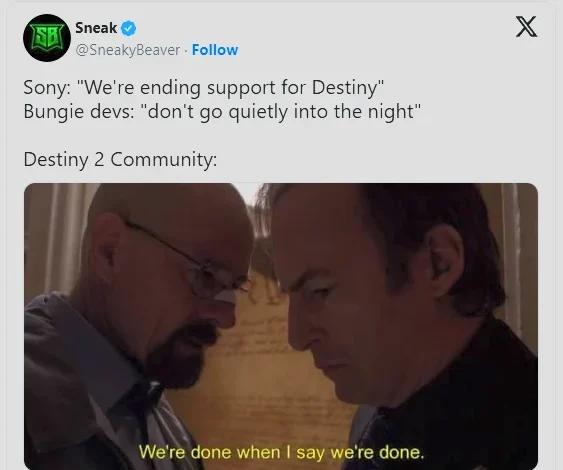
In a stunning reversal that has sent shockwaves through the gaming industry, Bungie has officially announced that Destiny 2 will be removed from its previously declared end-of-life maintenance mode. Just three months after the studio communicated its intention to cease all live-service content updates, leadership has pivoted, declaring that the franchise remains foundational to the company’s long-term strategic future. This sudden shift in policy includes the ambitious commitment to begin restoring previously vaulted content—a significant portion of which was paid for by players—effectively reversing a controversial multi-year strategy that had been designed to mitigate technical bloat.
The Chronology of a Corporate Pivot
The timeline of this reversal highlights the volatility of modern live-service management. In mid-2024, Bungie executives informed the player base that Destiny 2 would shift to a state of minimal maintenance, effectively ending the cycle of seasonal content, raids, and narrative expansions. The announcement was intended to allow the developer to focus resources on new projects, most notably the extraction shooter Marathon.
However, the decision triggered an immediate and sustained backlash. The ensuing three months saw a coordinated campaign from the Destiny community, ranging from digital protests on social media to a Change.org petition that garnered over 400,000 signatures. By late summer, the discourse had evolved from simple dissatisfaction to a coordinated effort to influence Sony Interactive Entertainment, Bungie’s parent company, by flooding official livestreams and public channels with demands for the franchise’s continuation or the development of a sequel.
Community Mobilization and Digital Advocacy
The scale of the community response was unprecedented. Influential content creators, such as "My name is Byf," "Aztecross," and "Mactics," played pivotal roles in maintaining visibility for the campaign. By leveraging their platforms, these creators ensured that the "We Want Destiny 3" sentiment remained a constant presence in the comments sections of Sony and Bungie’s other promotional materials.
Data analysts noted that throughout this period, Destiny 2’s concurrent player counts remained significantly higher than those of Bungie’s newer, experimental titles, providing empirical evidence to the company that the franchise still possessed a massive, active, and financially viable audience. The persistence of this player base, coupled with the support of rival communities such as those within the Warframe ecosystem, created a PR environment that proved impossible for leadership to ignore.
Official Statements and the Role of Leadership
Bungie’s recent internal communications suggest that a transition in leadership was a catalyst for this shift. With new stakeholders and executives now at the helm, the studio has re-evaluated its portfolio. In an official statement, Bungie representatives noted that the "foundational" nature of Destiny necessitates a return to active development.
The reversal is widely interpreted as a gesture of "good faith" toward a community that had felt abandoned. By pledging to restore content removed under the "Destiny Content Vault" (DCV) initiative—which had previously stripped the game of various planetary destinations, campaigns, and raids—Bungie is attempting to address the primary grievance of the long-term player base: the lack of permanence and value for historical purchases.
Expert Analysis and Market Implications
The decision to reverse course raises significant questions regarding the operational capacity of the current studio. Following major layoffs earlier this year, Bungie has lost a substantial amount of institutional knowledge. Industry analysts point out that restoring vaulted content is not merely a "toggle" switch; it requires extensive re-engineering to ensure that legacy assets function within the current game engine, which has seen numerous technical updates since those assets were first removed.
The financial calculus behind this decision is also complex. Maintaining a live-service game of this magnitude requires a continuous influx of capital, typically generated by consistent expansions and microtransactions. Whether the returning content will be offered as a free restoration or integrated into a new monetization model remains to be seen. Furthermore, the decision to pivot back to Destiny 2 could potentially cannibalize resources meant for other projects, suggesting that Sony may have determined that the guaranteed revenue of an established title is preferable to the high-risk gamble of launching new, untested intellectual properties.
Skepticism and the "Cycle of Disappointment"
Despite the widespread celebration, a segment of the community remains cautious. Subreddits such as r/DestinyTheGame have hosted numerous discussions advising players to temper their expectations. Long-time community figures, including Datto and Gladd, have expressed skepticism, noting that the studio’s track record regarding content management and communication has historically been fraught with "unfulfilled promises."
The prevailing concern is that this reversal might be a temporary measure to stem the tide of bad publicity, rather than a long-term commitment to quality. For many, the memory of the original content vaulting process remains fresh, and there is a palpable fear that the studio may struggle to manage the sheer volume of technical debt that the reintroduction of legacy content entails.
The Influence of the "Thin-Skinned" Corporate Culture
A particularly compelling aspect of this narrative is the apparent influence of the community on Sony’s executive team. In the modern era of high-stakes corporate gaming, it is rare for a major publisher to reverse a strategic product decision based on fan outcry. Analysts suggest that the constant, high-volume pressure on Sony’s social media accounts—often distracting from their broader marketing efforts for hardware and other software—forced a re-evaluation.
While it is difficult to quantify exactly how much the campaign influenced the C-suite compared to internal financial metrics, the timing is telling. Executives at major corporations are increasingly sensitive to brand damage that could affect broader stock performance. By effectively "uncanceling" the game, Sony has signaled a move toward stability and the protection of its most valuable asset in the looter-shooter genre.
Looking Toward the Future
The restoration of Destiny 2 is a case study in the power of collective consumer action in the digital age. It represents a rare moment where a gaming community succeeded in forcing a multinational corporation to reverse a core strategic decision.
However, the road ahead is fraught with technical and creative challenges. The team at Bungie must now reconcile the demands of a veteran player base with the realities of a smaller, leaner development staff. Whether the studio can deliver a sustainable, high-quality experience that respects the history of the franchise while providing enough innovation to keep it relevant remains the ultimate test.
For now, the "Guardians" of the community have secured a victory. The narrative of the game, much like the game itself, has been granted a stay of execution. As Bungie moves forward, the eyes of the entire industry will be fixed on how they handle this monumental task of reconstruction. The question is no longer whether Destiny 2 will end, but whether it can evolve into the game its community has always demanded it to be. The "unkillable" nature of the franchise has been proven, but its long-term health will depend on a level of transparency and execution that the studio has yet to consistently demonstrate.
As the dust settles on this announcement, the community remains in a state of cautious optimism. The victory lap is well underway, but the hard work of rebuilding the game’s legacy has only just begun. The challenge for Bungie will be to prove that this decision was based on a genuine, sustainable vision for the future, rather than a reactive measure designed to silence the loudest voices in the room. For a franchise built on themes of resilience and rebirth, this latest chapter serves as a fitting, if unexpected, addition to the Destiny lore.
Related posts: