Microsoft Details Next-Generation Xbox Project Helix Emphasizing Neural Rendering, Absolute Backward Compatibility, and Console-First Design

Microsoft has officially begun unveiling the foundational architecture and strategic philosophy behind Project Helix, its highly anticipated next-generation gaming ecosystem. In a comprehensive feature published in a digital commemorative magazine celebrating the 25th anniversary of the Xbox brand, Xbox Vice President of Next Generation Jason Ronald outlined the core tenets of the upcoming hardware family. Addressing industry speculation, Microsoft stressed that Project Helix represents a dedicated console experience capable of bridging the divide with PC gaming, rather than a conventional PC masquerading as a living-room console.
The announcements provide the clearest look yet at Microsoft’s hardware roadmap, which reportedly encompasses multiple form factors, including a traditional home console and a portable handheld device. By prioritizing innovative rendering techniques, seamless multi-device progression, and an uncompromising commitment to game preservation, Microsoft is signaling a major paradigm shift for the future of interactive entertainment.
Clarifying the Hardware Identity: Console-First Engineering
A central theme of Microsoft’s recent disclosures is the precise hardware classification of Project Helix. For years, the boundary between traditional home consoles and open personal computers has steadily blurred, leading to speculation that Microsoft’s next system might simply be a pre-built Windows PC designed for the living room. Ronald firmly rejected this characterization, emphasizing a distinct design philosophy.
"When we think about Project Helix, it’s really designed to be the ultimate gaming machine," Ronald stated. "Helix is designed to be a console that is also capable of playing games from your PC. It is not a PC that can also play console games."
This distinction carries significant implications for user experience. While open-platform PCs often require users to manage driver updates, adjust graphical settings, and troubleshoot software incompatibilities, Project Helix aims to deliver the frictionless, turn-key experience historically associated with dedicated consoles. At the same time, Microsoft intends to satisfy power users and enthusiasts by offering deep levels of customizability regarding performance metrics and visual settings, ensuring that hardcore gamers can still fine-tune their hardware without sacrificing the streamlined interface of a dedicated gaming ecosystem.
The Technological Leap: Neural Rendering and Efficiency
Rather than relying purely on brute-force computational improvements—such as targeting increasingly prohibitive 8K resolutions or hyper-elevated refresh rates—Microsoft is anchoring its next-generation visual ambitions in generative-AI-adjacent technology known as neural rendering.
In an era defined by soaring development costs, global component supply chain challenges, and exorbitant pricing for high-end computer hardware, traditional scaling methods have become increasingly unsustainable. Neural rendering provides a transformative alternative, utilizing advanced machine learning models to generate high-fidelity frames efficiently without demanding exponential increases in computational horsepower, raw silicon size, or memory bandwidth.
"This is a big reason why we’re really focused on advancements like neural rendering because it’s an entirely new way to generate a frame without requiring more computational horsepower," Ronald explained. "It is about leveraging new technical advancements such as neural rendering to deliver a new level of visual fidelity in more efficient and innovative ways. I think you’re going to see more innovation over the next three to five years than you’ve seen in the last 10 years."
This hardware strategy closely aligns with broader corporate directives articulated by Xbox chief Asha Sharma, who recently highlighted the democratizing potential of generative artificial intelligence within game development. Sharma noted that emerging toolsets will soon empower individual creators to achieve development capabilities that previously required entire studio nations, potentially injecting a massive wave of creativity and diversity back into the games industry.
Backward Compatibility and Game Preservation as a Core Pillar
Beyond hardware performance and visual fidelity, Project Helix places an unprecedented emphasis on game preservation and cross-generational compatibility. For decades, the rapid evolution of computer and console architecture meant that transitioning to a new hardware generation routinely rendered entire libraries of older software obsolete.
Microsoft has spent the last two generations reversing this trend through robust backward compatibility programs on the Xbox One and Xbox Series X/S. With Project Helix, the company is attempting to codify preservation not merely as an after-market feature, but as a foundational design requirement from the earliest stages of hardware engineering.
"Game preservation is core to Xbox," Ronald asserted. "Not only do we feel like it’s the right thing for the industry, we feel a deep responsibility as one of its biggest platforms and publishers. For the first 30 years of game development, nobody really thought about game preservation when they were designing their hardware, when they were building their games."
Under the Project Helix umbrella, users will reportedly have instantaneous access to four generations of the Xbox library alongside their accumulated player progression. This backward-compatibility pipeline is designed to secure software longevity, ensuring that games purchased today remain playable and fully optimized decades into the future.
The Evolution of Xbox Play Anywhere and Cross-Device Continuity
Building upon the successful framework of the Xbox Play Anywhere initiative, Project Helix is engineered to eliminate physical and geographical barriers to play. Microsoft’s strategy relies heavily on cloud synchronization, unified digital libraries, and seamless state transfer across different hardware form factors.
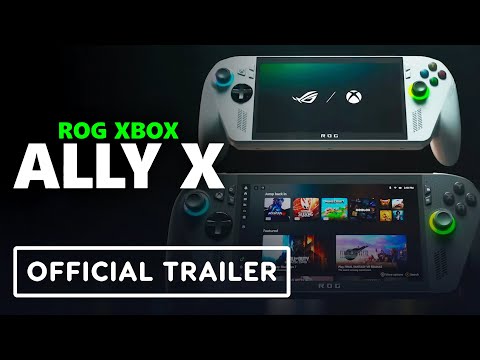
The company’s recent hardware experiments, including the collaborative ROG Xbox Ally X handheld, have served as operational testbeds for this multi-device vision. The goal is to establish a frictionless ecosystem where a user can effortlessly transition from a high-performance home console to a portable gaming device while maintaining exact save states, profile data, and achievements.
"It’s this notion that not only does my library move with me, but my progress moves with me as well," Ronald noted. "Because I fully expect that when I’m in the middle of an 80-hour RPG, if I’m 25 hours into that and I want to play it on another device, I should be able to instantly resume from where I was. Those are things that today are becoming more common, but I think in the future it’s going to be a baseline expectation of all players."
Economic Realities, Pricing Speculation, and Timeline Context
Despite offering extensive structural insights into the technology driving Project Helix, Microsoft executives have remained notably tight-lipped regarding specific pricing structures and official release dates.
Recent industry reports and insider leaks have suggested that the high-end home console variant of Project Helix could command a premium retail price—with estimates reaching up to $1,800—primarily due to the advanced silicon, custom neural processing units, and sophisticated cooling systems required to power next-generation software. Addressing these economic hurdles, Ronald acknowledged the delicate balance required in modern hardware manufacturing.
"It’s a challenging time, but it’s an exciting one," Ronald said, referencing the fiscal realities of contemporary hardware development. "We have to invent entirely new technology to continue to advance the state-of-the-art while also continuing to make things accessible and affordable."
While Microsoft has declined to confirm an exact launch calendar, industry speculation points to a staggered rollout. Reports indicate that a portable handheld iteration of Project Helix could debut as early as the holiday season in 2027, followed by the flagship home console variant the subsequent year. As the 25th anniversary of the Xbox brand prompts reflection on its historical footprint, Project Helix represents Microsoft’s bold blueprint for the next quarter-century of interactive entertainment.
Related posts: