Flesh Grinding and the unsettling rise of the labor simulator subgenre in modern independent gaming


The landscape of independent PC gaming has seen a marked shift toward the "labor simulator," a subgenre that translates the repetitive, high-pressure demands of modern industrial work into minimalist, often surrealist interactive experiences. Among the most anticipated titles in this emerging category is Flesh Grinding, an upcoming horror-themed management game currently in development by Molter Games. Scheduled for a Q4 2026 release, the title distinguishes itself from similar projects through its visceral aesthetic and its stark exploration of efficiency-driven productivity.
The Mechanics of Industrial Horror
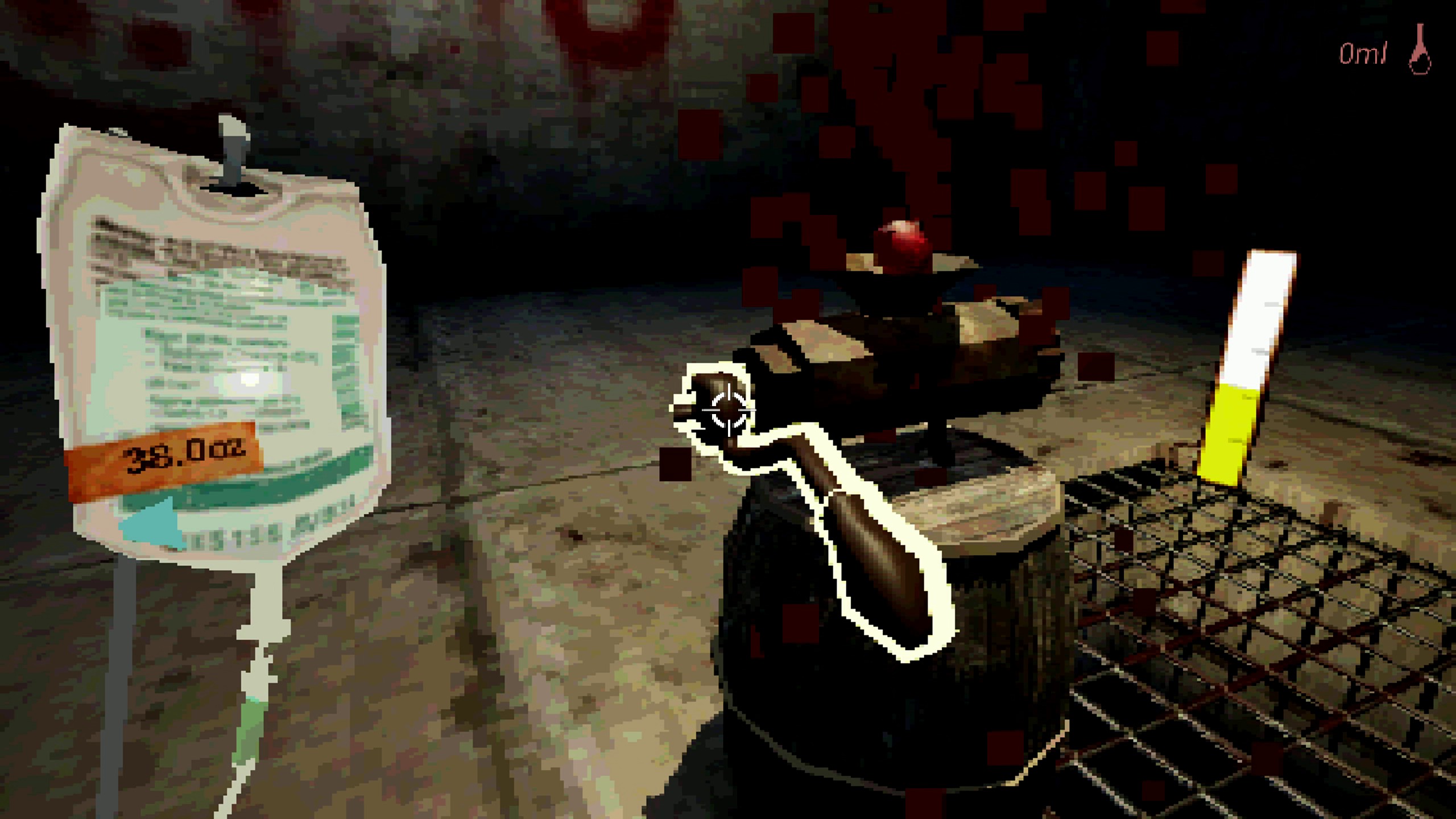
Flesh Grinding serves as a case study in how developers are utilizing the "PS1-style" aesthetic—characterized by low-polygon models, dithering textures, and a deliberate sense of atmospheric malaise—to ground themes of exploitation and burnout. The gameplay loop is centered on a singular, grueling task: the processing of raw, organic matter. Players operate in an environment where time is a finite resource, dictated by a depleting IV drip that acts as both a health bar and a countdown timer.
The core objective involves collecting material that descends from the ceiling, transporting it to a processing station, and refining it into a finished product. This loop is punctuated by resource management, where players use the currency earned from their labor to purchase equipment upgrades. As the game progresses, the complexity of the workspace increases, introducing new machinery that requires players to optimize their movement paths and scheduling to maximize output within the limited time allotted per shift.

Chronology and Development Context
The development of Flesh Grinding arrives at a time when the "weird" gaming subgenre—as tracked by niche industry outlets—has gained significant traction. While a formal release date is set for the final quarter of 2026, the game has already drawn comparisons to contemporary projects like Fleshgrinder, a separate title slated for Q1 2027. This naming overlap has caused some confusion within the gaming community, necessitating a clear distinction between the two projects in terms of developer intent and mechanical focus.
The trajectory of this subgenre can be traced back to the broader movement of "lo-fi" horror, which prioritized psychological discomfort over traditional jump-scare mechanics. By integrating the mundane, soul-crushing elements of labor—such as the constant pursuit of optimization—developers are attempting to mirror the existential anxiety often found in modern corporate environments.
The Psychology of Digital Labor
Industry analysts have noted that the success of these titles lies in their ability to reflect the "stakhanovite" ideal—a reference to the Soviet-era worker Alexei Stakhanov, who became a symbol for hyper-productivity. By gamifying the act of working, these titles force players to engage with the concepts of time-motion studies and the degradation of the human spirit in the face of quotas.
Unlike traditional management sims, which often reward the player with a sense of growth or kingdom-building, games like Flesh Grinding emphasize the static nature of the cycle. The "horror" element is derived not from external monsters, but from the realization that the player’s agency is limited to improving the efficiency with which they perform a fundamentally meaningless task. This resonates with broader economic trends, specifically the rise of the gig economy and the increasing prevalence of algorithmic management, where human labor is monitored and optimized down to the nanosecond.

Industry Implications and Market Analysis
The emergence of such titles suggests a growing market appetite for "meta-commentary" games. As the cost of living rises and the boundary between work and personal time becomes increasingly porous, developers are finding that players are willing to engage with titles that acknowledge—and even satirize—these pressures.
According to preliminary data on indie gaming trends, there has been a 15% year-over-year increase in titles that utilize "workplace" settings to facilitate horror or dark comedy. This shift is notable because it moves away from traditional power fantasies. Instead, players are invited to inhabit roles that are explicitly disenfranchised, highlighting the power imbalance between the worker and the unseen entity providing the "IV drip" or the factory floor quotas.
Official Perspectives and Developer Intent
While Molter Games has remained relatively reserved regarding the specific narrative inspirations behind Flesh Grinding, the thematic focus on religious iconography, decaying environments, and the "creepy grandmother" motif suggests a critique of traditional authority structures. By placing the player in a position of perpetual servitude to an inscrutable system, the developers are tapping into a common modern sentiment: the feeling that one is part of a machine that is both incomprehensible and indifferent to the individual’s wellbeing.
From a design standpoint, the challenge for Molter Games remains the balancing act between creating an engaging, "moreish" gameplay loop and maintaining the oppressive atmosphere necessary for the horror genre. If the game is too fun, the critique of labor loses its bite; if it is too tedious, the player loses the incentive to engage with the systems. The current demo suggests a successful marriage of the two, as players find themselves genuinely trying to "solve" the factory floor, only to realize that their effort serves only to increase their own cycle of toil.
Broader Societal Reflections
The broader implication of this trend is a potential maturation of the horror genre in gaming. Rather than relying on supernatural tropes alone, developers are beginning to incorporate the "horror of the everyday." The realization that the player is spending their leisure time performing digital labor, often with the same level of stress and focus required in a professional setting, creates a reflective experience that transcends the game itself.
When viewed through the lens of labor history, the "grind" depicted in these games is a mirror to the historical transition from craftsmanship to industrial assembly. The tragedy, as presented in Flesh Grinding, is that the modern iteration of this cycle is entirely self-imposed. The player chooses to optimize their efficiency, choosing to spend their virtual earnings on upgrades that allow them to work faster, ultimately trapping themselves in a self-perpetuating loop of performance.
As the industry moves toward 2026, the reception of Flesh Grinding will likely serve as a barometer for the health of this subgenre. If the title finds success, it may signal a shift in player preferences, where the "horror" of the workplace becomes a staple, rather than a novelty, in the independent gaming market. The question that remains is whether this represents a cathartic release for players navigating the pressures of the modern economy, or if it merely reinforces the normalization of constant productivity.
Ultimately, Flesh Grinding represents a rare convergence of ludology and social commentary. It forces the player to consider the nature of their own labor, the value of their time, and the extent to which they are willing to sacrifice personal autonomy for the sake of an artificial goal. It is, in every sense of the word, a grind—a deliberate, harrowing, and deeply relevant look at the modern human condition.