Lionsgate Enlists Mike P. Nelson to Direct the Next Installation of the Iconic SAW Franchise

The long-running and highly influential horror property SAW is officially expanding once again. Lionsgate has announced that filmmaker Mike P. Nelson will direct the next feature in the continuous mythology, working from a screenplay penned by the writing duo Gregory Weidman and Geoff Tock, widely recognized for their work on Below and Dune: Prophecy.

This upcoming project boasts significant heavy-hitting involvement from the franchise’s origins. James Wan, who directed the seminal 2004 original film, and Leigh Whannell, who penned multiple installments and co-created the universe, are returning to produce alongside Jason Blum under the combined banners of Blumhouse and Atomic Monster. While specific plot points and the exact involvement of the franchise’s perennial antagonist, John Kramer (Jigsaw), remain under strict wraps, studio representatives have emphasized that the upcoming film will maintain the unbroken continuity that has defined the series since its inception over two decades ago.

A Legacy of Unbroken Continuity
Unlike many of its contemporaries in the horror genre that frequently rely on reboots, remakes, or alternate timelines, the SAW franchise holds a distinct industry record. As noted by studio public relations, it stands as the longest-running theatrical horror franchise built upon a single, uninterrupted narrative mythology.

Since the release of the micro-budget independent feature in October 2004, the series has continuously expanded its complex lore across multiple sequels. The narrative has systematically explored the life, legacy, apprentices, and victims of John Kramer, a brilliant yet terminally ill civil engineer who subjects morally flawed individuals to elaborate, inescapable lethal traps—or "games"—designed to test their will to live.
The franchise’s unprecedented durability has seen it span ten theatrical features to date, weathering shifts in cinematic trends, changes in directorial visions, and complex narrative timelines that frequently jump backward and forward across the chronology of the central characters. By preserving this continuous timeline, the upcoming installment led by Nelson avoids the narrative resets common in contemporary horror franchises like Halloween, Texas Chainsaw Massacre, or Scream, ensuring that longtime fans see the logical progression of the universe’s established rules and consequences.
The Creative Team and Behind-the-Scenes Perspectives
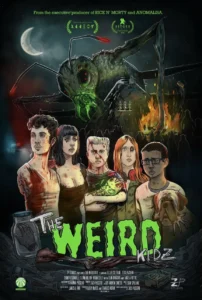
The pairing of Mike P. Nelson with franchise architects James Wan and Leigh Whannell signals a deliberate strategy by Lionsgate and producers to blend fresh directorial energy with foundational reverence. Nelson has built a formidable reputation within modern genre filmmaking through his distinct visual style and visceral approach to tension. His previous directorial efforts include the intense survival-horror reboot Wrong Turn (2021) and the slasher remake Silent Night, Deadly Night, alongside his feature Beware Boiña.
Expressing his enthusiasm for stepping into the iconic horror universe, Nelson highlighted the collaborative nature of the production. "Being asked to play in this twisted sandbox with James is nothing short of a dream come true," Nelson stated. He praised the screenplay delivered by Weidman and Tock, noting that it successfully mirrors the atmospheric mystery of the original motion picture while introducing innovative, brutal concepts that align with the core moral philosophy of the series.

James Wan, whose directorial debut with the original Saw fundamentally altered the landscape of 2000s horror and popularized the "torture porn" or "splatterpunk" subgenres of the era, emphasized the importance of safeguarding the intellectual property’s integrity. "Making the original Saw was a defining experience for me, so it was essential to find a director who would honor that world," Wan remarked. He lauded Nelson’s raw, distinctive filmmaking voice and inventive genre sensibilities as the ideal fit for the project.

Lionsgate Motion Picture Group Chair Adam Fogelson underscored the symbolic weight of Wan’s return and the studio’s confidence in Nelson’s vision. Fogelson pointed out that Wan’s passion for nurturing the upcoming film echoes the director’s own breakthrough trajectory two decades prior, positioning Nelson as a leading voice among a new generation of genre filmmakers.

Chronology of the SAW Franchise
To understand the weight of this upcoming production, it is essential to review the historical trajectory of the cinematic property:
- October 2004: The original Saw, directed by James Wan and written by Leigh Whannell, premieres at the Toronto International Film Festival before an October theatrical release, grossing over $103 million worldwide against a meager $1.2 million budget.
- 2005–2010: A yearly tradition is established, with Saw II, Saw III, Saw IV, Saw V, Saw VI, and Saw VII (released as Saw 3D) arriving annually every October, cementing the brand as a Halloween box-office staple.
- October 2017: After a seven-year hiatus, the franchise returns with the franchise’s eighth installment, Jigsaw, directed by The Spierig Brothers.
- May 2021: The Chris Rock-led spinoff/sequel Spiral: From the Book of Saw attempts to expand the cinematic universe into procedural thriller territory.
- October 2023: Saw X arrives in theaters to widespread critical acclaim, serving as a midquel set between the events of the first and second films, heavily featuring Tobin Bell’s return as John Kramer and revitalizing commercial interest.
- September 2026: Lionsgate officially announces the development of the next franchise installment, bringing in Mike P. Nelson to direct and reuniting Wan, Whannell, and Blumhouse.
Broader Industry Implications
The announcement of this latest chapter underscores the immense commercial and cultural value of established intellectual property in the modern theatrical landscape. In an era where original horror concepts often struggle to secure major studio financing outside of independent or micro-budget avenues, legacy franchises with built-in audiences remain paramount for major studios like Lionsgate.
Furthermore, the collaboration between Lionsgate, Blumhouse Productions, and Atomic Monster represents a consolidation of modern horror powerhouses. By uniting Blumhouse—known for its highly profitable micro-budget model and dominance in contemporary horror—with the foundational creators of one of the 21st century’s most lucrative horror properties, the studio is signaling a concerted effort to maximize both creative pedigree and box-office reliability.

As production gears up under Nelson’s direction, industry analysts will be closely watching to see how the creative team navigates the delicate balance between satisfying longtime devotees of the franchise’s intricate lore and attracting a new demographic of horror enthusiasts. For now, with the foundational architects back at the helm and a fresh visionary in the director’s chair, the machinery of the franchise continues to turn.