Hideo Kojima announces Bill Skarsgård as the lead for Physint as the studio transitions to an Xbox-led production model

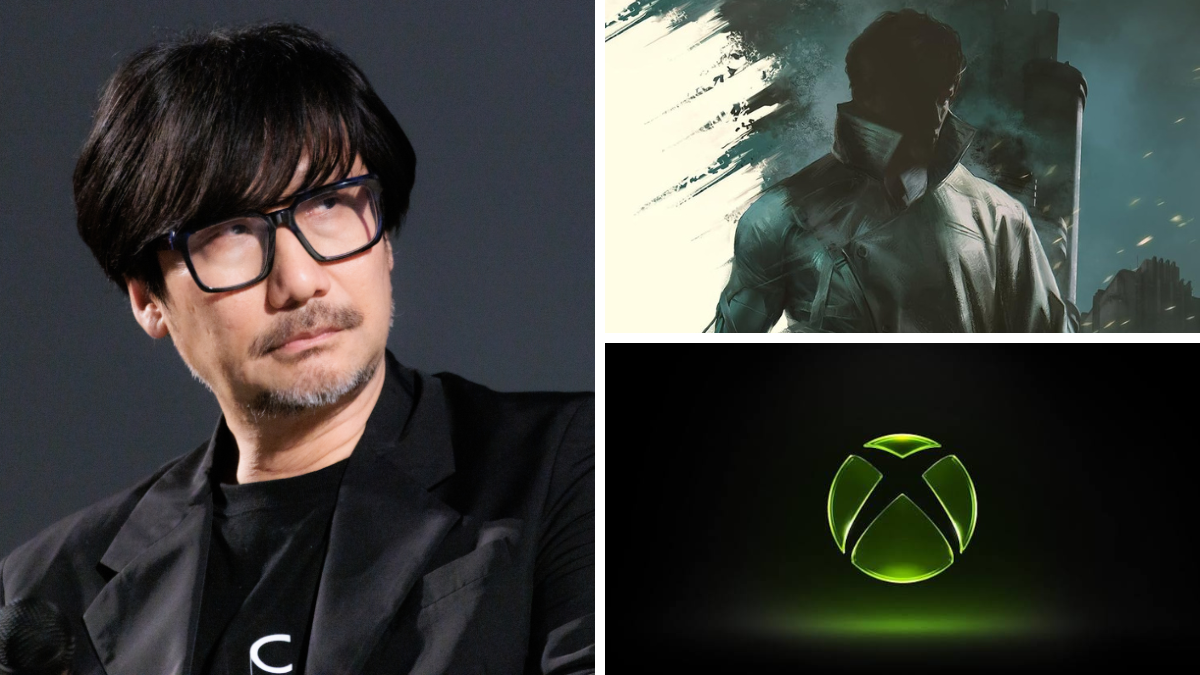
Hideo Kojima, the visionary creator behind the Metal Gear Solid series, has officially confirmed that actor Bill Skarsgård will headline his upcoming stealth-action title, Physint. The announcement, delivered via the developer’s social media channels, serves as a significant milestone for a project that has navigated a tumultuous production cycle over the past year. Alongside the casting update, Kojima reaffirmed the participation of Brendan Fraser, Lee Joon-gi, and Minami Hamabe, while unveiling a new promotional poster featuring the tagline, "The Next Cold War Begins."
The confirmation of the cast, coupled with the revelation that legendary designer Yoji Shinkawa will oversee character and mechanical design, provides much-needed clarity for a project that had recently been shrouded in uncertainty. This update follows a widely reported departure from a partnership with Sony Interactive Entertainment, marking a pivot toward a new strategic alignment with Microsoft’s Xbox division.
A Timeline of Production and Transition
The trajectory of Physint has been anything but conventional. Originally conceptualized during Kojima’s tenure as a developer heavily supported by the PlayStation ecosystem, the project was intended to be a spiritual successor to the tactical espionage genre that defined Kojima’s career at Konami. However, the development timeline hit significant hurdles that eventually strained the relationship between Kojima Productions and Sony.
According to industry reports, the partnership dissolved primarily due to escalating budgetary concerns and missed development milestones. Sources close to the project indicated that the ambitious nature of Physint—a game designed to blur the lines between cinema and interactive media—required resources and timelines that exceeded Sony’s internal projections. Consequently, the collaboration, which had previously yielded the PlayStation-exclusive Death Stranding, was terminated.
Following this split, Kojima Productions entered into a new agreement with Xbox. This transition represents a major shift in the console landscape, as the title will now be developed under the Microsoft banner. While fans were initially concerned that this move would result in the cancellation of the project or a complete overhaul of its core components, the recent cast announcements suggest that the creative vision remains largely intact.
Casting Decisions and Creative Direction
The selection of Bill Skarsgård as the lead character, tentatively referred to as "John Physint," marks a departure from earlier speculation. Industry analysts and fans had hypothesized that the role might go to actors with established track records in auteur-driven media, with names like Robert Pattinson frequently surfacing in online discussions. Skarsgård, however, brings a specific intensity to the role, bolstered by his recent performance in the 2024 adaptation of Nosferatu.
The decision to retain Brendan Fraser, Lee Joon-gi, and Minami Hamabe suggests that the game’s narrative structure, which appears to be a multi-national espionage thriller, remains grounded in the original script. By reaffirming this ensemble, Kojima is signaling that the fundamental DNA of the project—the story, the character motivations, and the tactical gameplay loops—has survived the studio’s transition between publishers.
Perhaps most significant to the game’s aesthetic identity is the involvement of Yoji Shinkawa. As the primary visual architect for the Metal Gear series and Death Stranding, Shinkawa’s return to the role of character and mechanical designer ensures that Physint will possess the distinct visual language that has become a hallmark of Kojima’s work. His presence provides a sense of continuity that is vital for long-time fans who associate his sketches and mechanical concepts with the depth and immersion of Kojima’s previous titles.
Technical Hurdles and the Decima Engine Dilemma
A critical point of analysis regarding the future of Physint is the status of the Decima engine. Developed by Guerrilla Games, a subsidiary of Sony Interactive Entertainment, the engine was the foundation for Death Stranding and the Horizon franchise. Because the engine is proprietary to Sony, the shift to an Xbox-backed production model introduces a complex technical challenge.
If Kojima Productions cannot continue to use the Decima engine due to licensing restrictions, the studio faces the prospect of either building a new engine from the ground up or migrating the project to an industry-standard framework such as Unreal Engine 5. Either path necessitates a significant amount of development time, which explains why the game, while now featuring a finalized cast, may still be in the mid-to-early stages of production. Analysts have noted that this migration could be the primary reason for the project’s reported delays, as transitioning an entire project’s assets to a new engine is a process that can take years of engineering labor.
The Broader Strategic Context: Xbox vs. PlayStation
The migration of Physint to the Xbox platform is reflective of a broader, more aggressive strategy by Microsoft to secure high-profile Japanese developers. In recent years, Xbox has sought to diversify its catalog by partnering with established auteurs, with the goal of expanding the reach of its Game Pass service and its console footprint in the Asian market.
For Kojima, the move offers a different kind of creative autonomy. While Sony is known for its rigorous internal quality control and strict project management, Microsoft’s recent approach to external partnerships has been characterized by greater financial flexibility and a focus on long-term growth. However, this flexibility comes with the burden of expectation. Given that Physint was previously flagged for budget overruns, the pressure on Kojima Productions to deliver a commercially viable product under the new agreement is higher than ever.
The Role of O.D. and Future Expectations
Beyond Physint, Kojima is also overseeing the development of O.D. (Overdose), another project being published by Xbox. The "Knock" trailer released last year offered a glimpse into a horror-centric experience that appears to tap into the same psychological discomfort seen in the canceled Silent Hills project, P.T.
The concurrent development of two major titles poses a logistical test for Kojima Productions. By prioritizing the marketing of O.D. while simultaneously refining the cast for Physint, the studio is attempting to demonstrate to both fans and investors that it is capable of managing multiple high-budget projects without compromising the quality of either.
Industry Implications and Market Outlook
The announcement of the cast and the "Next Cold War" tagline suggest that Physint will lean heavily into the tactical, high-stakes espionage tropes that made the Metal Gear series a global phenomenon. However, the modern gaming climate is vastly different from the era in which the Metal Gear franchise was at its peak. Today, success is measured not only by critical acclaim but by the ability to maintain player engagement through "live-service" elements, extensive post-launch support, and cross-platform accessibility.
Whether Physint will adhere to a traditional single-player experience or adopt modern multiplayer integration remains to be seen. Given Kojima’s history of innovation, it is likely that the game will attempt to redefine the stealth-action genre rather than simply replicate it.
As the project moves forward under the Xbox umbrella, the industry will be watching closely. The success of Physint will likely serve as a litmus test for the viability of "auteur-driven" triple-A development in an era where game budgets regularly exceed hundreds of millions of dollars. For now, the recruitment of a high-caliber cast and the retention of core creative talent suggest that despite the structural instability of the past year, Hideo Kojima remains committed to delivering a product that balances his unique, cinematic sensibilities with the technological demands of modern interactive entertainment. The "Next Cold War" has officially begun, and the world of gaming remains poised to see if this ambitious project can survive the transition to become the landmark title that its creator intends.
Related posts: