The Golden Age of Comic Books Meets the Modern Market: The Rare Auction of Military Comics #1 and the Storied Legacy of Blackhawk

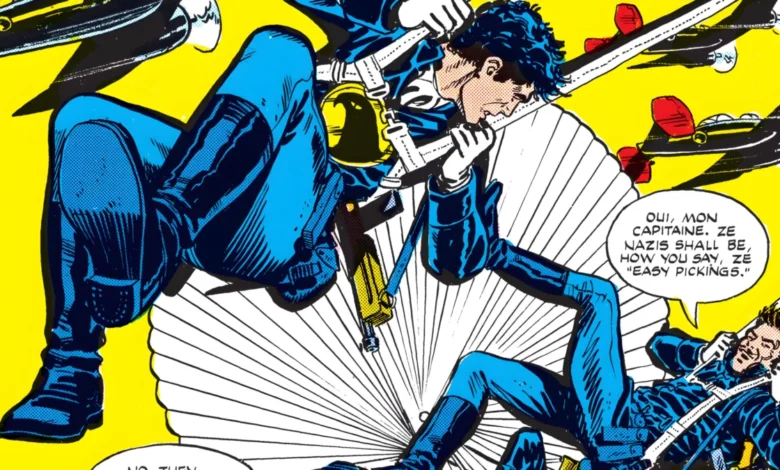
The landscape of American comic books during the 1940s was an entirely different cultural and commercial ecosystem compared to the multi-billion-dollar multimedia industry of the twenty-first century. Long before the Marvel Universe established its dominant cinematic footprint, and even as DC Comics was breaking ground with foundational pillars like Batman and Superman, the comic book market was characterized by raw exposure and wide-open competition. During this era, often referred to as the Golden Age of Comic Books, readership demographics reached historic peaks among children and adolescents. Publishers such as Fawcett, Fox, Quality, and dozens of others populated newsstands with an eclectic array of titles. While some characters from this era transcended their origins to become permanent fixtures of popular culture, others faded into historical obscurity, leaving behind a legacy preserved only by dedicated collectors and rare book historians.
A prominent example of this complex historical trajectory is Blackhawk, the flagship property of Quality Comics and an enduring anomaly within the broader scope of comic book history. As Heritage Auctions prepares to offer an exceptionally rare, high-grade copy of Military Comics #1—featuring the 1941 debut of the iconic pilot—industry analysts and rare book collectors are casting a spotlight back on a character whose five-decade publishing journey mirrors the volatile shifts of the comic book medium itself.
Main Facts of the Auction and the Rarity of Military Comics #1
The upcoming Heritage Auctions sale centers on a certified 9.0 or higher graded copy of Military Comics #1, published in August 1941 by Quality Comics. This specific issue holds monumental significance as the first appearance of Blackhawk and his international squad of elite aviators.
Within the hierarchy of Golden Age key issues, Military Comics #1 occupies a distinct space. While it may not command the astronomical market valuations of Action Comics #1 (Superman’s debut) or Detective Comics #27 (Batman’s debut), high-grade copies of this issue are exceptionally scarce. According to comic book census data, the upcoming auction marks only the third time in history that a copy graded 9.0 (Very Fine/Near Mint) or higher has surfaced on the public auction block. The previous notable sale occurred in 2009, and current bidding trajectories indicate that the hammer price will surpass prior benchmarks, reflecting a robust market for pristine Golden Age artifacts.
Chronological Evolution of Blackhawk: From 1940s Icon to DC Staple
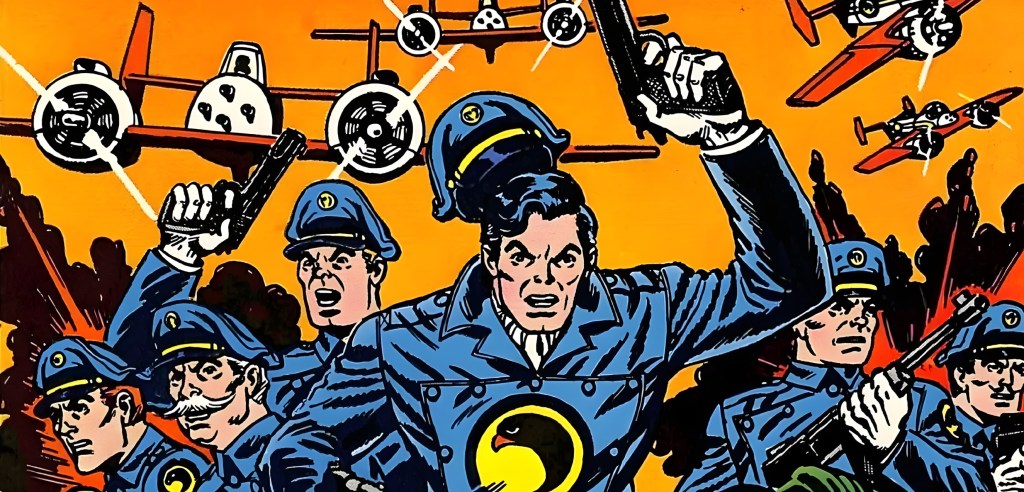
To understand the cultural weight of Military Comics #1, it is necessary to examine the chronological evolution of the character and his creators. Created during a period of intense global conflict, Blackhawk was introduced as an ace pilot of mysterious origin, later established as Janos Prohaska, a Polish Air Force pilot who turned to freedom fighting following the outbreak of World War II. Prohaska assembled the Blackhawk Squadron, a multinational team composed of top-tier warriors and aviators dedicated to combating tyranny. The original roster featured distinct, if occasionally stereotypical, representatives from various allied nations: Stanislaus, Hendrickson, Andre, Olaf, Chuck, and the young ward Wu-Cheng.
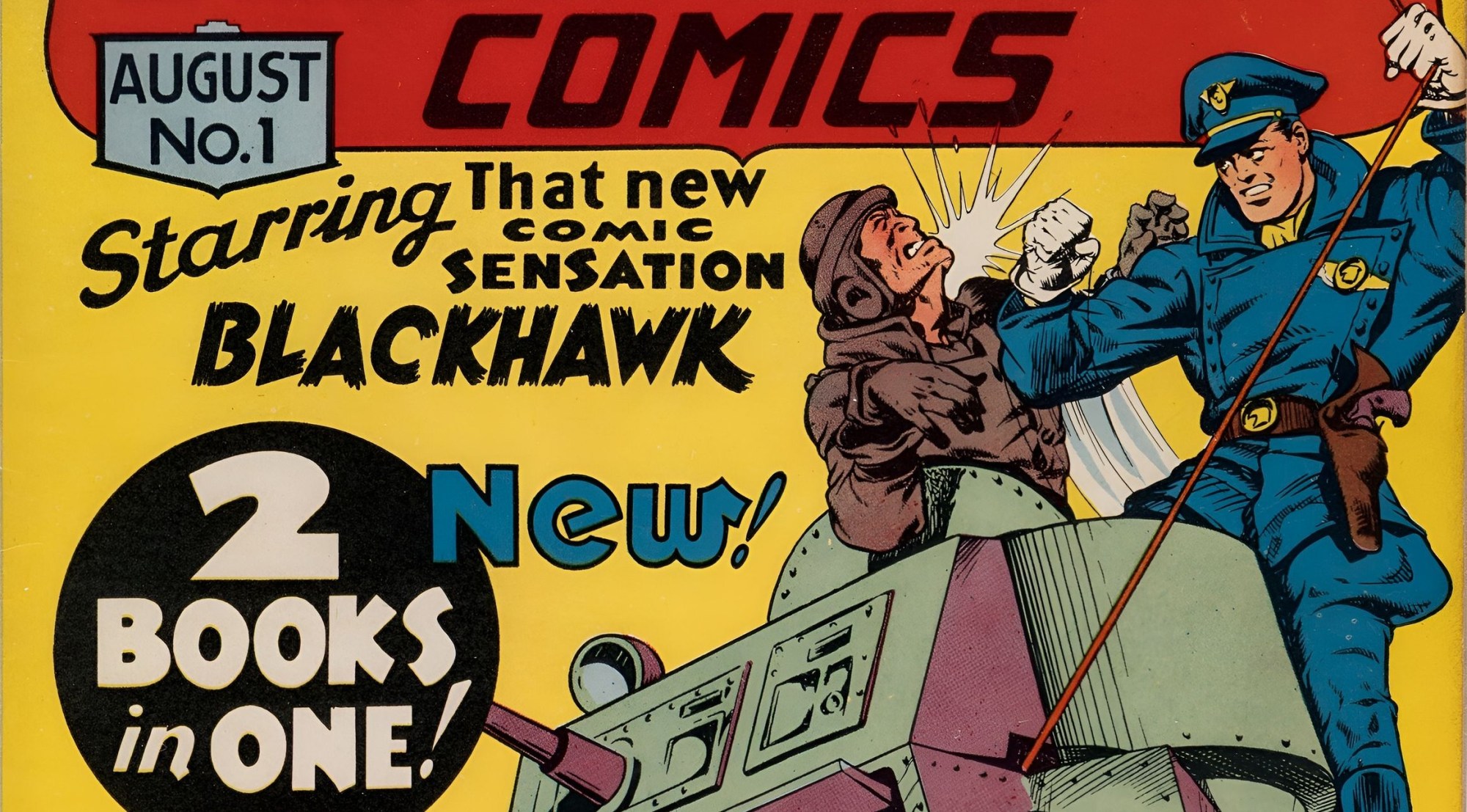
Unlike their contemporaries in the superhero genre, the Blackhawks relied on tactical skill, military hardware, and global reconnaissance rather than superhuman abilities. This grounded, two-fisted adventure formula resonated strongly with readers navigating the realities of World War II. By the early 1950s, however, the comic book industry faced severe structural challenges. The post-war decline of the superhero genre, combined with a cultural panic over violent crime and horror comics—intensified by Dr. Fredric Wertham’s 1954 critique Seduction of the Innocent—led to widespread publisher bankruptcies and increased government and parental scrutiny.
Faced with declining sales and a shifting market, Quality Comics leased its character trademarks to DC Comics in 1956. By 1957, DC officially assumed publication of Blackhawk. Under the new publisher, the series shifted away from gritty, war-time adventures toward science fiction and speculative threats, aligning with DC’s editorial direction for titles like Challengers of the Unknown.
Throughout the Silver and Bronze Ages, the title experienced various creative reboots. In 1959, issue #133 introduced Zinda Blake, known as "Lady Blackhawk," who later became a breakout character in modern DC continuity through writer Gail Simone’s acclaimed run on Birds of Prey. Despite these creative injections, changing reader demographics caused sales to wane. In a remarkably self-aware editorial decision, Blackhawk #228 featured a cover depicting Superman declaring the team "washed up." Subsequent attempts to reinvent the characters as costumed super-spies in the late 1960s, as well as a brief 1976 revival led by writer Gerry Conway, failed to secure long-term commercial viability.
Supporting Data and the Influence of Steven Enterprises
The trajectory of Blackhawk shifted yet again in the 1980s, driven largely by external cultural forces and persistent rumors of a Hollywood adaptation. According to industry historian and writer Mark Evanier, persistent whispers regarding filmmaker Steven Spielberg’s interest in acquiring the film rights prompted DC Comics to re-evaluate the property’s commercial potential.
Recognizing an opportunity to capitalize on renewed public interest, DC relaunched the Blackhawk series in 1982. This iteration returned the characters to their grounded World War II roots while actively modernizing the narrative and softening the ethnic caricatures of the original 1940s runs. This revived title ran for 23 issues, concluding in 1984. Subsequent creative efforts by Howard Chaykin in the late 1980s and a short-lived New 52 reboot in the 2010s attempted to reintroduce the concept to contemporary audiences with varying degrees of success.
Official Responses and Hollywood Ambitions
The intersection of Blackhawk and Hollywood reached a formal milestone in April 2018, when Warner Bros. Pictures officially announced that Steven Spielberg was attached to direct a feature-film adaptation of the property, with a screenplay penned by frequent collaborator David Koepp.
In subsequent years, however, progress on the project has faced delays amid broader restructuring within Warner Bros. Discovery and the reorganization of DC Studios under co-chairmen James Gunn and Peter Safran. Recent statements from both Koepp and studio executives indicate that while the project remains an item of interest, active production has not yet commenced.
Despite the dormant status of the cinematic adaptation, cultural parallels between Blackhawk and Spielberg’s celebrated filmography remain pronounced. Scholars and film historians frequently cite 1952’s fifteen-part cinematic serial Blackhawk: Fearless Champion of Freedom as a foundational blueprint for the classic adventure serials that inspired the Indiana Jones franchise.
Broader Impact and Market Implications
The impending sale of Military Comics #1 at Heritage Auctions underscores a broader trend within the modern collectibles market: the growing appreciation for historical milestones that exist outside the traditional Big Two (Marvel and DC) superhero pantheon. While characters like Superman and Batman continue to dominate box office returns and high-end auction catalogues, the valuation of Quality Comics’ premier title demonstrates sustained collector demand for World War II-era adventure fiction.
From an analytical perspective, the resilience of Blackhawk in the secondary market illustrates the enduring power of nostalgia and the historical significance of the Golden Age. Even as the character struggles to maintain a permanent foothold in contemporary monthly comic book lineups, original artifacts from his 1941 debut remain quintessential pieces of pop culture history—rarities that, in the words of cinematic adventurers, truly belong in a museum.