Looking Back at Star Trek Enterprise: The Prequel Series That Triggered a Franchise Hiatus

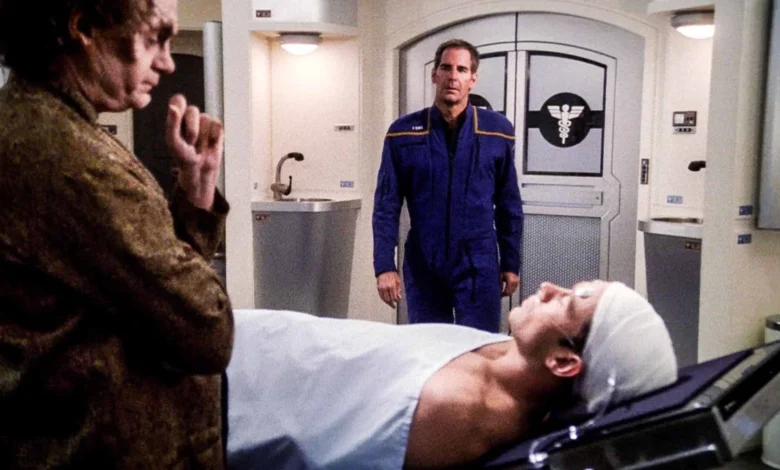
When Star Trek: Enterprise premiered on the United Paramount Network (UPN) on September 26, 2001, it represented a bold new frontier for one of science fiction’s most enduring universes. Designed to revitalize a television franchise that had maintained an uninterrupted presence on the airwaves since 1987, the series was conceived as a prequel. Set a century before the adventures of Captain James T. Kirk, the show aimed to explore humanity’s tentative first steps into deep space, the founding of the United Federation of Planets, and the early, often tense diplomatic relations with iconic species like the Vulcans, Klingons, and Andorians.
However, despite its innovative premise and creative ambitions, the series became deeply polarizing among the established fanbase. Plagued by a steady decline in viewership, shifting network mandates, and controversial creative decisions, Enterprise struggled to capture the sustained cultural footprint of its predecessors. Its eventual cancellation in 2005 brought an eighteen-year era of continuous television production to a sudden halt, triggering a twelve-year hiatus for the franchise on the small screen. Looking back at the trajectory of Star Trek: Enterprise reveals a complex chapter in television history, marked by network pressure, creative risk-taking, and a profound shift in how science fiction was produced at the turn of the millennium.
Chronology of the Franchise Leading to Enterprise
The historical lineage of Star Trek is defined by distinct eras of production, cancellation, and reinvention. The journey began in 1966 with Star Trek: The Original Series, created by Gene Roddenberry and starring William Shatner as Captain James T. Kirk and Leonard Nimoy as Mr. Spock. Despite its cultural longevity, the original show suffered from low ratings and was canceled by NBC after three seasons and 79 episodes. Following a successful run in syndication, the franchise was briefly revived in animation form with Star Trek: The Animated Series from 1973 to 1974, before transitioning into a highly lucrative series of feature films throughout the late 1970s and 1980s.
The modern television golden age of Star Trek commenced in 1987 with the debut of Star Trek: The Next Generation, starring Patrick Stewart as Captain Jean-Luc Picard. The immense success of The Next Generation paved the way for an unprecedented era of consecutive programming. It was immediately followed by Star Trek: Deep Space Nine in 1993 and Star Trek: Voyager in 1995. For several years in the mid-1990s, two distinct Star Trek series aired concurrently, creating a massive logistical and creative machine helmed largely by producers Rick Berman and Brannon Braga.
By the turn of the millennium, however, franchise fatigue began to set in among both viewers and the creative team. Deep Space Nine concluded its seven-season run in 1999, and Voyager was scheduled to wrap up in the spring of 2001. Paramount Pictures and UPN recognized that the franchise needed a fresh start to remain viable in a rapidly changing television landscape. This realization led to the conceptualization of Enterprise, a series intended to strip away the complex political machinery of the 24th-century shows and return to a gritty, exploratory foundation where humanity was the underdog in a vast, mysterious galaxy.
The Premise, Production, and Initial Reception
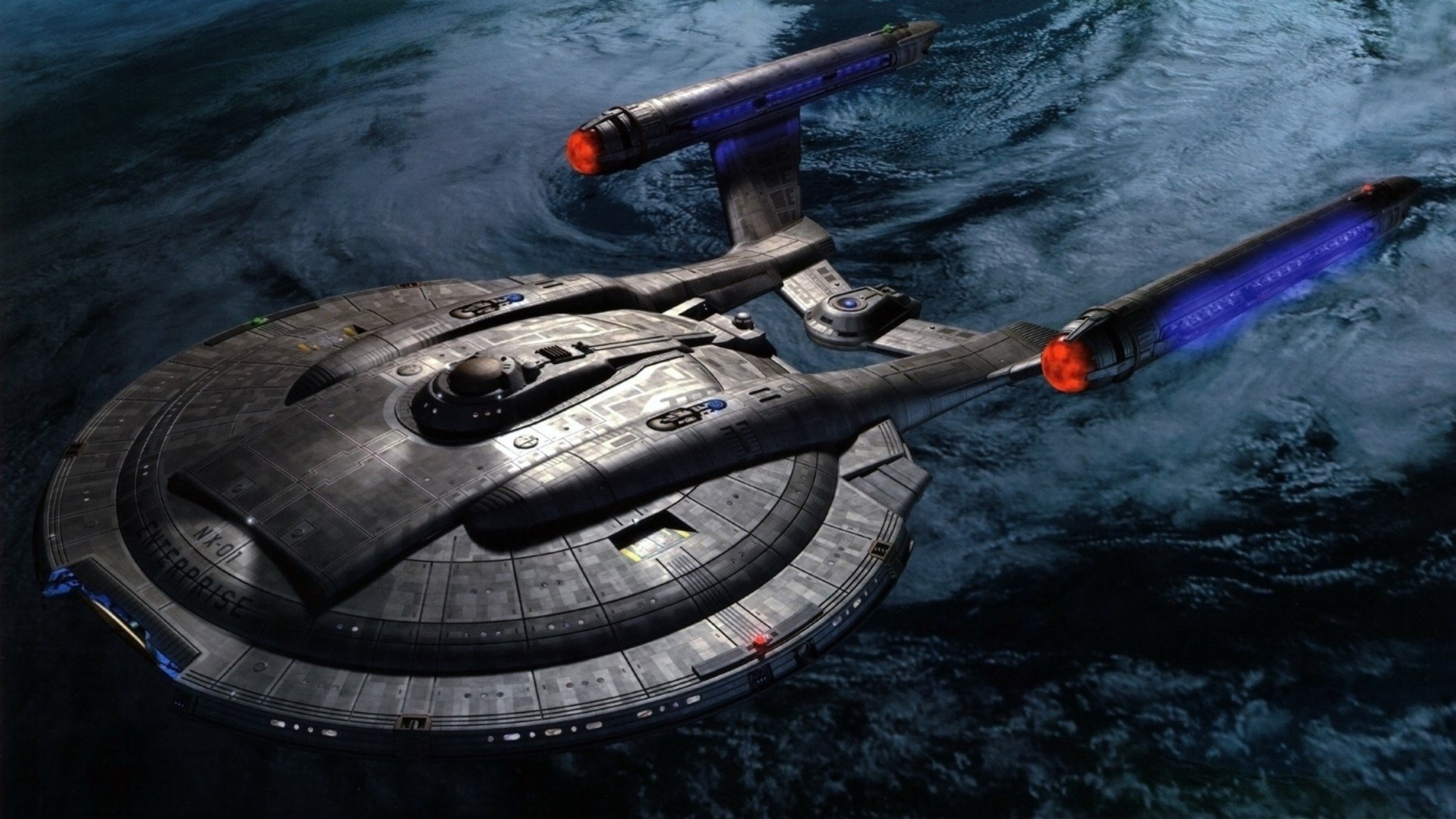
The premiere of Star Trek: Enterprise was anchored by a double-length pilot episode titled "Broken Bow." The narrative established a timeline beginning on Earth in the mid-22nd century, introducing a young Jonathan Archer—played by Scott Bakula—whose father, Henry Archer, designed the warp engine that made deep-space exploration possible. The plot swiftly advanced to the launch of the prototype vessel, the Enterprise NX-01. The inciting incident involved a wounded Klingon courier named Klaang crash-landing in Broken Bow, Oklahoma. Against the cautious advice of their Vulcan science officer, T’Pol (played by Jolene Blalock), Captain Archer and his crew embarked on their maiden voyage to return Klaang to his home world of Qo’noS, inadvertently drawing the attention of interstellar powers.
The core cast also featured Connor Trinneer as Chief Engineer Charles "Trip" Tucker III, Dominic Keating as Tactical Officer Malcolm Reed, Linda Park as Communications Officer Hoshi Sato, and John Billingsley as Doctor Phlox. In its earliest iterations, the production team made deliberate choices to distinguish the series from its immediate predecessors. Most notably, the network decided to drop the "Star Trek" moniker from the title during its first two seasons, airing the show simply as Enterprise. Furthermore, the traditional orchestral theme music, a staple of previous iterations, was replaced by a soft-rock ballad titled "Faith of the Heart," performed by Russell Watson. This decision met with immediate resistance from traditionalists within the fan community.
Data and Viewership Metrics
When Star Trek: Enterprise debuted on September 26, 2001, it commanded impressive initial ratings, drawing an estimated 12.54 million viewers. In the wake of recent real-world events, audiences were eager for escapist television, and the high-profile launch signaled strong preliminary interest. However, the series experienced a swift and continuous erosion of its audience base over the course of its first season.
By the third episode, viewership dropped to approximately 9.18 million. The downward trend persisted unchecked as the novelty of the prequel concept wore off. By the conclusion of the first season, the audience had shrunk to 5.28 million viewers. The downward trajectory continued into the second season, culminating in a season-two finale that drew a mere 3.88 million viewers. These statistics alarmed executives at UPN, who quickly concluded that radical interventions were necessary to salvage the property before it became financially unviable.
Creative Shifts and the Final Seasons
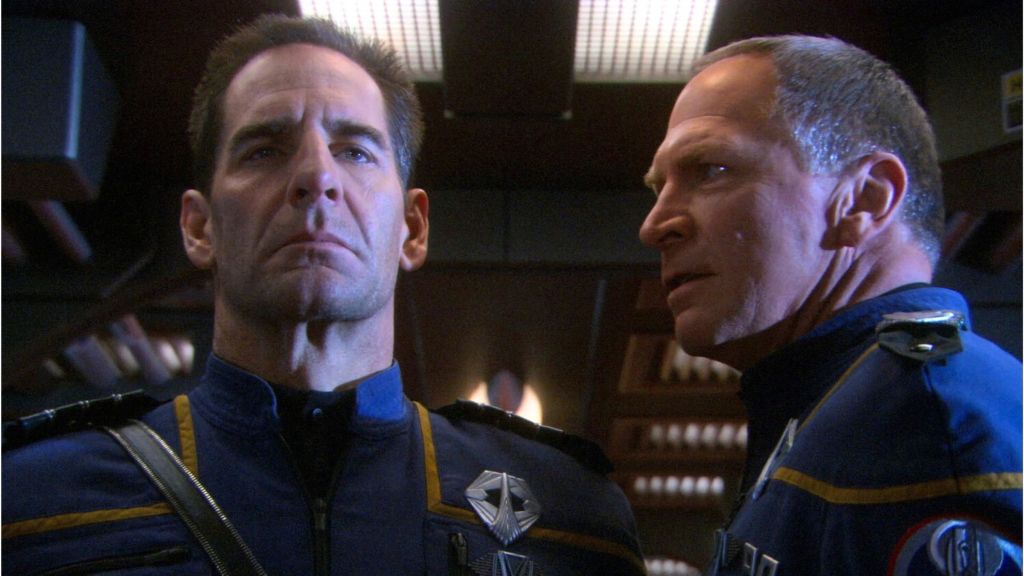
Responding to falling ratings and mounting pressure from network executives, producers Rick Berman and Brannon Braga initiated a significant overhaul for the show’s third season. UPN management explicitly attributed part of the show’s struggles to brand confusion, prompting the network to officially restore the "Star Trek" prefix to the title, rebranding the series as Star Trek: Enterprise.
Beyond cosmetic title changes, the creative direction underwent a fundamental transformation. While the first two seasons relied heavily on standalone, philosophical science-fiction storytelling reminiscent of 1960s television, the third season abandoned this episodic format in favor of a continuous, highly serialized narrative arc. Prompted by an apocalyptic attack on Earth by a mysterious alien coalition known as the Xindi, the crew of the Enterprise was thrust into a grim, action-oriented mission spanning the entirety of the expanse. This darker tone, heavily influenced by contemporary geopolitical anxieties and serialized television dramas, was designed to attract a broader, mainstream demographic.
Despite these adjustments, the ratings failed to recover significantly. For its fourth and final season, the show shifted showrunners, bringing in producer Manny Coto. Under Coto’s leadership, the fourth season focused heavily on multi-episode story arcs that directly addressed long-standing continuity questions within the franchise, bridging the gap between the 22nd-century setting and the events of The Original Series. While critically well-received by remaining fans for its dedication to franchise lore, the fourth season could not overcome the cumulative damage of the previous years.
Cancellation and Broader Implications for the Franchise
On February 2, 2005, UPN officially announced the cancellation of Star Trek: Enterprise, with the series finale airing on May 13, 2005. The decision marked a watershed moment for the entertainment industry: it was the first time a live-action Star Trek television series had been canceled by a network since the conclusion of The Original Series nearly forty years prior. The cancellation effectively brought an 18-year period of continuous television production to a close.
The aftermath of the cancellation resulted in a twelve-year hiatus for Star Trek on television. During this extended absence, the intellectual property migrated to the cinematic medium through director J.J. Abrams’ 2009 reboot film, Star Trek, which utilized an alternate timeline to bypass established continuity and attract new moviegoers. It was not until the launch of Star Trek: Discovery in 2017 on the CBS All Access streaming platform that the franchise returned to episodic television, successfully adapting to the modern streaming era.
Retrospectively, analysts and industry observers view Star Trek: Enterprise as a cautionary tale of franchise fatigue compounded by network interference. While contemporary reassessments of the series often praise its later seasons, particularly the world-building efforts of its final year, its early struggles underscored the difficulty of sustaining a long-running television universe under intense broadcast pressure. The 25-year legacy of Star Trek: Enterprise remains a complex testament to a transitional era in science fiction television, highlighting both the risks of creative reinvention and the enduring passion of a devoted fanbase.