Willam Wisher, T2 & Judge Dredd Co-Writer & The Man James Cameron Called “A Best Friend”, Dead at 71

Wisher died peacefully at his home on July 14, 2024, a report initially shared by journalist David Poland confirmed, with subsequent verification from his brother, John Wisher. Over a distinguished career spanning more than three decades in Hollywood, Wisher cultivated a reputation as one of the industry’s most dependable screenwriters and an invaluable script doctor, particularly within the demanding action and science fiction genres. His extensive contributions include credits on films such as Judge Dredd, The 13th Warrior, and Live Free or Die Hard. However, it is his profound collaboration with James Cameron on the Terminator franchise that stands as the defining achievement of his professional life, solidifying a cornerstone of modern science fiction cinema and leaving an indelible mark on global pop culture.
Early Life and the Genesis of a Cinematic Visionary
Born on May 23, 1953, in Brea, California, William Wisher Jr.’s journey into the world of film began not behind the typewriter, but in front of the camera. Before transitioning to the craft of screenwriting that would ultimately define his professional legacy, Wisher cultivated an early career as an actor. This initial foray into performance provided him with a unique perspective on storytelling, understanding the nuances of character, dialogue, and narrative flow from the vantage point of those who would bring the words to life. This hands-on experience undoubtedly informed his later success as a writer, allowing him to craft scripts that were not only imaginative but also highly performable and visually compelling.
His formative years in Brea were also crucial for another reason: it was where he forged a lifelong friendship with James Cameron. This bond, rooted in shared youthful ambitions and a mutual passion for storytelling and filmmaking, would later become one of the most creatively fertile partnerships in Hollywood history. Their connection was more than just professional; it was a friendship that underpinned their collaborative efforts, fostering an environment of trust and shared vision that proved instrumental in bringing the complex, high-stakes universe of The Terminator to the screen.
The Genesis of a Partnership: William Wisher Jr. and James Cameron
The collaboration between Wisher and Cameron on The Terminator began years before the film’s theatrical release in 1984. In the early 1980s, James Cameron was a struggling filmmaker, having directed the critically panned Piranha II: The Spawning (1981) and grappling with a severe fever dream that birthed the terrifying concept of a cybernetic assassin from the future. As Cameron meticulously crafted the initial script for his low-budget sci-fi thriller, he leaned on his childhood friend, Wisher, for assistance in expanding and refining the intricate universe he was creating.
Wisher’s contributions to the original Terminator were multifaceted and crucial, even if not fully reflected in an upfront writing credit. He provided significant additional dialogue, helped to polish scenes, and contributed substantially to the narrative’s overall coherence and impact. His uncredited work during this foundational phase was vital in shaping the film’s distinctive voice and its enduring mythology. The narrative, which introduced audiences to the relentless T-800 cyborg (Arnold Schwarzenegger) sent from a dystopian future to assassinate Sarah Connor (Linda Hamilton), and Kyle Reese (Michael Biehn), a soldier sent to protect her, was revolutionary. It masterfully blended elements of sci-fi, horror, and action, creating a lean, suspenseful, and emotionally resonant narrative that defied its modest budget of approximately $6.4 million.
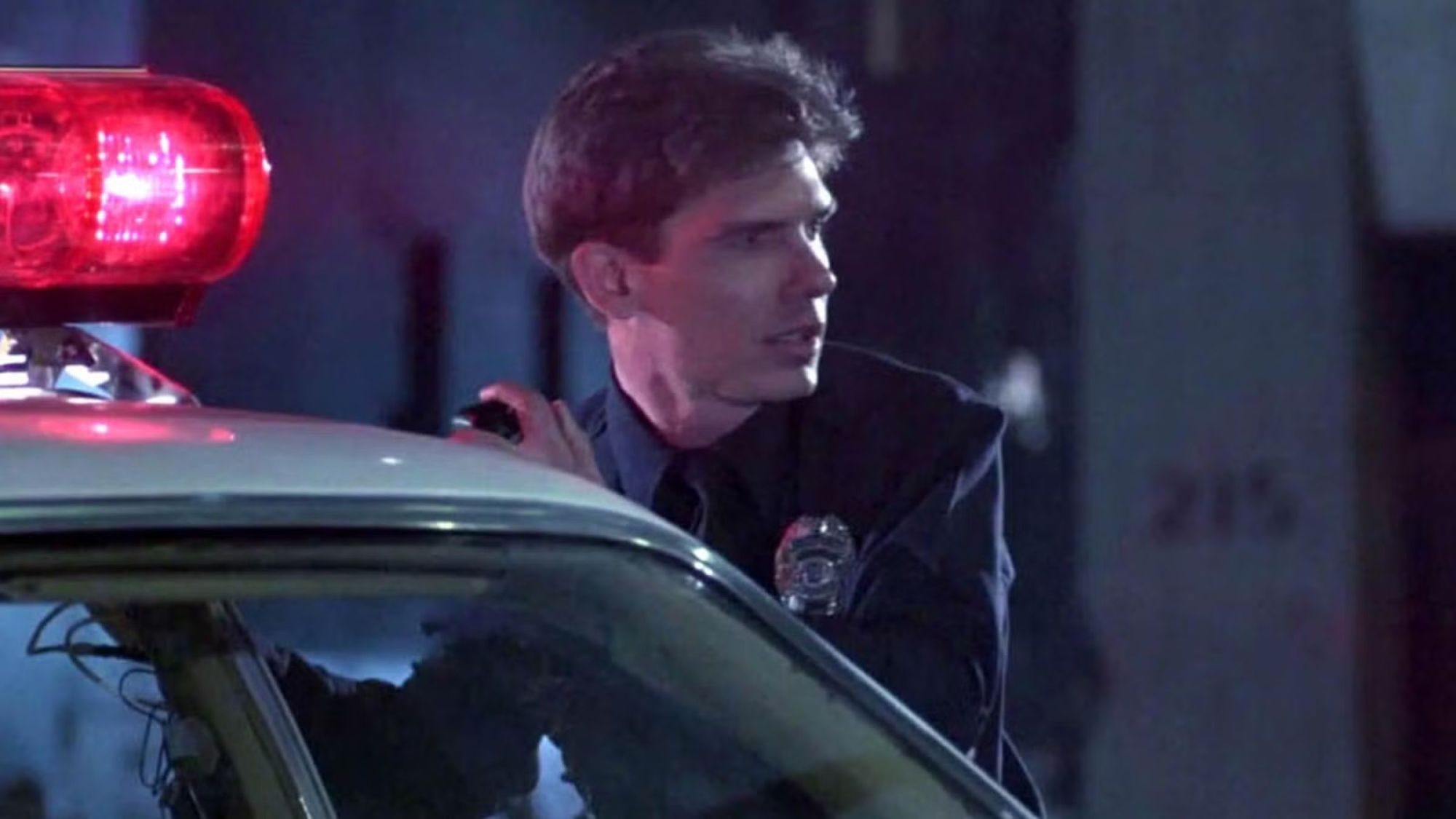
Beyond his script contributions, Wisher also had a cameo in the film, playing a police officer identified as 1L19, one of the unfortunate officers dispatched by the T-800 early in its murderous rampage. This small role underscored the depth of his involvement and his presence within Cameron’s tight-knit creative circle even in the nascent stages of their professional relationship. The film went on to gross over $78 million worldwide, a phenomenal success that catapulted Cameron into the league of promising genre directors and established The Terminator as an instant cult classic and a benchmark for intelligent action cinema. Its critical reception was overwhelmingly positive, with Rotten Tomatoes currently listing a perfect 100% critics score, testament to its tight script, groundbreaking effects for its time, and relentless pacing, all of which Wisher had a hand in shaping.
Wisher’s involvement extended even further, as he later collaborated with Randall Frakes to write the film’s novelization. This endeavor allowed him to delve deeper into the lore and expand on the characters’ inner lives, further cementing his understanding and influence over the nascent Terminator universe.
The Pinnacle of Collaboration: Terminator 2: Judgment Day
Wisher’s role within the Terminator franchise expanded significantly with the highly anticipated sequel, Terminator 2: Judgment Day (1991). By this point, Cameron had established himself as a blockbuster director with Aliens (1986) and The Abyss (1989), and T2 represented an ambitious leap in scale, budget, and technological innovation. Wisher earned a full "written by" credit alongside Cameron for the sequel, a clear acknowledgment of his indispensable contribution to the narrative’s development.
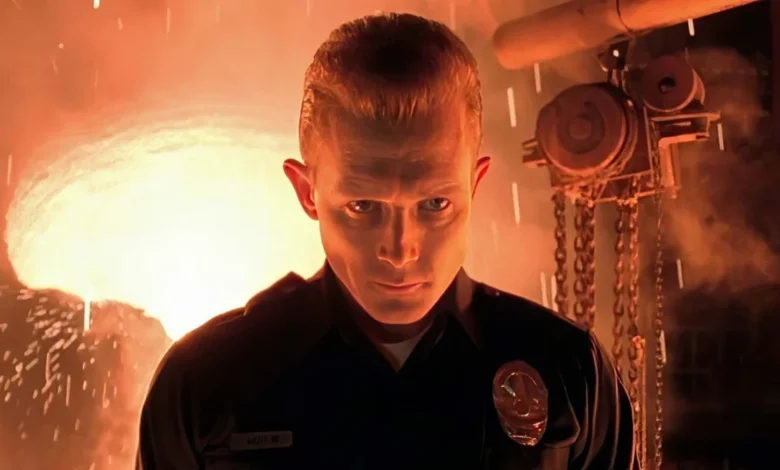
Terminator 2: Judgment Day was a monumental undertaking, with a then-unprecedented budget of over $100 million, making it one of the most expensive films ever made at the time. The script, co-penned by Wisher and Cameron, took the established foundation of the original and pushed it further, both thematically and technically. It introduced the iconic liquid metal T-1000 (Robert Patrick), a villain that pushed the boundaries of CGI, and saw Arnold Schwarzenegger’s T-800 reprogrammed to protect a teenage John Connor (Edward Furlong) and his mother Sarah (Linda Hamilton), who had transformed into a hardened warrior.
The film’s narrative was lauded for its complex character arcs, particularly the evolution of the T-800 from menacing villain to paternal protector, and Sarah Connor’s struggle with her own humanity amidst the impending apocalypse. Wisher’s keen understanding of dialogue and character development was crucial in crafting these nuanced portrayals, ensuring that the spectacle was always grounded in relatable human emotion. The sequel was a colossal success, grossing over $520 million worldwide and earning four Academy Awards for its groundbreaking achievements in Sound, Sound Effects Editing, Makeup, and Visual Effects. Critically, it was also a triumph, holding a 91% rating on Rotten Tomatoes, with many critics hailing it as one of the finest action films ever produced.
T2‘s success not only solidified the Terminator franchise as a global phenomenon but also paved the way for Cameron’s subsequent blockbusters like Titanic and Avatar, both of which redefined blockbuster filmmaking on a global scale. Wisher’s direct, credited involvement in T2 underscored his profound impact on the film’s narrative integrity and its enduring legacy as a cinematic masterpiece. He also made another brief on-screen appearance in T2, this time as a tourist photographing the T-800, further cementing his playful yet deeply involved presence in the Cameron universe. Earlier, he had also appeared as a reporter in Cameron’s 1989 film, The Abyss, highlighting the consistent nature of his presence within Cameron’s inner circle.
Beyond Skynet: Wisher’s Broader Filmography
While his work on the Terminator franchise remains the most celebrated aspect of his career, William Wisher Jr. built a substantial and diverse filmography as both a credited writer and an uncredited script doctor across the action, sci-fi, and horror genres. His versatility and reliability made him a sought-after talent in Hollywood.
In 1995, Wisher penned the screenplay for the Sylvester Stallone vehicle Judge Dredd. Based on the popular British comic book character, the film aimed to launch a new superhero franchise. While Judge Dredd faced mixed critical reception (a 22% score on Rotten Tomatoes) and underperformed at the box office with approximately $113 million on a $90 million budget, Wisher’s script nonetheless attempted to capture the dystopian, satirical essence of the source material. It demonstrated his ability to adapt existing intellectual properties for the big screen, even under challenging production circumstances.
Four years later, Wisher contributed to John McTiernan’s historical action film The 13th Warrior (1999), starring Antonio Banderas. The film, loosely based on Michael Crichton’s novel Eaters of the Dead, faced significant production troubles and extensive reshoots, leading to a troubled release. Despite a substantial budget of around $160 million, it grossed only about $61 million worldwide, making it a notable box office disappointment. However, Wisher’s involvement in shaping its narrative underscored his role in ambitious, large-scale genre productions.
His foray into the horror genre saw him writing Dominion: Prequel to the Exorcist (2005) for director Paul Schrader. This film experienced its own tumultuous journey, being shelved and then largely re-shot by director Renny Harlin, eventually released as Exorcist: The Beginning. Wisher’s original screenplay for Dominion was generally considered by critics and fans of Schrader’s work to be a more psychological and character-driven horror film, a testament to Wisher’s range beyond pure action. The ultimate release as Exorcist: The Beginning garnered a meager 11% on Rotten Tomatoes, a clear indication of how studio interference can drastically alter a writer’s original vision.
The Unsung Architect: Script Doctoring and Uncredited Contributions
One of the less visible but equally impactful aspects of William Wisher Jr.’s career was his extensive work as an uncredited script doctor. In Hollywood, script doctors are often brought in to salvage troubled productions, punch up dialogue, clarify plot points, or completely restructure screenplays, often without receiving public credit. This role requires not only exceptional writing skills but also a deep understanding of story mechanics, pacing, and genre conventions, often under immense pressure and tight deadlines. Wisher’s reputation for reliability and his sharp understanding of action and character made him a prime candidate for such tasks.
He served as an executive producer on Live Free or Die Hard (2007), the fourth installment in the beloved Die Hard franchise, after reportedly rewriting its script from front to back. The film, which saw Bruce Willis reprise his role as John McClane, was a critical and commercial success, earning an 82% approval rating on Rotten Tomatoes and grossing nearly $388 million worldwide on a $110 million budget. This success, in part, can be attributed to Wisher’s ability to infuse the script with the quintessential Die Hard blend of high-octane action, witty banter, and a resilient, everyman hero.
Furthermore, Wisher was reported to have contributed uncredited revisions to several other major studio productions, including Die Hard with a Vengeance (1995), Broken Arrow (1996), Eraser (1996), and Mercury Rising (1998). This consistent involvement in high-profile action films of the 1990s and 2000s underscores his significant, albeit often anonymous, influence on the genre. The role of a script doctor is often an unsung one, but it is critical to the success of countless films, and Wisher’s frequent engagement in this capacity speaks volumes about his talent and trusted reputation within the industry.
A Legacy Etched in Sci-Fi History
William Wisher Jr.’s contributions to cinema, particularly through his collaborative efforts on the Terminator franchise, have left an indelible mark on the landscape of science fiction and action films. The Terminator arrived as a lean, mean, low-budget sci-fi thriller, but its success, significantly shaped by the mythology and dialogue Wisher helped construct, transformed James Cameron into one of Hollywood’s most bankable filmmakers. The film’s blend of relentless action, a compelling high-concept premise, and surprisingly grounded emotional stakes set a template that Cameron would masterfully employ across his subsequent career.
Terminator 2: Judgment Day then built upon that foundation, pushing the boundaries of cinematic storytelling and visual effects. It evolved the themes of fate versus free will, the nature of humanity, and the dangers of unchecked technological advancement, all while delivering unprecedented spectacle. The emotional through-line, which Wisher was instrumental in crafting, resonated deeply with audiences, cementing the film’s status as a cultural touchstone and one of the finest action films ever produced. The influence of these films, and by extension Wisher’s writing, can be seen in countless subsequent sci-fi and action movies that have attempted to replicate their blend of intelligence and visceral thrills.
His legacy extends beyond these two iconic films. Wisher’s extensive career as a credited writer and a trusted script doctor highlights the vital, often behind-the-scenes, work that shapes Hollywood blockbusters. He was a craftsman who understood the mechanics of storytelling, the rhythm of dialogue, and the demands of genre, consistently delivering material that elevated productions.
Industry Reactions and Tributes
Following the news of his passing, William Wisher Jr.’s family released a heartfelt statement, encapsulating the essence of his character and beliefs: “William believed that stories have the power to connect people across generations. While the world celebrates the unforgettable films he helped create, we will remember him for his kindness, his humor, his brilliant imagination, and the love he gave so freely to his family and friends. We are grateful for the outpouring of love and support during this difficult time.” This statement underscores not only his professional impact but also the profound personal qualities that endeared him to those close to him.
While specific statements from industry figures are still emerging, it is anticipated that tributes will pour in from his collaborators and colleagues. James Cameron, whose career was so intimately intertwined with Wisher’s, is expected to acknowledge the loss of his childhood friend and pivotal creative partner, reflecting on their shared journey from Brea to the heights of Hollywood. Arnold Schwarzenegger, the iconic face of the Terminator, who brought Wisher’s dialogue to life in two seminal films, will likely commend his talent and contribution to one of cinema’s most enduring characters. The broader filmmaking community, particularly those in the action and sci-fi genres, will undoubtedly mourn the loss of a talented screenwriter who quietly and effectively shaped some of the most memorable cinematic experiences of the last four decades.
William Wisher Jr.’s passing marks the end of an era for many who grew up with his stories. His work will continue to be celebrated by generations of film enthusiasts, serving as a powerful reminder of the profound impact a dedicated and imaginative screenwriter can have on the cultural landscape. His contributions to the art of storytelling, particularly his role in crafting the intricate universe of The Terminator, ensure that his legacy will endure, forever etched into the annals of cinematic history.