Elizabeth Olsen Addresses Avengers: Doomsday Speculation Amidst Lingering Scarlet Witch Rumors

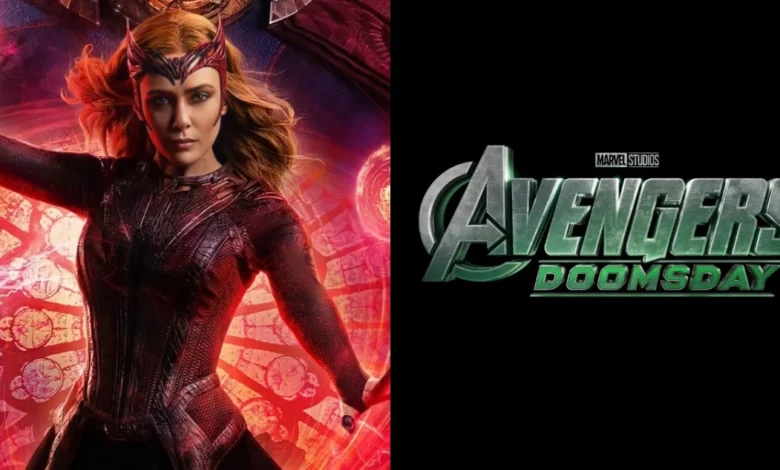
The fervent anticipation surrounding Marvel Studios’ upcoming cinematic tentpole, Avengers: Doomsday, has placed a spotlight on many key figures within the Marvel Cinematic Universe (MCU), none more so perhaps than Elizabeth Olsen, known globally for her portrayal of Wanda Maximoff, the Scarlet Witch. At a recent appearance at the Chicago Comics and Entertainment Expo (C2E2), Olsen directly addressed the persistent rumors of her character’s involvement in the highly anticipated film, offering a response that, while seemingly definitive, leaves room for the characteristic ambiguity often associated with Marvel’s closely guarded production secrets.
Olsen’s statement, delivered amidst questions regarding the future of the MCU, was succinct: "I know nothing. I know about VisionQuest, because I’ve seen Paul [Bettany] in the last six months. I know nothing about any of it. Is [Secret Wars] what happens after? I’m not kidding. Why did I think there were two Secret Wars? Are there not?" This declaration, reported by ComicBookMovie.com, immediately sparked renewed discussion among fans and industry observers alike, who have come to expect a high degree of discretion, and sometimes strategic misdirection, from actors involved in major Marvel projects.
The Enduring Legacy of the Scarlet Witch in the MCU
Wanda Maximoff, introduced in a post-credits scene for Captain America: The Winter Soldier (2014) before her full debut in Avengers: Age of Ultron (2015), has arguably ascended to one of the most pivotal and complex roles in the entire MCU narrative. Her journey from an orphaned Sokovian experimental subject to a formidable Avenger, and subsequently to the powerful, grief-stricken, and morally ambiguous Scarlet Witch, has captivated audiences across multiple films and a groundbreaking Disney+ series.
Her character arc has been meticulously developed across a significant portion of the MCU’s Phases. In Age of Ultron, she grappled with her burgeoning powers and the loss of her brother, Pietro. Captain America: Civil War (2016) explored her integration into the Avengers and the tragic consequences of her uncontrolled abilities. Her relationship with Vision became a central emotional anchor, culminating in devastating losses during Avengers: Infinity War (2018) and Avengers: Endgame (2019), where she displayed raw power in her confrontation with Thanos.
The Disney+ series WandaVision (2021) marked a critical turning point, establishing her fully as the Scarlet Witch, a nexus being of immense magical capability. The series delved deep into her trauma and grief, showcasing her ability to warp reality on a grand scale, inadvertently creating a new family and a new reality within the town of Westview. This exploration of her power and psychological state laid the groundwork for her central, albeit antagonistic, role in Doctor Strange in the Multiverse of Madness (2022). In this film, driven by the corrupting influence of the Darkhold and her desire to reunite with her children from Westview, she became a multiversal threat, culminating in her apparent demise beneath a collapsing Wundagore Mountain.
The impact of the Scarlet Witch’s story extends beyond her direct appearances. Her actions and the sheer scale of her power have had lasting repercussions on the fabric of the MCU, influencing other characters and setting precedents for multiversal threats and reality-bending capabilities. Her status as a "main character" in recent years is undeniable, with her narrative often serving as a linchpin for major plot developments.
Marvel’s Culture of Secrecy and Actor Denials
Olsen’s recent remarks at C2E2 are far from an isolated incident within the MCU. Marvel Studios is renowned for its stringent secrecy protocols, often going to extraordinary lengths to prevent plot leaks and surprise reveals. Actors are frequently required to sign extensive non-disclosure agreements and are coached on how to deflect or outright deny involvement in upcoming projects. This practice has become an unofficial rite of passage for many within the franchise.
Perhaps the most famous recent example is the persistent denials from actors Andrew Garfield and Tobey Maguire regarding their roles in Spider-Man: No Way Home (2021). Despite overwhelming fan speculation and numerous leaks, both actors consistently maintained they were not involved until their dramatic reveal in the film itself. Similarly, Benedict Cumberbatch denied his involvement in Thor: Ragnarok (2017) and Mark Ruffalo famously "spoiled" Avengers: Infinity War‘s ending (which was later revealed to be a joke, but underscored the need for secrecy). These instances highlight a pattern where actor denials, especially concerning major plot points or character returns, are often taken with a grain of salt by the discerning audience.
Given this historical context, Olsen’s "I know nothing" statement, while delivered with apparent sincerity, aligns perfectly with Marvel’s modus operandi. The potential return of a character as powerful and narratively significant as the Scarlet Witch in a film as crucial as Avengers: Doomsday would undoubtedly be considered a monumental spoiler, warranting the highest level of secrecy.
The Context of Avengers: Doomsday and the Multiverse Saga
Avengers: Doomsday is slated for release in December 2026 and is positioned as a pivotal installment in the Multiverse Saga, leading directly into Avengers: Secret Wars, scheduled for May 2027. These two films are expected to serve as the culmination of the MCU’s Phases 4, 5, and 6, which have heavily explored concepts of the multiverse, alternate realities, and the incursions that threaten to collapse them.
The title Avengers: Doomsday itself evokes a sense of impending catastrophe and ties into long-standing comic book narratives, particularly those involving Doctor Doom. Victor Von Doom, a character intrinsically linked with the Fantastic Four and often portrayed as one of Marvel’s most formidable and intelligent villains, is frequently associated with events of global and multiversal significance. The presence of Doctor Doom, whether as a primary antagonist or a key player, could drastically alter the stakes of the upcoming Avengers films.
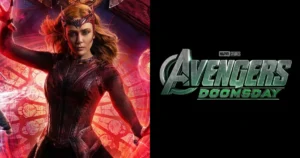
The connection between Scarlet Witch and Doctor Doom in the comics is also noteworthy. While not always direct allies or adversaries in the mainstream continuity, their paths have intersected in significant storylines, particularly those involving magic and the fate of reality. Wanda Maximoff’s immense magical abilities and her recent foray into dark magic could potentially align her with or against a figure like Doctor Doom, especially if multiversal incursions are at the core of Doomsday‘s plot. The article’s featured image, depicting Scarlet Witch alongside a hint of Doctor Doom, further fuels these speculative connections.

The "Mutant Saga" and Wanda’s Potential Rebirth
Another crucial element in the ongoing MCU narrative is the gradual introduction of mutants, culminating in what is being informally dubbed the "Mutant Saga." In the comic books, Wanda Maximoff and her brother Pietro (Quicksilver) were long established as mutants, the children of Magneto. While the MCU initially presented their powers as a result of HYDRA experimentation with the Mind Stone, WandaVision subtly hinted at an innate magical capability that was merely amplified by the Stone. The subsequent revelation of her being the Scarlet Witch, a fabled figure of chaos magic, further distanced her from the traditional mutant origin.
However, with the X-Men and other mutant characters slowly making their way into the MCU (e.g., Ms. Marvel’s mutation reveal, Professor X’s variant in Multiverse of Madness, Wolverine’s upcoming appearance in Deadpool & Wolverine), there is a strong possibility that Wanda’s mutant heritage could be retconned or re-established within the cinematic universe. This would provide a compelling narrative pathway for her return.
If the "Mutant Saga" is indeed "just around the corner," as the original article posits, then the Scarlet Witch’s return, perhaps as a newly resurrected or multiversal variant with her mutant identity confirmed, would be a monumental event. It could tie her deeply into the burgeoning mutant storyline, potentially positioning her as a leader, a powerful advocate, or even a reformed antagonist within the mutant community. This re-contextualization would not only honor her comic book roots but also provide a fresh narrative direction for a character whose emotional journey has been so thoroughly explored.
Analyzing Olsen’s Statement: A Deeper Look
When Olsen states, "I know about VisionQuest, because I’ve seen Paul [Bettany] in the last six months," this provides a concrete piece of information. VisionQuest is an upcoming Disney+ series that will focus on Vision, specifically the "White Vision" created by S.W.O.R.D. at the end of WandaVision. Given Wanda’s deep connection to Vision, her awareness of this project suggests she maintains some level of contact with the Marvel production sphere, even if not directly involved in VisionQuest itself. This small detail adds a layer of credibility to her general "ignorance" regarding Doomsday, as it implies she would disclose what she does know.
Her apparent confusion about the Secret Wars titles ("Is [Secret Wars] what happens after? I’m not kidding. Why did I think there were two Secret Wars? Are there not?") could be interpreted in several ways. It could be genuine, reflecting the fragmented nature of information actors receive, or it could be a masterful deflection, designed to make her appear out of the loop. The fact that Avengers: Doomsday and Avengers: Secret Wars are two distinct films, released sequentially, is public knowledge. Her feigned or genuine confusion could serve to reinforce the narrative that she is not privy to the overarching plans for the Multiverse Saga’s climax.
Implications of Scarlet Witch’s Return or Absence
The potential return of the Scarlet Witch in Avengers: Doomsday carries significant narrative weight. Her death in Doctor Strange in the Multiverse of Madness was portrayed as a sacrifice, a moment of self-realization and atonement for her destructive actions. If she were to return, the manner of her reappearance would be crucial. Would it be a resurrection? A variant from another universe? A magical escape from her apparent demise? Each option presents unique storytelling opportunities and challenges.
Scenario 1: Resurrection/Survival
If Wanda somehow survived the collapse of Wundagore Mountain or is resurrected, it would signify a new chapter for the character. This could allow for her redemption arc to continue, perhaps with a renewed focus on her role as a hero, potentially grappling with the immense power she wields and the consequences of her past actions. Her return could be a powerful force against the threats of Doomsday and Secret Wars, or perhaps an unpredictable wild card.
Scenario 2: Multiversal Variant
The Multiverse Saga explicitly allows for the introduction of alternate versions of characters. A variant Scarlet Witch could be introduced, perhaps one who never succumbed to the Darkhold, or one with a different moral compass. This would allow Olsen to reprise the role while giving the character a fresh slate, avoiding the need to immediately address the complicated moral baggage of Earth-616 Wanda. This could also be a way to introduce her mutant heritage more organically.
Scenario 3: Absence from Doomsday
If Olsen’s statement is entirely truthful and Scarlet Witch does not appear in Avengers: Doomsday, it would solidify the ending of Multiverse of Madness as a more definitive closure for her character, at least for that iteration. Her absence would underscore the finality of her sacrifice and allow other characters to step into the forefront of the Multiverse Saga’s climax. However, it would leave a significant void, given her prominence and power level, especially when facing multiversal threats. It might also disappoint a large segment of the fanbase eager for her return.
Even if she is absent from Doomsday, her eventual return in Secret Wars (as hinted by the original article’s "one final send-off or a rebirth into a new era") remains a strong possibility. Secret Wars often involves the remnants of various realities converging, making it a prime opportunity for any character, including those presumed dead, to reappear.
Conclusion: The Unfolding Future of the MCU
Elizabeth Olsen’s enigmatic remarks at C2E2 serve as a potent reminder of the tight-lipped nature of Marvel Studios and the high stakes involved in the upcoming Multiverse Saga. While her direct denial regarding Avengers: Doomsday might seem conclusive, the historical precedent of Marvel’s secrecy, coupled with the enduring popularity and narrative significance of the Scarlet Witch, ensures that speculation will continue unabated.
The path of Wanda Maximoff in the MCU has been one of profound transformation, immense power, and deep tragedy. Whether she emerges from the shadows of Wundagore Mountain, arrives from an alternate reality, or remains absent from the immediate future, her legacy is firmly cemented in the fabric of the MCU. As Avengers: Doomsday prepares to hit theaters in December 2026, and with the broader "Mutant Saga" on the horizon, the question of the Scarlet Witch’s ultimate fate and her role in the impending multiversal conflict remains one of the most compelling mysteries awaiting resolution in the Marvel Cinematic Universe. Fans will undoubtedly stay tuned for any new developments, scrutinizing every hint and denial in the hope of glimpsing the true destiny of one of the MCU’s most powerful figures.