A Quarter Century of Masterpieces: How Ico and Silent Hill 2 Redefined the PlayStation 2 Era and the Boundaries of Interactive Entertainment

Twenty-five years ago, the PlayStation 2 solidified its position as one of the most culturally significant hardware platforms in the history of interactive entertainment by playing host to a remarkably unique cultural coincidence. On that single fateful day, two titles arrived on store shelves that would fundamentally alter the trajectory of video game design, narrative structure, and aesthetic ambition. While the PlayStation 2 library was already swelling with a robust catalog of commercial blockbusters and third-party triumphs, the simultaneous release of Fumito Ueda’s minimalist puzzle-platformer Ico and Team Silent’s psychological horror masterwork Silent Hill 2 proved that the medium was capable of profound emotional resonance, artistic legitimacy, and psychological depth.
A quarter of a century later, the enduring influence of these two distinct pillars of game development remains unmistakable. Though they approached interactive design from diametrically opposed philosophical angles—one relying on sparse environmental storytelling and stark visual poetry, the other diving headfirst into the suffocating depths of human grief and guilt—both projects transcended their contemporary technological constraints. In doing so, they provided definitive counter-arguments to critics who questioned whether video games could ever legitimately aspire to the status of high art.
The Genesis of Minimalist Art Design in Ico
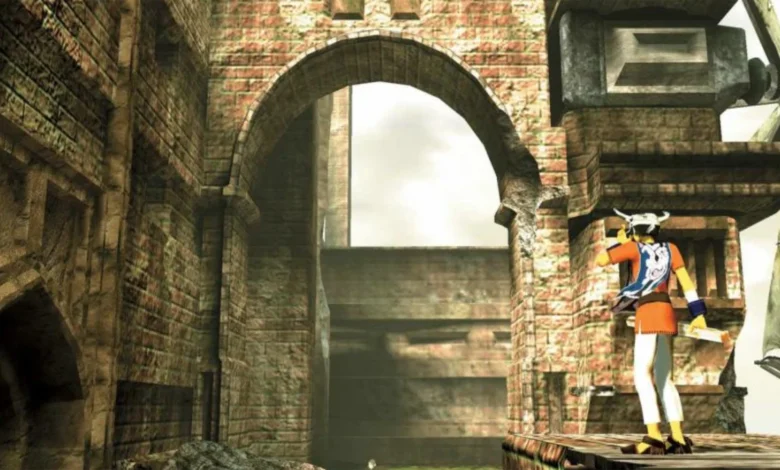
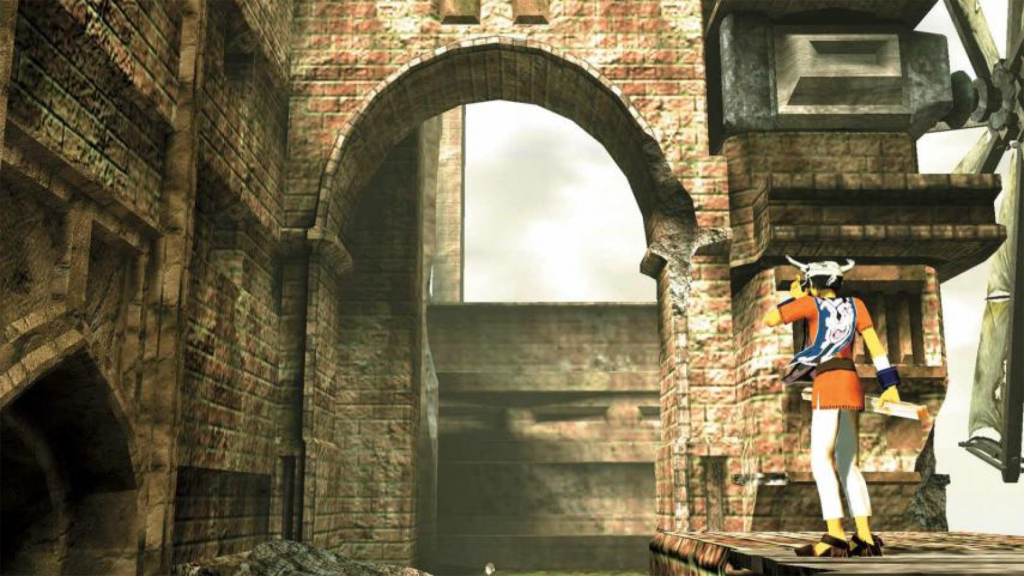
Developed under the visionary leadership of game director and designer Fumito Ueda within Sony Computer Entertainment’s internal studios, Ico was conceived as an intentional subversion of prevailing action-adventure tropes. Rather than overwhelming the player with complex user interfaces, endless dialogue trees, or chaotic combat encounters, Ueda championed a philosophy of subtractive design. The narrative follows a young boy named Ico, ostracized by his village due to the curved horns protruding from his head, who is abandoned within the stone corridors of a colossal, forsaken castle. There, he encounters Princess Yorda, a young girl speaking an incomprehensible fictional language, and endeavors to help her escape the clutches of her shadowy mother.
The moment-to-moment gameplay loops were intentionally restrained. Players navigated crumbling architecture, solved environmental puzzles, and fended off spectral entities attempting to drag Yorda back into the abyss. However, the true innovation lay in the tactile nature of navigation and the mechanics of holding hands with Yorda. This simple act established an immediate emotional bond between the player and the non-player character, transforming a mechanical escort mission into a deeply empathetic relationship.
Critically, Ico was heralded as a triumph of mood and atmosphere. The production relied heavily on a distinctive lighting engine, creating stark contrasts between brilliant sunlight and consuming shadows to guide the player’s eye and evoke a haunting sense of isolation. When the title debuted, mainstream cultural critics—notably figures like Charles Herold of The New York Times, who famously dubbed it a collection of "perfect moments"—recognized its artistic merit at a time when prominent traditionalists like film critic Roger Ebert were openly dismissing the medium’s capacity for genuine artistic expression.
While Ico famously struggled at retail during its initial launch window, failing to capture immediate mainstream commercial success, it resonated deeply with critics and fellow creators. The game’s minimalist blueprint paved the way for Ueda’s subsequent masterpieces, Shadow of the Colossus and The Last Guardian. More broadly, its DNA can be traced through an entire lineage of celebrated indie and triple-A artistic endeavors, including Jenova Chen’s Journey and Starbreeze Studios’ Brothers: A Tale of Two Sons.
The Industry-Wide Ripple Effect of Ueda’s Vision
The artistic ripples generated by Ico extended far beyond traditional puzzle-platformers, fundamentally redirecting the career paths of some of the industry’s most influential modern auteurs. Most notably, Hidetaka Miyazaki, the visionary director behind the Dark Souls franchise and Elden Ring, has frequently recounted how encountering Ico inspired him to abandon a conventional corporate career path and enter the video game industry. The game’s reliance on environmental storytelling, sparse instruction, and implicit world-building directly influenced the design philosophies that would eventually spawn the punishing yet rewarding worlds of modern action RPGs.
Furthermore, industry luminaries across generations—including The Legend of Zelda producer Eiji Aonuma, The Last of Us co-creator Neil Druckman, veteran creator Hideo Kojima, and Prince of Persia creator Jordan Mechner—have repeatedly cited Ico as a foundational text in their respective approaches to interactive storytelling and spatial design. The willingness to trust the player’s intelligence, stripping away unnecessary exposition in favor of ambient mood, transformed how creators conceptualized player immersion.
Descending Into the Abyss: The Psychological Terror of Silent Hill 2
While Ico was quietly demonstrating how aesthetic minimalism could elevate video game design to high art, Konami’s Team Silent was preparing a wholly different kind of cultural earthquake. Released on the exact same day, Silent Hill 2 refined the survival horror genre by pivoting away from cheesy B-movie tropes and schlocky jump scares, opting instead for a deeply unsettling, melancholic exploration of the human psyche.
The narrative follows James Sunderland, an ordinary man drawn to the foggy, abandoned lakeside town of Silent Hill after receiving a mysterious letter from his wife, Mary—despite the fact that she had succumbed to a terminal illness three years prior. Eschewing the occult conspiracies of the first Silent Hill installment, the sequel presented a self-contained psychological nightmare. The town itself materialized as a physical manifestation of James’s repressed guilt, trauma, and unresolved grief, populated by grotesque, symbolic monsters such as the iconic Pyramid Head and nurses warped by psychological torment.
Stylistically, Silent Hill 2 drew heavily from the surreal, dreamlike sensibilities of auteur filmmaker David Lynch and psychological literature rather than traditional horror cinema. The pacing was deliberate, slow, and suffocating, characterized by decaying industrial spaces, dense fog, and an oppressive industrial soundtrack composed by Akira Yamaoka that functioned as an extension of the protagonist’s fractured mental state.
Commercial Performance and Broader Market Reception
Unlike Ico, which endured a notoriously arduous path to finding its audience, Silent Hill 2 struck an immediate chord with a broader demographic of players. Bolstered by the strong reputation of its 1999 predecessor, the psychological horror sequel shipped over 1.3 million copies worldwide during its initial release window, proving that complex, mature narratives could achieve commercial viability alongside mainstream action titles.
The critical and financial success of Silent Hill 2 established a new benchmark for narrative depth in interactive media. By grounding its horror not in external monsters, but in the internal guilt and psychological fragility of its protagonist, the title set a structural precedent for subsequent narrative-driven thrillers. Modern horror benchmarks and narrative adventures—ranging from Remedy Entertainment’s Alan Wake to frictional games like Amnesia: The Dark Descent—drew direct inspiration from its pacing, atmospheric dread, and willingness to handle uncomfortable thematic material.
The Legacy of a Singular Release Date
Reflecting on the landscape of the entertainment industry a quarter of a century later, the simultaneous launch of Ico and Silent Hill 2 stands as an extraordinary anomaly. In an industry frequently obsessed with chasing fleeting commercial fads, high-budget technical spectacles, and rapid technological obsolescence, these two contrasting masterpieces endure because they prioritized emotional resonance, artistic integrity, and narrative ambition above all else.
Whether examining the quiet, windswept stone halls of Ico or the suffocating, fog-drenched asphalt of Silent Hill 2, both titles demonstrated that video games are uniquely equipped to evoke complex human emotions. As subsequent generations of developers continue to draw inspiration from their mechanics, aesthetics, and storytelling techniques, the legacy of that historic release day remains firmly etched into the foundational bedrock of modern game design.