Creative Pedigree and the Return to the Animated Universe
The pairing of Paul Dini and Kevin Altieri is highly significant for long-time followers of DC animation. Dini, a primary architect of the DC Animated Universe (DCAU), was instrumental in defining the personality and psychological depth of the Joker during his tenure on Batman: The Animated Series (BTAS) and its successor, The New Batman Adventures. His ability to balance the character’s lethal unpredictability with a dark, theatrical wit set the standard for the villain’s modern iterations.
Kevin Altieri, meanwhile, directed some of the most critically lauded episodes of the original series, including the visually striking "Dreams in Darkness" and the fan-favorite "The Cape and Cowl Conspiracy." His distinct directorial style—often characterized by heavy chiaroscuro, stylized shadows, and expressive character silhouettes—was foundational to the "Dark Deco" aesthetic that defined Gotham City for a generation of viewers. By bringing these two veterans back together for The Joker’s Christmas Carol, DC Comics is signaling a deliberate effort to evoke the tone of the 1990s era, providing a bridge between the classic animated continuity and the modern comic book market.
Narrative Premise: A Dickensian Nightmare in Gotham
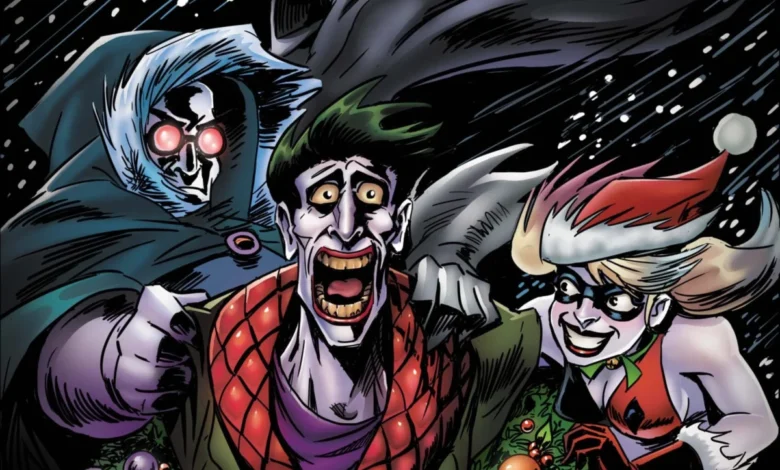
The plot of The Joker’s Christmas Carol deviates from the traditional sentimental tone of the source material. According to official solicitation details, the story takes place on the eve of Christmas, finding the Clown Prince of Crime in a rare moment of isolation. As the narrative progresses, the protagonist is confronted by three spectral entities, a nod to the ghosts of Christmas Past, Present, and Yet to Come.
However, the tone remains distinctly faithful to the character’s sadistic nature. Rather than seeking redemption or spiritual growth—the traditional trajectory for a Scrooge-like figure—the Joker is described as viewing these supernatural visitors with hostility, preferring to see them as "food for worms." This subversion of the Dickensian trope suggests that the one-shot will be less of a morality play and more of a psychological character study, exploring whether the Joker is capable of self-reflection or if his psyche is entirely impervious to external influence. The narrative structure, which spans 64 pages, allows for an expansive exploration of the character’s past and potential future within the context of the DCAU world.
Production Specifications and Variant Strategies
DC Comics has opted for a prestige format for this release, emphasizing the collectibility of the issue. The book will be published in a card-stock cover format, with a standard retail price of $7.99 for the main edition and $8.99 for the variant cover. The commitment to a 64-page count indicates that this is a substantial narrative, likely featuring additional content or expanded sequences that would not fit within the constraints of a standard 22-page monthly comic.
In addition to the interior art and cover by Kevin Altieri, the publisher has commissioned variant covers from industry veterans Dustin Nguyen and Ty Templeton. Both artists have long histories with the Batman franchise. Dustin Nguyen is widely regarded for his stylized, watercolor-infused interpretations of the Bat-family, notably showcased in his work on Li’l Gotham and Batman: Streets of Gotham. Ty Templeton, a frequent contributor to the Batman Adventures comics of the 1990s and 2000s, is perhaps the artist most synonymous with the "animated" style in comic book form, having been a mainstay of the tie-in books that accompanied the original television run. The inclusion of these specific artists reinforces the nostalgic branding of the project.
Chronology and the Legacy of BTAS in Comics
The release of The Joker’s Christmas Carol follows a long line of successful efforts by DC to bridge the gap between their animation library and the print medium. Since the conclusion of the original animated run, DC has maintained a steady stream of "animated-style" comics, beginning with The Batman Adventures in 1992. These titles were critical in expanding the lore of the animated universe, often providing character backstories that the limitations of television broadcasting could not accommodate.
The following timeline highlights the evolution of these animated-style crossovers:
- 1992: Premiere of Batman: The Animated Series.
- 1993: Launch of The Batman Adventures comic book series.
- 2003: The Batman Adventures: Mad Love and Other Stories wins an Eisner Award, cementing the legitimacy of animated-style comics.
- 2014: Batman: The Animated Series celebrates its 22nd anniversary with a massive Blu-ray release, renewing interest in the property.
- 2020-2022: The launch of Batman: The Adventures Continue, a series that officially canonized stories set within the original animated continuity, written by Dini and Alan Burnett.
- 2026: Scheduled release of The Joker’s Christmas Carol, continuing the legacy of the BTAS world.
This chronology demonstrates that the interest in the DCAU is not merely a passing trend but a persistent pillar of DC’s publishing strategy. By revisiting this world in 2026, DC is capitalizing on a multi-generational fanbase—those who grew up with the show and a younger demographic that has discovered the series through streaming platforms and home media.
Industry Implications and Market Impact
The decision to launch a one-shot featuring the Joker during the holiday season is a strategic move designed to capture the "gift-giving" market while also appealing to core collectors. Historically, Christmas-themed comic books have performed well in the specialty market, particularly those that offer a darker or more subversive take on holiday archetypes.
From an analytical standpoint, the success of The Joker’s Christmas Carol may influence future editorial decisions regarding the "animated" imprint. Should this title meet or exceed sales expectations, it could encourage DC to greenlight similar one-shots focusing on other classic villains, such as Two-Face, Harley Quinn, or the Riddler, using the same creative team or similar industry veterans.
Furthermore, the prestige format and higher price point suggest that DC is positioning this as a "premium" product rather than a standard monthly issue. This reflects a broader trend in the comic book industry: moving away from high-volume, low-cost serials toward higher-value, standalone graphic novels or one-shots that can be easily sold as individual items or collected volumes.
Conclusion
The Joker’s Christmas Carol represents a convergence of nostalgia, high-level creative talent, and strategic brand management. By reuniting Paul Dini and Kevin Altieri, DC Comics has effectively curated a project that appeals to the intellectual and emotional connection fans have with the 1990s animated universe. Whether the narrative successfully subverts the Dickensian structure or serves as a dark character piece, its release on December 2, 2026, is poised to be a significant event for the Batman franchise. For retailers and readers alike, the one-shot stands as a testament to the enduring influence of the animated iteration of Gotham City and the timeless appeal of its most iconic villain. As the industry moves toward a future defined by diverse multimedia integration, this project serves as a reminder of the power of established legacies and the continued relevance of the stories that defined them.