The Resurgence of the Ragin’ Cajun: Gambit Returns as Apocalypse’s Horseman of Death in X-Men ’97 Season 2, Episode 6.

The landscape of superhero narratives has long been characterized by a fluid relationship with mortality, where death often serves as a temporary state rather than a definitive end. This established trope meant that the tragic demise of Remy LeBeau, known as Gambit, in the climactic first season of X-Men ’97 was widely interpreted by viewers not as a final farewell, but as a precursor to an inevitable, and perhaps more dramatic, return. Gambit’s heroic sacrifice on Genosha, where he immolated himself to halt a rampaging Sentinel and prevent further mutant genocide, resonated deeply, yet the narrative threads woven throughout Season 2 have consistently pointed toward his re-emergence, intrinsically linked to the overarching machinations of the ancient mutant villain, Apocalypse. Episode 6 of the second season has now definitively confirmed these widespread predictions, unveiling Gambit resurrected as the formidable Horseman of Death, a development poised to send profound shockwaves through the already fractured ranks of the X-Men.
The Genoshan Cataclysm and the Prophecy of Return
Gambit’s initial death was a pivotal moment in X-Men ’97. The mutant haven of Genosha, intended as a sanctuary for mutantkind, was brutally attacked by a fleet of advanced Sentinels, leading to an unprecedented massacre. In a desperate act of selflessness, Gambit channeled his kinetic energy powers to overload and destroy a colossal Sentinel, saving countless lives but sacrificing his own in the process. This poignant event left a gaping wound in the X-Men’s psyche, particularly for Rogue, whose deep romantic connection with Gambit was a cornerstone of their shared history.
However, the very premise of X-Men ’97 Season 2, centered on Apocalypse, immediately suggested a pathway for Gambit’s resurrection. In Marvel Comics lore, Apocalypse has a notorious history of transforming powerful mutants into his Four Horsemen—Death, Famine, Pestilence, and War—to serve his vision of "survival of the fittest." Among these transformations, Gambit’s stint as the Horseman Death is one of the most visually striking and, despite its mixed reception in print, a memorable storyline. The animated series, celebrated for its nuanced adaptations and willingness to revisit complex comic narratives, appeared to be setting the stage for this very development from its earliest promotional materials for the second season.
Apocalypse’s Master Plan: A Convoluted Chronology
The narrative of X-Men ’97 Season 2 meticulously unfolds Apocalypse’s intricate, multi-temporal strategy, revealing a villain operating across vast stretches of time to achieve his ultimate goal: to consolidate his power and ensure his dominance.
-
Ancient Egyptian Roots (Circa 3000 BC): The series has already delved into the origins of En Sabah Nur, the mutant who would become Apocalypse. Through a group of time-displaced X-Men, including Cyclops, Jean Grey, and Cable, viewers witnessed Apocalypse’s birth in ancient Egypt and his early ascendance to power. This period established his core philosophy and his relentless pursuit of evolutionary advancement through conflict. The revelation of a hidden Infinity Stone playing a role in his origin further cemented his cosmic significance and immense power.
-
The Dystopian Future (3960 AD): Another faction of the X-Men, led by Bishop and Forge, found themselves catapulted into a grim future ruled by an aging but still formidable Apocalypse. In this desolate timeline, Apocalypse, while at the zenith of his control over humanity and mutantkind, faces the natural erosion of his immense power. He is depicted seeking a new, suitable host body to transfer his consciousness and extend his immortal reign, hinting at a desperate need for renewal. This future timeline underscores the pervasive threat Apocalypse poses across millennia.
-
Intervention in the ’90s: The "Weakest" Era: Paradoxically, it is this weakened future version of Apocalypse who determines that the 1990s—the present day for the X-Men—is the opportune moment to strike. His rationale is that the X-Men were at their "weakest" during this period. This assessment is, in part, a self-fulfilling prophecy. The scattering of key X-Men members across different timelines (to ancient Egypt and the distant future) left the contemporary mutant community fragmented and vulnerable. With Professor X mysteriously absent and the core team disbanded or disoriented, anti-mutant sentiment intensified globally, leading to the outlawing of the X-Men and the rise of less organized, often confused, successor groups like X-Factor and X-Force. This power vacuum and societal chaos provided the perfect canvas for Apocalypse to execute his plans unhindered.

Apocalypse’s time-traveling endeavors were not subtle. The series explicitly showed him recovering a casket lined with purple fabric—a clear visual cue to the original comic book storyline where Gambit, after his resurrection, was encased in similar shrouds before his transformation. This deliberate foreshadowing built anticipation, confirming that Gambit’s return was not just probable but meticulously planned by the series’ primary antagonist.
The Horseman of Death: Comic Book Legacy and X-Men ’97‘s Redemptive Adaptation
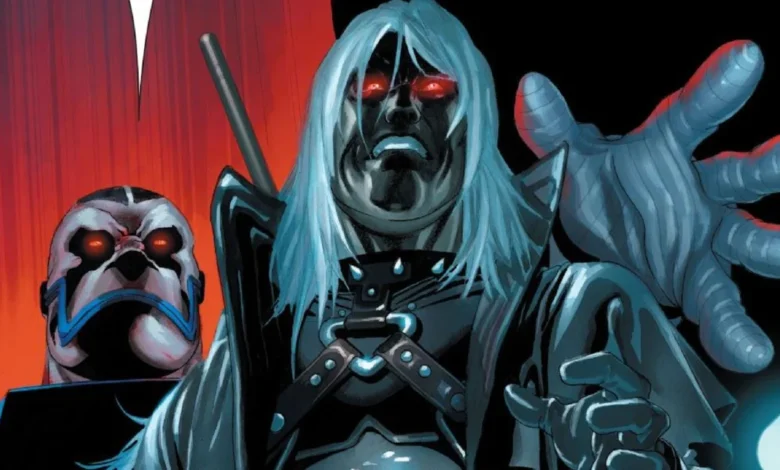
The transformation of Gambit into the Horseman Death is a significant event in Marvel Comics history, albeit one with a complicated legacy. The storyline originated primarily in Uncanny X-Men #376-377 (part of the larger "Apocalypse: The Twelve" arc) and depicted Gambit, suffering from a crisis of faith and guilt, willingly submitting to Apocalypse to restore his powers, which had been temporarily lost. Apocalypse, seeing potential in Gambit’s internal darkness, manipulated him, augmenting his powers but twisting his mind, turning him into a skeletal, pale-skinned figure with black energy powers and a menacing aura. While the visual aesthetic was undeniably "cool" and memorable, many comic readers felt the narrative execution lacked depth, portraying Gambit’s internal struggle and subsequent redemption as somewhat rushed or unconvincing. He largely served as a plot device rather than a character with profound agency during this period.
X-Men ’97 appears to be consciously addressing these criticisms. The showrunners have openly stated their intention to "fix" controversial or underdeveloped comic book stories, leveraging the animated format to explore their full emotional and thematic potential. By placing Gambit’s transformation firmly within the context of his sacrifice on Genosha and Apocalypse’s overarching, multi-temporal plot, the series imbues his new role as Death with far greater narrative weight and tragic resonance. His resurrection is not merely a means to restore his powers or an act of personal despair; it is a direct consequence of a world-altering catastrophe and the malevolent will of a millennia-old entity. This makes his enslavement by Apocalypse a profound violation of his heroic sacrifice, promising a more impactful and emotionally charged storyline than its comic book predecessor.
Episode 6’s Pivotal Revelation: The Unveiling
The culmination of Apocalypse’s meticulous planning and the long-held fan theories arrived in X-Men ’97 Season 2, Episode 6. The episode showcased Apocalypse’s successful resurrection of Gambit, presenting him as the newest, and arguably most devastating, Horseman of Death. The visual depiction of Gambit’s transformation is chilling, conveying not just a physical alteration but a profound spiritual corruption. This reveal is strategically timed to maximize its impact on the fragmented X-Men, who are already grappling with the emotional aftermath of Genosha, the absence of Professor X, and the various temporal displacements that have destabilized their team and their world.
Implications for the X-Men: Emotional and Tactical Warfare
The return of Gambit as Death carries immense implications, both on an emotional and tactical level, for the X-Men and the broader mutant community.
-
Emotional Devastation: The most immediate and profound impact will be on Rogue. Her relationship with Gambit was central to both characters’ development, a passionate and often tumultuous love story. To see him not only alive but twisted into an instrument of Apocalypse’s will, stripped of his heroic essence, will be a crushing blow. This emotional warfare is a classic tactic for Apocalypse, who delights in breaking his enemies psychologically before physically. Other X-Men who knew Gambit well, such as Beast, Cyclops, and Storm, will also be deeply affected, forced to confront a corrupted version of their fallen comrade. The grief over his death will be replaced by horror and the agonizing dilemma of fighting someone they once considered family.
-
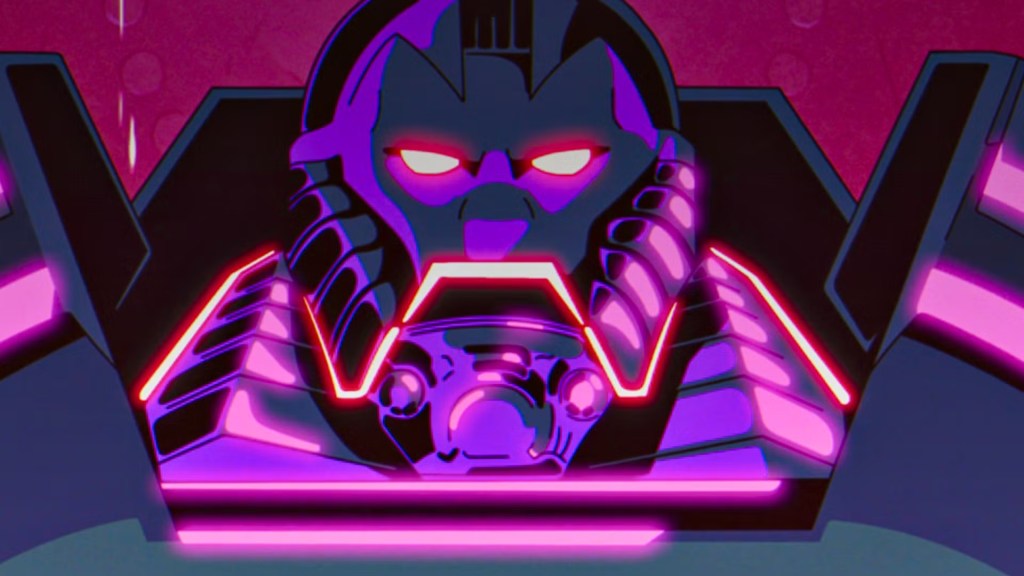
Tactical Advantage for Apocalypse: Gambit, even before his transformation, was a formidable opponent, a master of kinetic energy manipulation and a skilled hand-to-hand combatant. As Death, his powers are likely amplified and twisted, making him an even more dangerous adversary. His familiarity with the X-Men’s tactics and weaknesses, combined with Apocalypse’s strategic intellect, makes him an unparalleled weapon. Furthermore, forcing the X-Men to confront Gambit distracts them from Apocalypse’s ultimate goals, allowing the ancient villain to maneuver and implement his larger plans with less direct opposition. The X-Men’s inherent reluctance to harm a former ally will be a significant tactical hurdle for them to overcome.
-
The Divided Front: The ’90s timeline, as Apocalypse observed, is marked by disunity among mutant factions. With the original X-Men scattered, groups like X-Factor and X-Force are attempting to fill the void, but often with conflicting ideologies and methods. The appearance of a corrupted Gambit will further exacerbate these divisions, potentially leading to disagreements on how to approach the threat. Will they seek to redeem him? Will they be forced to neutralize him? These questions will test the resolve and unity of all mutant heroes.
Beyond the Horseman: Potential Narrative Trajectories
While Gambit’s role as the Horseman of Death is a powerful twist, X-Men ’97 could explore several deeper narrative paths, drawing on various comic book precedents.
-
Enslaved Weapon: The most straightforward path is for Gambit to remain Apocalypse’s loyal, albeit brainwashed, enforcer. This would set up emotionally charged confrontations where the X-Men must fight their friend, forcing them to make impossible choices. The narrative focus would be on the X-Men’s struggle to break Apocalypse’s control and potentially redeem Gambit, echoing his comic book redemption arc where he eventually broke free of Apocalypse’s influence.
-
The "Twelve" Connection: Gambit as a Host: X-Men ’97 has already shown a willingness to adapt and "fix" complex comic storylines, and "The Twelve" is a prime example. This arc saw Apocalypse attempting to transfer his consciousness into a new, powerful host, ultimately choosing Cyclops. Given Apocalypse’s weakened state in the future timeline and his consistent search for a new body, it is entirely plausible that Gambit’s resurrection is not merely to serve as a Horseman, but as a potential vessel for Apocalypse himself. The death and resurrection process might have rendered Gambit particularly susceptible to such a transfer, adding another layer of tragic irony to his sacrifice. This would elevate the stakes considerably, transforming Gambit from an enemy into a ticking time bomb, potentially housing the ultimate evil. The visual of Apocalypse transferring his essence into a beloved hero would be far more impactful than his comic book possession of Cyclops, which was quickly undone.
-
A Path to Redemption: Regardless of his immediate role, the core of Gambit’s character is his innate goodness and his complex morality. Even as Death, there remains the possibility of him breaking free from Apocalypse’s control, perhaps through the unwavering love and efforts of Rogue, or through a moment of clarity triggered by his past memories. Such a redemption arc, hard-earned and fraught with internal struggle, would be far more compelling given the profound cost of his resurrection.
The Broader Significance: Elevating X-Men ’97‘s Narrative Ambition
Gambit’s resurrection as Death is more than just a shocking plot twist; it is a testament to X-Men ’97‘s ambitious storytelling and its commitment to delivering sophisticated, emotionally resonant narratives. By consciously engaging with and reinterpreting controversial comic book stories, the series demonstrates a deep understanding of its source material while simultaneously carving out its own unique identity. This approach allows the show to tap into established fan expectations while simultaneously subverting them with fresh perspectives and enhanced emotional depth. The sheer emotional weight of Gambit’s return, coupled with the strategic brilliance of Apocalypse’s multi-timeline assault, ensures that the remainder of Season 2 will be a powerful and potentially devastating exploration of loss, redemption, and the enduring fight for mutantkind’s future. The series continues to prove itself a worthy successor to its beloved predecessor, pushing the boundaries of animated superhero storytelling.
The first six episodes of X-Men ’97 are currently available for streaming on Disney+, with new episodes released weekly. The unfolding drama promises to deliver some of the darkest and most impactful X-Men stories ever seen on television.