The Authority Crisis: Analyzing the Escalating Metahuman Conflict in Kingdom Come Chapter Two

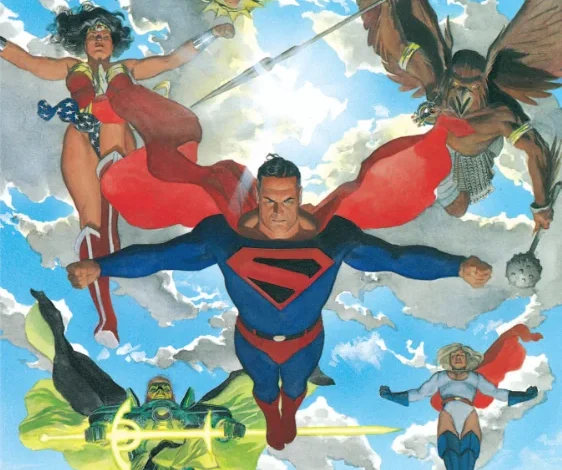
The return of the Justice League to the global stage has catalyzed a profound geopolitical realignment, forcing a confrontation between traditional concepts of sovereignty and the rise of autonomous metahuman influence. In the second chapter of the ongoing crisis, the return of Superman and his contemporaries has shifted from a perceived stabilization effort into a complex, multi-front struggle for the ideological control of Earth-22. As the world navigates the vacuum left by the collapse of conventional legal institutions, the emergence of competing power structures—the Justice League, the Wayne-led surveillance state, and Lex Luthor’s clandestine coalition—has placed the future of human governance at a critical juncture.
A Chronology of Escalation
The current instability finds its roots in the events of the mid-2010s, specifically the catastrophic incident in Kansas that effectively ended the era of traditional heroics. Following the acquittal of Magog for the extrajudicial execution of the Joker—a decision that disregarded the loss of life at the Daily Planet—the public mandate shifted toward a more aggressive, consequence-free brand of justice. This period, characterized by the retirement of Superman and the subsequent proliferation of reckless vigilante groups, created the landscape observed in the present day.
The recent timeline of events highlights the volatility of this new era:

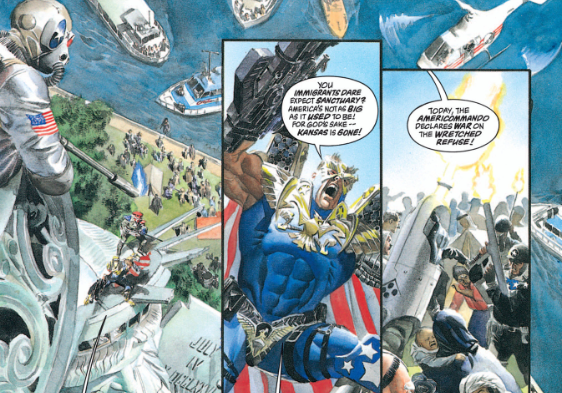
- The Statue of Liberty Incident: A high-profile confrontation occurred between the nationalist vigilante group known as the Minutemen and an opposing faction of automated security units. The conflict placed hundreds of civilians in the crossfire, necessitating intervention by the newly reformed Justice League.
- The United Nations Press Conference: Following the incident, Superman addressed the international community at the U.N. headquarters, officially declaring the League’s intention to reassert control over global metahuman activity.
- The Infrastructure Collapse: Concurrent reports confirm that major high-security containment facilities, including Arkham Asylum, Belle Reve, and Blackgate, have been destroyed by metahuman actions, rendering the existing penal system effectively non-functional.
- The Formation of the Super-Prison: In response to the unchecked chaos, the Justice League has initiated the construction of an off-world containment facility to house metahumans who refuse to adhere to their newly established protocols.
The Divergent Philosophies of Order
The international response to the Justice League’s resurgence is bifurcated. While some nations view the League as a necessary corrective to the rampant lawlessness of the new, untrained metahuman generation, others—most notably government entities—are increasingly concerned by the lack of oversight. The fundamental issue remains the absence of a legal framework for these interventions. As self-appointed arbiters, the Justice League operates without the mandate of democratic elections or judicial oversight, creating a precedent where power is the sole arbiter of justice.
Contrasting this is the approach taken by Bruce Wayne. Operating from a fortified position, Wayne has rejected the League’s "direct intervention" model in favor of a technological, surveillance-heavy methodology. By deploying advanced robotics and pervasive monitoring networks across Gotham and Star City, Wayne claims to provide a more sustainable, human-centric solution. However, this model introduces significant privacy concerns, as the collection of biometric data and the use of automated law enforcement lack traditional constitutional protections. Critics argue that Wayne has essentially replaced governmental corruption with a private, unaccountable police state, further eroding the privacy rights of the citizens he claims to protect.
The Role of Non-State Actors and the Liberation Front
While the Justice League and Wayne focus on distinct methods of control, other factions have mobilized to exploit the systemic instability. Lex Luthor’s "Mankind Liberation Front" represents perhaps the most sophisticated threat to the current order. By rebranding survivors of the prison collapses as "superheroes," Luthor is actively influencing public perception to favor a complete rejection of metahuman presence.
Data suggests that while these Luthor-backed entities account for a small percentage of total vigilante activity, their actions are specifically designed to incite public outrage. By escalating conflicts and then framing the resolution as a triumph over "superhero anarchy," the Liberation Front is effectively maneuvering the global populace toward a total uprising. The inclusion of Billy Batson in these strategic deliberations signals that the Front is preparing to move beyond mere public relations and into direct engagement with the Justice League’s hierarchy.
Implications for Global Governance
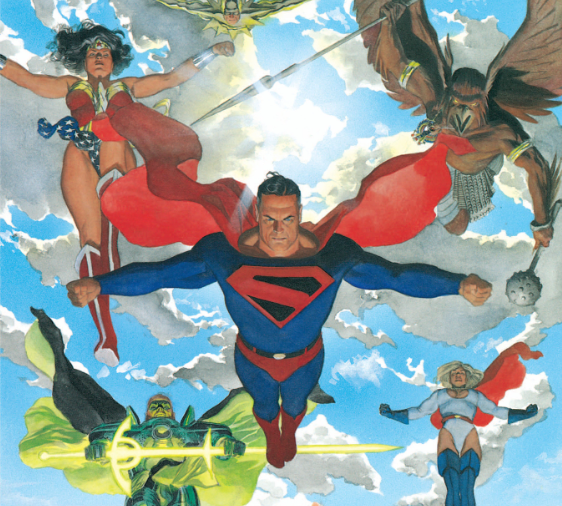
The current state of global affairs is defined by a lack of institutional legitimacy. When the security of a nation is dependent on the temperament of individuals with god-like capabilities, the distinction between a protector and a ruler becomes blurred. The internal friction within the Justice League—notably the increasingly radicalized stance of Wonder Woman versus Superman’s attempts at containment—suggests that the coalition itself is not immune to the pressures of their self-appointed roles.
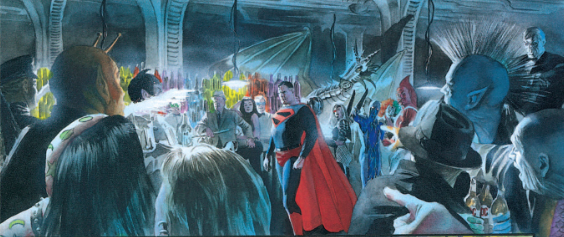
From an analytical standpoint, the implications are severe. If the Justice League continues to operate as an extralegal entity, they risk creating a feedback loop where their presence provokes further rebellion, necessitating greater force. This dynamic is clearly illustrated by the League’s recent operations at metropolitan night clubs and international conflict zones, where they have bypassed local law enforcement to enforce their own version of "truth and justice."
Furthermore, the technological integration championed by Wayne represents a shift toward algorithmic policing. In a society where information is the primary currency, the ability to control data flows—as seen in Gotham—allows for a level of social engineering that was previously impossible. When these systems are controlled by private entities rather than public institutions, the potential for abuse is exponential.
A Tenuous Future
The alliance between Bruce Wayne and Lex Luthor, forged in the wake of the Justice League’s decision to operate a private super-prison, indicates that the divide is no longer just between heroes and villains, but between those who believe in the necessity of a metahuman-led order and those who view such an order as a fundamental threat to human autonomy.
As we look toward the next phase of this crisis, the primary questions remain centered on authority: Who has the right to monitor the population? Who has the right to detain individuals without trial? And, most importantly, can a world that has ceded its security to individuals with extraordinary power ever reclaim the mechanisms of its own governance? With the Justice League and their opposition now fully mobilized, the prospect of a peaceful resolution is diminishing. The history of the coming months will likely be defined by whether these competing factions can reconcile their methods with the fundamental human right to self-determination, or if the current instability will lead to a complete breakdown of global order. The situation remains in flux, and the world waits to see how these "gods" will reconcile their power with the reality of the people they seek to lead.
Related posts: