The transition of one of the most successful indie video games of the last decade into the tabletop space is set to reach a critical milestone this month. Paper Fort Games has confirmed that the highly anticipated Terraria: The Board Game will officially launch its crowdfunding campaign on Kickstarter on May 28, 2024. This move represents a significant expansion of the Terraria intellectual property, managed by Re-Logic, into the analog gaming market, aiming to replicate the sandbox exploration, deep crafting mechanics, and high-stakes combat that have defined the video game’s legacy since its initial release in 2011.
A Legacy of Global Success
To understand the gravity of this adaptation, one must look at the unprecedented success of the source material. Re-Logic’s Terraria has sold more than 58 million units globally as of 2024, consistently ranking among the top-selling video games of all time. Its popularity is attributed to its "infinite" replayability, characterized by 2D exploration, complex base building, and a progression system that encourages players to move from humble mining beginnings to defeating cosmic-level threats.
The challenge of translating a digital sandbox with nearly unlimited freedom into a structured tabletop format has historically been a difficult task for game designers. Paper Fort Games, the studio tasked with this adaptation, has spent the last year refining mechanics that aim to mirror the "miney-crafty" loop of the original. The project was first unveiled to the public in the summer of 2023, drawing immediate interest from both the board game enthusiast community and the massive Terraria player base.
Mechanics and Gameplay Philosophy
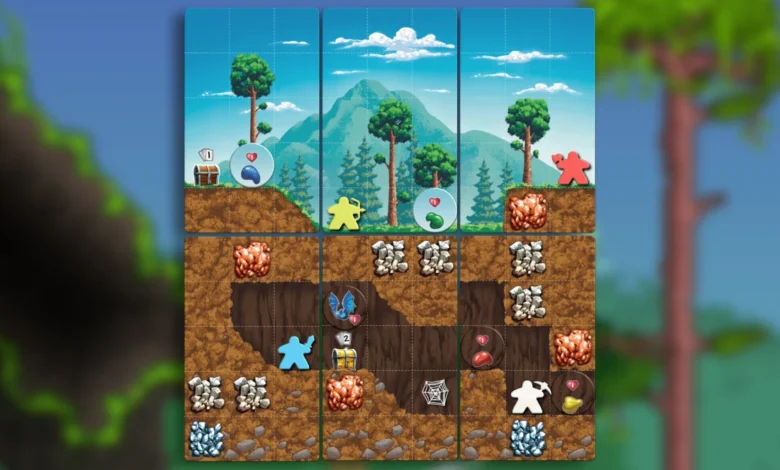
The board game is designed as a cooperative experience for one to four players. According to early development documentation and demonstrations provided at major industry events such as Essen Spiel 2023, the game utilizes a modular, grid-based card system to generate the world. This ensures that no two sessions are identical, mirroring the procedural generation technology that serves as the backbone of the video game.
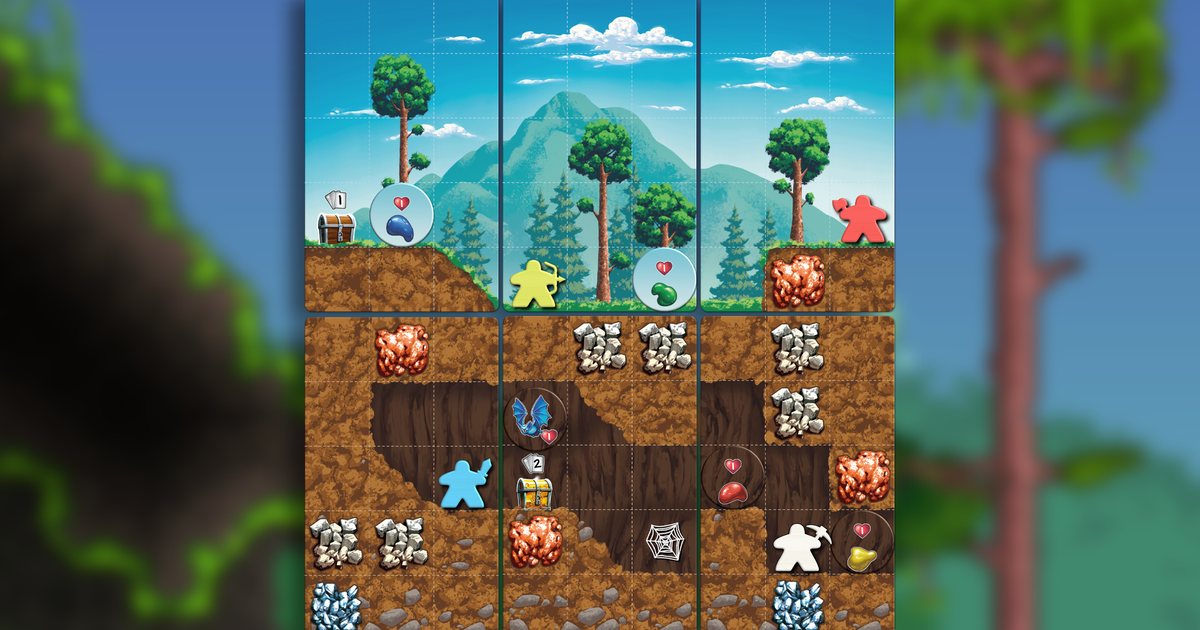
The gameplay centers on an action-point allowance system, a staple of modern cooperative strategy games that forces players to prioritize tasks. Because players must balance exploration, resource gathering, and base defense, the action-point system creates a "tension-and-release" loop that mimics the pressure of a ticking clock found in the original title.
One of the most notable design choices is the "layering" system for character customization. The game employs transparent cards that players place over their character boards. As players craft new armor and gear, these cards visually update the avatar’s appearance, providing a tangible sense of progression that mirrors the digital inventory and equipment slots. Combat is resolved through a combination of dice rolls and action cards, with over 30 unique enemy types represented. The gear quality directly influences the efficacy of the player’s dice, ensuring that resource management—mining and crafting—remains central to surviving combat encounters.
The Role of Boss Encounters
A defining feature of the Terraria experience is the "Boss Fight," and the board game adaptation prioritizes these moments as the climax of each session. Players will face six distinct bosses, each represented by modular miniatures. These miniatures are designed to reflect the health status of the entity, allowing players to physically track the progress of the battle as they dismantle the boss.
These encounters are structured as high-stakes events that typically serve as the endgame for a 90-minute to two-hour session. The objectives are highly customizable, allowing groups to tailor the difficulty and the specific goals of the campaign. This flexibility is intended to extend the game’s longevity, as players can focus on different aspects of the game—such as architectural building, exploration, or pure combat—depending on their preferences for that specific session.
Base Building and NPC Integration
The board game does not abandon the "builder" demographic of the Terraria community. Players can construct houses and fortify their bases, which serves a mechanical purpose beyond aesthetics. Expanding the settlement attracts various NPCs, each offering unique bonuses or crafting capabilities. This creates a secondary progression layer where the village acts as a hub for the players to prepare for deeper expeditions into the subterranean layers of the generated world. The inclusion of these NPCs ensures that the board game captures the "town-building" aspect of the video game, which is often cited as a favorite feature among long-term players.
Industry Context and Crowdfunding Trends
The decision to launch on Kickstarter is consistent with the current landscape of the board game industry. Crowdfunding has become the primary vehicle for high-complexity, licensed adaptations, as it allows developers to gauge demand and fund the production of high-quality components, such as the modular boss miniatures.
Historically, video game-to-board game adaptations have seen varying levels of success. Successful titles such as Dark Souls: The Board Game or Stardew Valley: The Board Game have demonstrated that audiences are willing to invest in tabletop experiences that faithfully capture the "feel" of their digital counterparts. Analysts observe that for an adaptation to succeed, it must simplify the complex backend logic of a video game without stripping away the emergent gameplay that makes the original fun. Paper Fort Games appears to be leaning into this strategy by focusing on the core loop of exploration, combat, and crafting rather than attempting to recreate every single pixel of the digital game’s vast content.
Future Outlook and Development Timeline
Following the Kickstarter campaign on May 28, the production timeline will likely span several months to a year, depending on the scope of the stretch goals and the scale of the initial manufacturing run. While a final release date for the retail market has not been established, the crowdfunding stage will provide the necessary data for Paper Fort Games to finalize production schedules.
The broader implication of this release is the continued blurring of lines between digital and physical entertainment. With Re-Logic maintaining tight control over the Terraria brand, the board game is expected to be a high-fidelity product that adheres to the established art style and lore of the franchise. For the gaming industry at large, the performance of this campaign will serve as a bellwether for the viability of long-term indie game properties in the physical tabletop market.
As the May 28 date approaches, expectations remain high. The studio has emphasized that their goal is not just to create a piece of merchandise for collectors, but to deliver a deep, strategic experience that stands on its own merits. Whether the game successfully translates the "Terraria experience" to the tabletop remains to be seen, but the initial reception from the community suggests a strong appetite for a physical, cooperative version of one of the world’s most enduring digital adventures. For fans, the campaign represents an opportunity to participate in the development process and secure a product that promises to bring the chaos, charm, and complexity of Terraria into their living rooms.