Nestled on the edge of the Mojave Desert, approximately two hours northwest of Las Vegas, the historic town of Beatty, Nevada, serves as the primary gateway to Death Valley National Park. While long celebrated by outdoor enthusiasts, hikers, and mountain bikers for its rugged surrounding landscapes, the town has steadily cultivated a reputation as a prominent hub for paranormal tourism. During a three-night investigation conducted for a Halloween-themed episode of the paranormal pop culture program Talking Strange, host and journalist Aaron Sagers documented a series of unexplained acoustic and visual anomalies across Beatty, anchored by a stay in a remarkably preserved, century-old miner’s cabin operating as an Airbnb rental.
Main Facts of the Investigation
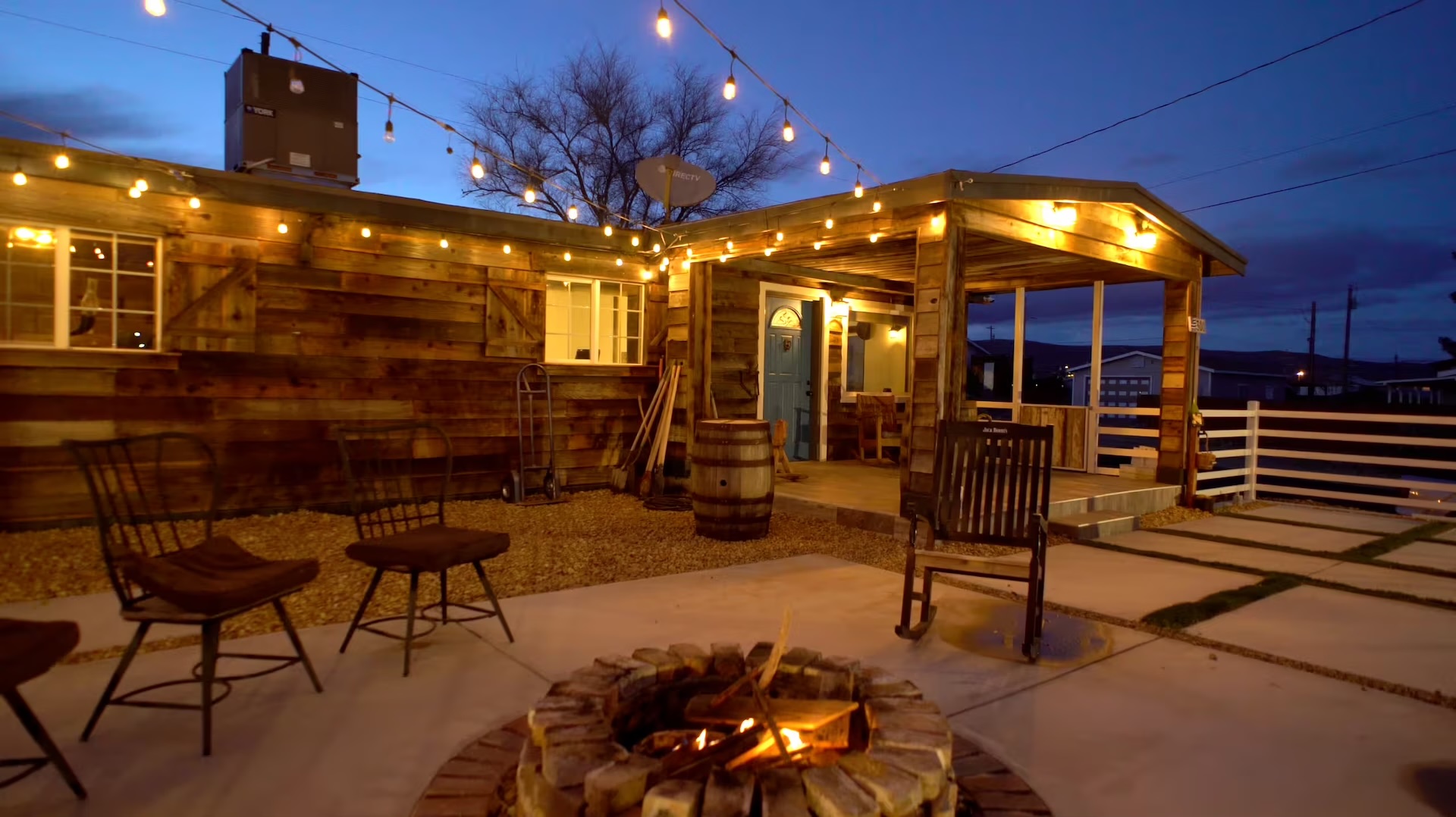
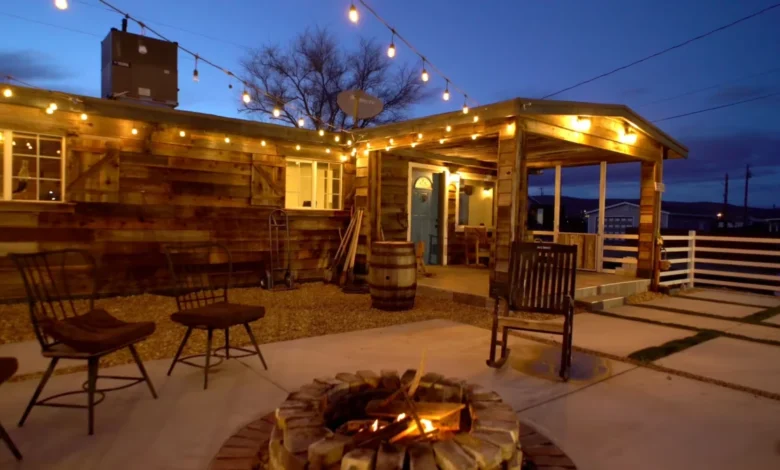
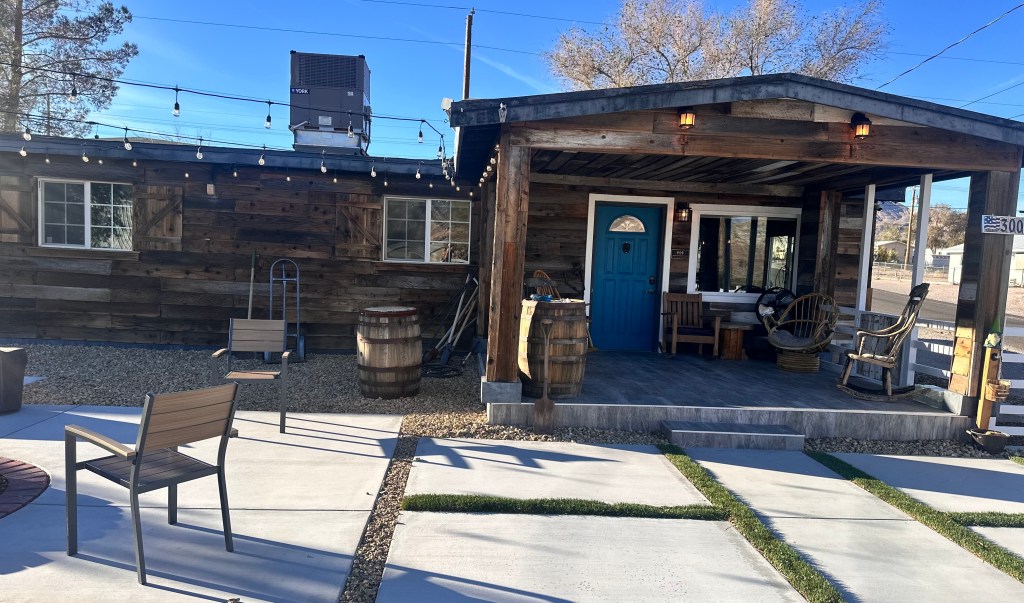
The focal point of the expedition was a residential property in downtown Beatty consisting of three historic miners’ cabins originally erected in the booming gold-mining camp of Rhyolite. Acquired in 2020 by entrepreneurs Derek and Dorian Stonebarger, the structures underwent a meticulous four-year historical restoration, blending rustic structural elements with contemporary amenities. Derek Stonebarger, who also holds business interests in several prominent Las Vegas venues including ReBAR, Davy’s Locker, and Arty’s Steakhouse, experienced an anomalous encounter on the property in 2022 that fundamentally shifted his perspective on the supernatural.
At approximately 2:00 a.m., Stonebarger—who described himself at the time as a skeptic—observed a translucent figure resembling a bearded, grizzled miner leaning around the kitchen refrigerator, staring directly at him. The visual contact persisted for an estimated seven seconds before the apparition vanished. Seeking to share the property’s unique historical atmosphere with travelers interested in frontier history and anomalous phenomena, the owners subsequently opened the cabin to overnight guests. During the recent journalistic stay, unattended audio recording equipment inside the cabin captured persistent, unexplained acoustic phenomena, including sharp structural pops, shifting sounds, and distinct footfalls that could not be definitively attributed to environmental settling or mechanical causes.
Chronology of Rhyolite and Beatty Architecture

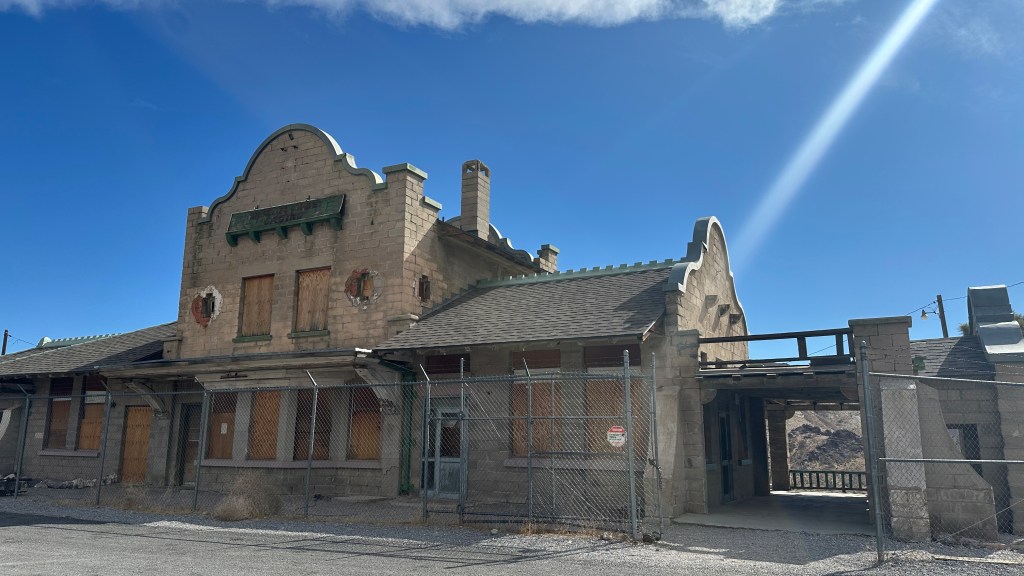
The architectural lineage of the haunted Airbnb is deeply intertwined with the meteoric rise and fall of the nearby mining boomtown of Rhyolite. Following the discovery of gold by prospectors Shorty Harris and Ed Cross in 1904, Rhyolite experienced an exponential population surge, expanding from a remote desert encampment to a bustling municipality of approximately 5,000 residents within a six-month window.
The financial Panic of 1907 precipitated the rapid economic collapse of the district. By 1920, the local population had plummeted to just 14 permanent residents, transforming Rhyolite into one of the American West’s most famous ghost towns. As the town deteriorated, many of its wooden structures were systematically dismantled and relocated to neighboring communities. Around 1925, approximately a decade after Rhyolite’s commercial abandonment, the miners’ cabins that now comprise the Beatty Airbnb were transported down to downtown Beatty, preserving a tangible physical link to the early-century mining era. Today, the property sits within a region officially designated by Travel Nevada as part of the "Park to Park in the Dark" initiative, highlighting the area’s exceptionally dark night skies.
Supporting Data and Regional Paranormal Claims
Beyond the miner’s cabin, Beatty features a dense concentration of historical structures with documented local folklore and reported paranormal activity, drawing the attention of media production teams, including the crew of the Travel Channel series Ghost Adventures.
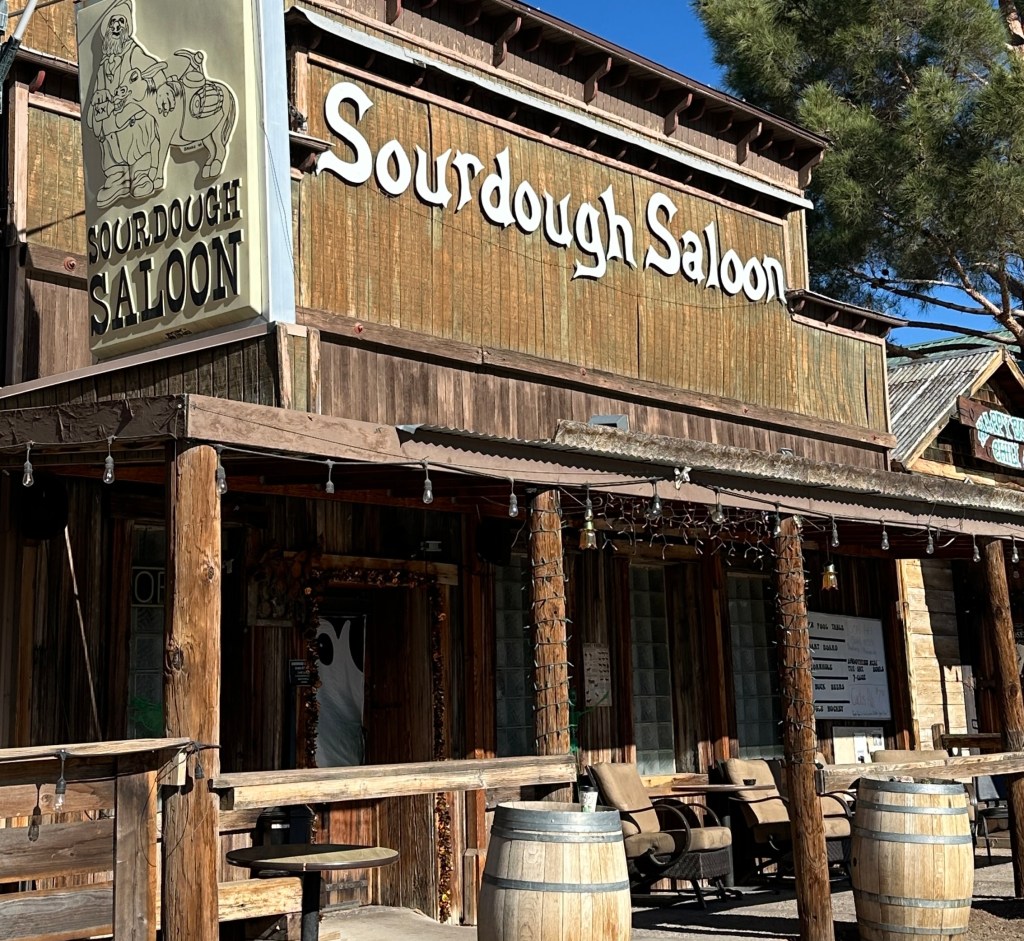
The Sourdough Saloon, a local establishment whose origins trace back to the Rhyolite boom era or the 1940s, features prominently in regional ghost lore. Staff and patrons have reported frequent sightings of a "Shadow Man" pacing specific interior corners, alongside persistent accounts of an upper floor historically utilized as an illicit frontier-era brothel. Bartenders and kitchen staff have corroborated recurring instances of unexplainable visual reflections in windows and localized shifts in atmospheric pressure within the building’s back corridors.
Directly across the street, the Exchange Club—established in 1906 and distinguished by a modern steampunk facade—houses subterranean and upper-level spaces steeped in local legend. Maintenance personnel and long-term workers stationed on the premises have reported hearing distinct, disembodied voices of multiple speakers conversing in empty hallways and locked back rooms during off-hours, mirroring acoustic phenomena documented across several historic structures in the downtown corridor.
Further contributing to the area’s dark tourism profile is an underground subterranean church featuring a dirt floor, situated immediately behind the Sourdough Saloon. Local oral history links the remote, pitch-black structure to the movements of Charles Manson and members of his cult, who famously operated out of the nearby Barker Ranch in the Death Valley backcountry prior to their 1969 arrests.
Official Responses and Preservation Efforts
The preservation of Beatty and its adjacent ghost town ruins relies heavily on the stewardship of federal land managers and local historians. Karl Olson, the Bureau of Land Management (BLM) caretaker and unofficial mayor of the Rhyolite ghost town, has dedicated years to mapping and protecting the remaining historical footprints of the district. Olson emphasizes that the historical integrity of Rhyolite offers a tangible window into the past, noting that intimate familiarity with archival maps allows modern researchers to reconstruct the daily lives of the thousands of transient miners who briefly inhabited the Mojave Desert over a century ago.
Broader Impact and Implications for Desert Tourism
The convergence of authentic mining-era history and localized paranormal folklore has transformed Beatty from a conventional highway waypoint into a thriving destination for cultural and dark tourism. The integration of historic preservation—exemplified by the restoration of the Rhyolite cabins into functional short-term rentals—demonstrates a viable economic model for revitalizing economically depressed rural mining communities in the American Southwest.
As researchers, television production crews, and independent travelers continue to document anomalous phenomena throughout Beatty’s saloons, motels, and ghost towns, the region remains a vital case study in how frontier history, public folklore, and modern experiential travel intersect. Visitors exploring the area are consistently advised to support local small businesses—such as Mama Sara’s Taco Shop and the Sourdough Saloon—while exercising standard safety precautions when navigating abandoned desert structures and remote historical ruins within the Death Valley periphery.