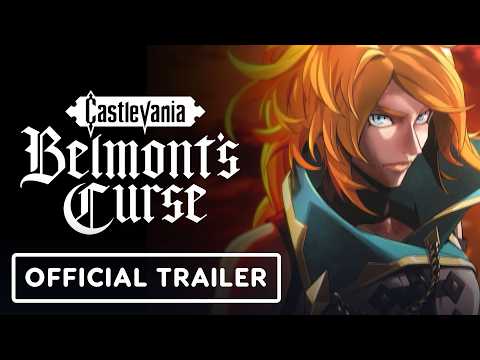
Castlevania Belmont’s Curse represents a significant strategic pivot for Konami, marking a sophisticated return to the foundational side-scrolling roots of one of the most storied franchises in video game history. Developed in a high-profile collaboration between Konami and Evil Empire—the studio renowned for its transformative work on Dead Cells—the title serves as both a nostalgic homage and a forward-looking evolution of the gothic action-platformer genre. Following an extensive hands-on preview session, the game reveals itself to be a meticulously constructed experience, built upon a bedrock of classic mechanics while introducing modern complexities that distinguish it from its 8-bit and 16-bit predecessors.
The Genesis of a New Era: Development Context and Partnership
The announcement of Castlevania Belmont’s Curse at the Xbox Games Showcase 2026 follows a period of relative dormancy for the mainline Castlevania series, which had recently been kept in the public consciousness primarily through Netflix’s animated adaptations and various legacy collections. The decision to partner with Evil Empire is a calculated move by Konami to leverage external creative expertise. Evil Empire previously demonstrated a profound understanding of the Castlevania IP with the "Return to Castlevania" DLC for Dead Cells, which was widely praised for its reverent yet fresh take on the series’ iconography.

This new project is positioned as a "Grand Return," shifting away from the experimental 3D environments of the Lords of Shadow era and returning to the 2D plane where the series first found global success. Industry analysts suggest that this collaboration is part of Konami’s broader "revitalization strategy," which includes the remaking of Metal Gear Solid Delta and the expansion of the Silent Hill universe. By entrusting a core IP to a developer known for tight, responsive combat and intricate level design, Konami aims to capture both the veteran fanbase and a new generation of players accustomed to the high-speed "roguelite" and "Metroidvania" titles of the last decade.
Narrative and Character Dynamics: The Rise of Rose Belmont
Central to the identity of Castlevania Belmont’s Curse is its new protagonist, Rose Belmont. As a new initiate into the legendary family of vampire hunters, Rose serves as a narrative and mechanical bridge between two of the series’ most beloved archetypes. She is the daughter of Trevor Belmont, the rugged warrior of Castlevania III: Dracula’s Curse, and Sypha Belnades, the powerful Speaker magician.
Rose’s design reflects this dual heritage. While she retains the physical prowess and combat-hardened demeanor of her father, she also possesses the innate mystical affinity of her mother. This hybridity is not merely a plot point but the core of the gameplay loop. Players are tasked with balancing traditional melee combat with a sophisticated magic system, allowing for a level of tactical flexibility rarely seen in the series’ early entries. The narrative setting, which includes a gothic reimagining of Paris, suggests a broader European scope than previous titles, moving the conflict beyond the borders of Wallachia and into new, culturally distinct territories.
Visual Artistry and Environmental Design
The visual direction of Belmont’s Curse departs from the muted, somber palettes often associated with the series. Instead, Evil Empire has opted for a vibrant, high-contrast aesthetic that emphasizes atmospheric storytelling through color. During the initial acts of the game, players transition through three distinct regions, each defined by a specific visual identity:
- The Overrun Capital: A gothic Paris bathed in deep wine reds and earthy tones, conveying a sense of historical grandeur under siege by supernatural forces.
- The Aquatic Caverns: A region defined by vivid greens and complex blue water caustics, showcasing the game’s lighting engine and fluid animation.
- The Celestial Cathedral: A high-altitude environment that utilizes bright, ethereal lighting to contrast with the dark, oppressive interiors of the traditional Castlevania castle.
The technical execution of these environments ensures that navigation remains a primary source of engagement. The backgrounds are layered with parallax effects and dynamic environmental hazards that require precise movement, reinforcing the game’s identity as a platformer first and foremost.
Combat Systems: Weapons, Relics, and Tarot Magic
The combat in Castlevania Belmont’s Curse is characterized by its "punchy" and "immediate" feedback. The developers have focused on the tactile sensation of impact, where melee strikes resonate with a distinct weight. Rose Belmont’s arsenal is expansive, offering a variety of playstyles that cater to different player preferences:

- The Standard Sword: A balanced introductory weapon designed to teach the fundamentals of timing and positioning.
- The Greatsword: A high-risk, high-reward option that trades attack speed for massive damage output, requiring players to commit to slower, more deliberate animations.
- Brawler’s Gauntlets: Focused on high-speed, close-quarters combat and aerial combos, appealing to players who prefer a more aggressive, "action-character" feel.
- Short Sword and Shield: A defensive configuration that includes a horizontal charge mechanic, providing a safety net for more cautious players.
The depth of combat is further enhanced by the Relic System. Unlike previous iterations where relics were often binary toggles or passive stat boosts, Belmont’s Curse allows players to construct specific "builds." Relics act as modifiers—such as granting a damage bonus when at full health—that encourage players to tailor their loadouts to specific challenges.
Magic is handled through a Tarot Card System, a direct nod to the series’ occult themes. Players begin with a basic projectile spell but unlock more potent abilities by defeating bosses. These cards can be upgraded through specific gameplay challenges, such as defeating a set number of enemies with a single cast. This system introduces a layer of "meta-progression" that rewards skillful play and experimentation rather than just grinding for experience points.
Mobility and the Iconic Whip
In a significant mechanical innovation, the series’ signature whip has been reimagined as a comprehensive mobility tool. While it remains a viable weapon, its primary function in Belmont’s Curse is environmental interaction. Rose can use the whip to grapple to specific points, zip toward enemies for aerial follow-ups, and navigate complex platforming puzzles.

This "whip mobility" transforms the pace of exploration. The ability to fluidly transition from ground combat to aerial grappling creates a sense of momentum that is central to the game’s design. The controls are reportedly tight and responsive, allowing skilled players to "fly" through levels by chaining grapple points and slides. This emphasis on movement extends to the game’s hidden treasures, many of which are tucked away behind "trials of mobility" that require mastery of Rose’s full movement kit.
Strategic Boss Encounters: The Medusa Case Study
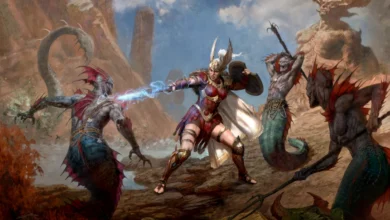
The boss encounters in Belmont’s Curse are designed as "combat puzzles" rather than simple tests of endurance. A prime example is the fight against Medusa, a recurring antagonist in the franchise. In this iteration, Medusa possesses a diverse move set, including:
- A short-range flurry attack.
- The ability to summon falling boulders.
- A petrification gaze that stuns the player if they are facing her.
- An arena-filling laser blast.
The design of the encounter encourages multiple tactical approaches. A player focusing on melee might spend the fight dashing behind cover and timing strikes between laser blasts. However, the game rewards exploration by placing specialized weapons, such as a throwable spear, in nearby hidden areas. Using the spear allows a player to maintain distance and face away from Medusa’s gaze while still dealing damage, effectively "solving" the encounter through preparation and environmental awareness.

Chronology of Development and Release
- 2023: Konami and Evil Empire begin preliminary discussions following the success of the Dead Cells Castlevania DLC.
- Early 2024: Full production commences, focusing on a "back-to-basics" 2D approach with modern visual fidelity.
- June 2026: The official reveal trailer debuts at the Xbox Games Showcase, generating significant social media engagement and critical interest.
- Late 2026: Scheduled release across major platforms, including Xbox Series X|S, PlayStation 5, and PC.
Analysis of Progression Systems and Potential Challenges
While the initial impressions of the game are overwhelmingly positive, some elements of the progression system remain under scrutiny. The game features an XP and Leveling System involving statues and enemy drops. During preview sessions, the immediate impact of leveling up felt negligible compared to the tangible power spikes provided by new weapons and relics. It remains to be seen if the XP system will provide a meaningful long-term growth curve or if it will take a backseat to the gear-based progression.
Furthermore, the difficulty curve is a point of discussion. The opening acts of the game appear accessible, with a focus on teaching mechanics rather than punishing the player. For a franchise known for its "Nintendo Hard" reputation, maintaining a balance between accessibility for newcomers and the grueling challenge expected by veterans will be a critical hurdle for Evil Empire in the final stages of development.
Broader Impact on the Gaming Landscape
The release of Castlevania Belmont’s Curse is poised to be a landmark moment for the action-platformer genre. By combining the heritage of a foundational IP with the modern sensibilities of a developer like Evil Empire, the game seeks to prove that classic 2D formulas are still viable in the AAA space.

For Konami, a successful launch would validate their current strategy of "outsourcing" development to specialized Western studios while maintaining strict oversight of the IP’s soul. For the industry, it reinforces the ongoing "Metroidvania" renaissance, highlighting a shift away from bloated open-world designs in favor of dense, mechanically rich, and visually stunning 2D experiences. As the release date approaches, the anticipation surrounding Rose Belmont’s debut suggests that the "curse" of the Belmont family is, in fact, a blessing for fans of the genre.
Related posts: