Avengers: Doomsday Final Trailer Released Ahead of December 18 Theatrical Release

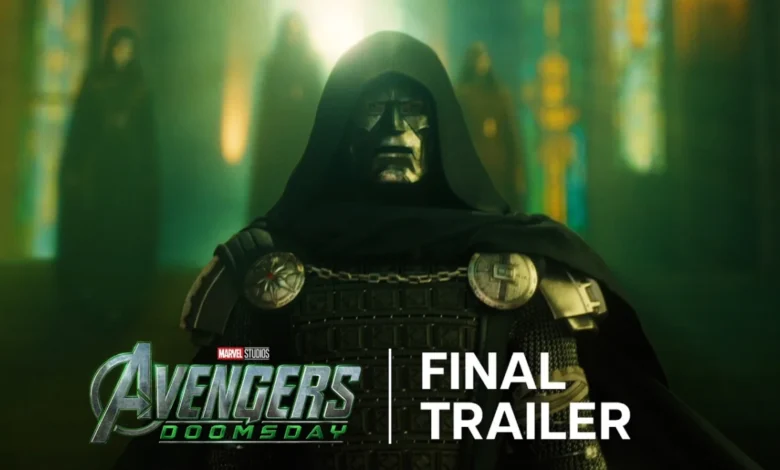
The cinematic landscape is bracing for what trade analysts and entertainment economists are predicting to be one of the most significant box-office events in modern film history, as Marvel Studios officially unveils the final theatrical trailer for Avengers: Doomsday. Set to premiere in theaters worldwide on December 18, the feature-length production represents a monumental convergence point for the Marvel Cinematic Universe (MCU) and associated cinematic franchises. The narrative picks up precisely fourteen months after the cataclysmic events depicted in Thunderbolts*, establishing a high-stakes premise centered on the systemic collapse of the multiverse. As dimensional barriers dissolve, disparate factions of extraordinary individuals from three distinct realities—specifically the primary Avengers, the Wakandans, and the New Avengers hailing from Earth-616, alongside the Fantastic Four from Earth-828 and the venerable X-Men from Earth-10005—find themselves forced into an unprecedented alliance. Their collective mission is to confront the ultimate existential threat posed by the formidable adversary Doctor Doom.
Main Facts and Narrative Premise
The plot architecture of Avengers: Doomsday relies heavily on complex multiversal mechanics that have been systematically introduced and expanded across Phase Four, Five, and Six of the MCU. According to preliminary narrative briefings released by studio executives, the collapse of the multiverse is not merely a localized phenomenon but a total structural failure of reality itself, threatening the existence of infinite timelines. The convergence of Earth-616, Earth-828, and Earth-10005 marks the first time that characters originating from separate cinematic universes—previously managed by different corporate and creative custodians—share sustained screen time in a unified narrative arc.
At the center of this multiversal crisis is Doctor Doom, a character whose historical roots in Marvel Comics extend back to his 1962 debut in Fantastic Four #5 by Stan Lee and Jack Kirby. Within the context of the film, Doom emerges as a transcendent and tyrannical force seeking to impose his own order upon the crumbling debris of reality. The stakes are underscored by the sheer diversity of the coalition gathered to oppose him. This alliance bridges the technological prowess of Wakanda, the grassroots operations of the New Avengers, the cosmic pioneering of the Fantastic Four, and the mutant resilience of the X-Men. Industry analysts note that uniting these intellectual properties under a single directorial vision requires an intricate balancing act of character development, pacing, and fan service, a challenge that Marvel Studios has spent over a decade quietly positioning itself to execute.
Chronology of Production and the Multiverse Saga
To fully understand the weight of Avengers: Doomsday, it is essential to examine the chronological progression of the broader Multiverse Saga, which serves
as the spiritual successor to the sprawling Infinity Saga. The conceptual groundwork for multiversal instability was laid in television projects such as Loki and What If…?, before spilling over into feature films like Spider-Man: No Way Home, Doctor Strange in the Multiverse of Madness, and The Marvels.
The immediate precursor to Doomsday within the internal timeline of the cinematic universe is Thunderbolts, scheduled for release earlier in 2025. The events of that film—involving government-sanctioned operatives and compromised anti-heroes dealing with deep geopolitical and psychological fallout—leave the global infrastructure of Earth-616 vulnerable and fractured. Fourteen months following the conclusion of Thunderbolts, the fractures in the space-time continuum widen beyond repair.
Production on Avengers: Doomsday has been subject to intense media scrutiny, largely due to major structural shifts behind the scenes. Originally conceptualized under a different subtitle, the project underwent significant creative pivots, culminating in the return of acclaimed directors Anthony and Joe Russo, who previously helmed some of the highest-grossing entries in MCU history, including Avengers: Infinity War and Avengers: Endgame. The screenplay, penned by Stephen McFeely and Michael Waldron, has been crafted to streamline the immense roster of characters while advancing a cohesive narrative thread that leads directly into subsequent planned installments. Principal photography spanned multiple international soundstages and location shoots, utilizing cutting-edge virtual production technologies to render the collapsing multiversal environments with unprecedented visual fidelity.
Supporting Data, Cast, and Creative Personnel
The sheer scale of Avengers: Doomsday is reflected in its colossal ensemble cast, which combines veteran Academy Award winners, franchise mainstays, and newly integrated actors portraying iconic comic book figures. The roster features Robert Downey Jr., Chris Evans, Chris Hemsworth, Pedro Pascal, Paul Rudd, Anthony Mackie, Florence Pugh, Vanessa Kirby, Ebon Moss-Bachrach, Wyatt Russell, Channing Tatum, Simu Liu, Hayley Atwell, Tom Hiddleston, James Marsden, Joseph Quinn, Sebastian Stan, David Harbour, Letitia Wright, Lewis Pullman, Kelsey Grammer, Kathryn Newton, Danny Ramirez, Winston Duke, Alan Cumming, Hannah John-Kamen, Rebecca Romijn, Hailee Steinfeld, Tenoch Huerta Mejía, Mabel Cadena, Alex Livinalli, Ian McKellen, and Patrick Stewart.
Financial analysts tracking the entertainment sector have projected extraordinary production and marketing budgets for the film, aligning with the historical expenditures of upper-tier blockbuster cinema. Pre-ticket sales projections, calculated by independent box-office tracking firms, suggest that Doomsday is positioned to shatter opening-weekend records, potentially rivaling the historic theatrical debuts of Avengers: Endgame (2019) and Spider-Man: No Way Home (2021). The inclusion of legacy actors from non-MCU franchises—such as members of the original Fox X-Men film series and historical iterations of Marvel properties—provides a quantifiable boost in cross-demographic audience appeal, drawing interest from older demographics who grew up with early-2000s superhero cinema, alongside younger generations native to the modern MCU.
Official Responses and Studio Strategy
Executives at The Walt Disney Company and Marvel Studios have maintained a tightly managed promotional campaign, carefully doling out promotional materials to maximize anticipation while preserving narrative secrecy. In official statements accompanying the release of the final trailer, studio representatives emphasized the emotional and structural resonance of the film, framing it as a celebration of cinematic history rather than a purely commercial exercise.
"When you look at what these characters represent across decades of storytelling, bringing them together under the threat of a villain as monumental as Doctor Doom required a level of coordination and creative ambition that we have never attempted before," noted a senior production source close to the project, speaking on condition of anonymity. "The Russo brothers, alongside Stephen McFeely and Michael Waldron, have constructed a narrative that honors the legacy of these separate universes while pushing the boundaries of where the medium can go next."
Furthermore, marketing teams have leveraged the holiday release window strategically. By positioning the film for a December 18 debut, Disney aims to capture not only the lucrative opening-weekend rush but also the prolonged box-office tailwinds provided by the year-end holiday vacation period, during which family audiences and casual moviegoers have increased leisure time. This release calendar mirrors the successful deployment strategies of past high-grossing epics, ensuring maximum screen allocation across premium large formats (PLFs) such as IMAX, Dolby Cinema, and 4DX.
Broader Impact and Industry Implications
The commercial and cultural implications of Avengers: Doomsday extend far beyond the financial balance sheets of a single studio. As the traditional theatrical exhibition model continues to navigate post-pandemic recovery and shifting consumer streaming habits, tentpole event films of this magnitude serve as vital economic life-lines for global cinema chains. Industry trade organizations have frequently pointed to Marvel’s multiversal crossovers as essential drivers of domestic and international ticket sales, frequently accounting for double-digit percentages of total annual box-office grosses.
From a narrative perspective, Doomsday represents a crucial inflection point for the superhero genre. Critics and cultural commentators have increasingly debated whether audience fatigue regarding comic book adaptations is setting in, pointing to diminishing returns on certain standalone projects across the industry. By consolidating multiple distinct cinematic universes into a single, high-stakes narrative event, Marvel Studios is actively betting that scale, nostalgia, and interconnected storytelling remain potent incentives for theatrical attendance. The success or failure of Doomsday will likely dictate the strategic direction of Hollywood franchise filmmaking for the remainder of the decade, serving as a definitive test case for whether legacy crossover events can still command universal cultural attention in an increasingly fragmented media ecosystem. As the December 18 release date approaches, exhibitors, investors, and millions of fans worldwide wait to see how the curtain rises on the ultimate battle for the multiverse.