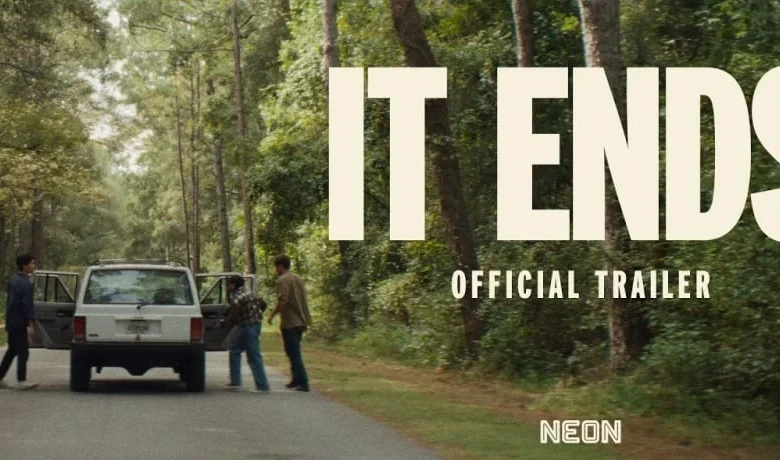
A chilling new cinematic experience, "IT ENDS," is set to redefine the boundaries of psychological horror and cosmic dread when it premieres in theaters nationwide on August 21st. Directed and written by the emerging talent Alex Ullom, the film plunges a group of recent graduates into an inescapable nightmare, transforming a celebratory late-night drive into an eternal descent into terror. The premise, starkly summarized by the film’s tagline, "Some wrong turns last forever," hints at a narrative that explores not only external threats but also the internal fracturing of individuals facing unimaginable circumstances.
The core of "IT ENDS" revolves around four friends on the cusp of their next life chapter. Seeking to savor their final moments together before their individual paths diverge, they embark on a casual late-night excursion for food. This seemingly innocuous decision takes a catastrophic turn when they inadvertently veer onto a road that defies all logic and physics – a seemingly endless, two-lane highway shrouded in an atmosphere of palpable dread. The landscape surrounding this spectral thoroughfare is described as containing "untold horrors and cosmic forces beyond their understanding," suggesting a departure from conventional horror tropes into realms of existential fear and the unknown.
Confined within the claustrophobic interior of a Jeep Cherokee, the protagonists find themselves trapped on this spectral highway, with the mileage appearing to stretch into infinity. This perpetual journey forces them to confront a fundamental choice: succumb to the overwhelming psychological pressure and the encroaching existential void, or muster the courage and ingenuity to fight for an escape that may not even exist. The film’s narrative arc is poised to investigate themes of friendship under duress, the resilience of the human spirit when confronted with the incomprehensible, and the terrifying prospect of being utterly alone in an indifferent, or perhaps malevolent, universe.
The cast features a quartet of promising young actors: Mitchell Cole, Akira Jackson, Noah Toth, and Phiehas Yoon. Their collective performance will be crucial in conveying the escalating fear, desperation, and potential fracturing of their relationships as they grapple with their nightmarish predicament. The decision to place these characters in a confined space for the majority of the film amplifies the sense of entrapment and forces an intense focus on their interactions and individual reactions to the unfolding terror.
"IT ENDS" is positioned to tap into a growing audience fascination with cosmic horror, a subgenre that draws inspiration from the works of H.P. Lovecraft and emphasizes the insignificance of humanity in the face of vast, indifferent, or actively hostile cosmic entities. This genre often eschews jump scares in favor of a pervasive sense of dread, psychological unease, and the existential terror of confronting truths that shatter one’s perception of reality. The film’s focus on a seemingly mundane setting—a highway—transformed into a cosmic trap offers a unique and potentially unsettling twist on these established themes.
Background and Context: The Allure of the Endless Journey in Horror
The concept of an unending journey or a cyclical trap has a long-standing tradition in horror and speculative fiction. From the mythical Sisyphus eternally pushing his boulder to the modern iterations found in films like "Triangle" (2009) or episodes of "The Twilight Zone," the idea of being trapped in a loop or an inescapable environment preys on fundamental human anxieties about freedom, agency, and the passage of time.
In the context of "IT ENDS," the late-night drive for sustenance is a relatable, everyday scenario. This grounding in the mundane makes the sudden, inexplicable shift into a terrifying, endless void all the more impactful. The Jeep Cherokee itself, a symbol of freedom and mobility, becomes a prison. This juxtaposition of the ordinary with the extraordinary is a hallmark of effective horror, allowing audiences to project their own fears onto familiar situations.
The "cosmic forces beyond their understanding" element suggests that the horror in "IT ENDS" may not be confined to terrestrial threats. This opens the door for explorations of themes such as existentialism, the limits of human knowledge, and the profound psychological impact of confronting the truly alien. Such narratives often challenge viewers to question their place in the universe and the nature of reality itself.
Director Alex Ullom’s Vision: Crafting Existential Dread
Alex Ullom, serving as both writer and director, appears to be delving into deep-seated psychological fears with "IT ENDS." The decision to center the narrative on a small group of recent graduates adds another layer of poignancy. These characters are at a pivotal moment in their lives, filled with anticipation for the future. Their sudden entrapment on this spectral road not only threatens their immediate survival but also represents the annihilation of their anticipated futures and the abrupt halt to their personal growth and aspirations.
The film’s visual representation, hinted at by the accompanying promotional materials, likely plays a significant role in establishing the unsettling atmosphere. The description of the landscape as a "hellscape" suggests a deliberate artistic choice to portray a world that is both nightmarish and surreal, pushing the boundaries of visual storytelling. The "untold horrors" could manifest in various ways, from subtle environmental distortions to more overt, yet perhaps still incomprehensible, visual phenomena.
The limited setting within the Jeep Cherokee is a strategic choice that forces intense character development and inter-character dynamics. As the hours, or perhaps days, blur into an eternal stretch of road, the relationships between the friends will undoubtedly be tested. Tensions will rise, loyalties will be strained, and individual coping mechanisms will be exposed, potentially leading to internal conflicts as potent as the external horrors they face.
Supporting Data and Industry Trends in Horror Cinema
The horror genre has seen a consistent and robust performance at the box office in recent years. Films that offer unique concepts, strong thematic depth, and a departure from formulaic scares often resonate with audiences. The subgenre of elevated horror, which blends genre conventions with critical and artistic ambition, has particularly thrived. This includes films that explore social commentary, psychological depth, and philosophical ideas, such as Jordan Peele’s "Get Out" (2017) or Ari Aster’s "Hereditary" (2018).
"IT ENDS" appears to align with this trend by focusing on psychological terror and existential themes rather than relying solely on gore or jump scares. The reported emphasis on "cosmic forces beyond their understanding" also places it within the growing interest in cosmic horror, a subgenre that has seen a resurgence in popularity across film, television, and literature. The success of franchises like "A Quiet Place," which rely on a high-concept premise and intense atmosphere, suggests that audiences are receptive to original horror stories that offer a distinct viewing experience.
The independent film circuit has also been a fertile ground for innovative horror. Many of the most impactful and critically acclaimed horror films of the past decade have emerged from smaller studios and independent productions, allowing for greater creative freedom and the exploration of more niche or challenging themes. Alex Ullom’s directorial debut with "IT ENDS" could signal the emergence of a new voice in this landscape.
Promotional Material and Audience Reception
The official trailer for "IT ENDS," released on YouTube, offers a glimpse into the film’s unsettling atmosphere and narrative premise. The trailer, which has garnered significant attention, showcases the stark visual contrast between the mundane setting of the late-night drive and the encroaching, surreal horror of the endless road. The use of sound design and pacing in the trailer is crucial in building anticipation and conveying the escalating sense of dread.
Early reactions from industry observers and horror enthusiasts suggest a high level of anticipation for the film. The unique premise and the promise of a thought-provoking, character-driven horror experience have generated considerable buzz on social media platforms and genre-specific forums. The tagline itself has become a point of discussion, resonating with the universal fear of irreversible mistakes and the consequences of choices made.
The decision to release the film in theaters nationwide on August 21st indicates confidence from the distributors in its potential to draw audiences. This theatrical release strategy is particularly significant in the current film landscape, suggesting that the filmmakers and distributors believe the immersive visual and auditory experience of "IT ENDS" is best appreciated on the big screen.
Chronology of Release and Anticipated Impact
The announcement of "IT ENDS" and its subsequent trailer release mark the initial stages of its promotional campaign. The film is scheduled for a theatrical debut on August 21st. This date places it within the late summer release window, a period that often sees a mix of blockbuster tentpoles and genre films vying for audience attention.
The film’s success will likely depend on its ability to translate its intriguing premise into a compelling and terrifying cinematic experience. If "IT ENDS" delivers on its promise of existential dread and psychological intensity, it could become a significant talking point within the horror community and beyond. Its thematic explorations of entrapment and the unknown could resonate with a broad audience, prompting discussions about fear, isolation, and the human condition.
The film’s impact could extend beyond its box office performance. A successful and critically acclaimed independent horror film like "IT ENDS" can pave the way for future projects from its director and cast, contributing to the ongoing evolution of the horror genre. The film’s potential to explore complex themes within a genre often dismissed as mere entertainment could further elevate the artistic legitimacy of horror cinema.
Official Statements and Artistic Intent (Inferred)
While direct quotes from the filmmakers regarding their specific artistic intentions for "IT ENDS" beyond the provided synopsis are not yet widely available, the director’s and writer’s credit to Alex Ullom suggests a singular vision driving the project. The emphasis on "untold horrors and cosmic forces beyond their understanding" strongly indicates a desire to explore themes of existentialism and the limitations of human comprehension.
The choice of a confined setting like the Jeep Cherokee, coupled with the concept of an infinite road, points towards an exploration of psychological claustrophobia and the breakdown of individual and group dynamics under extreme pressure. This deliberate narrative and environmental construction suggests an intent to create a deeply unsettling and thought-provoking experience that lingers with the audience long after the credits roll. The film’s structure, as described, is not merely a plot device but a fundamental element designed to evoke a specific emotional and intellectual response.
The film’s release date suggests a strategic approach to capitalize on audience interest in genre cinema. The current landscape of horror films often rewards originality and thematic depth, and "IT ENDS" appears poised to deliver on both fronts, positioning it as a potential standout in the late summer release slate.
Broader Implications and Analysis
The narrative of "IT ENDS" taps into fundamental anxieties that have been amplified in recent years. The feeling of being stuck, the uncertainty of the future, and the sense of powerlessness in the face of overwhelming external forces are themes that resonate deeply in a post-pandemic world grappling with global challenges. The film’s premise of an inescapable, unending journey can be interpreted as a potent metaphor for these collective and individual experiences.
The film’s exploration of cosmic horror also aligns with a growing cultural interest in the unknown and the limitations of human understanding. As scientific advancements reveal more about the universe, they also highlight the vastness of what remains undiscovered and the potential for phenomena that defy our current paradigms. "IT ENDS" seems poised to engage with this sense of cosmic awe and terror, prompting audiences to contemplate humanity’s place in a seemingly indifferent or incomprehensible cosmos.
Furthermore, the emphasis on a group of friends facing a shared ordeal under extreme duress can offer insights into the dynamics of human relationships. The film’s potential to showcase the disintegration or, conversely, the strengthening of bonds under pressure provides a compelling human element to the supernatural horror. This focus on interpersonal dynamics within a terrifying context can elevate the film beyond a simple genre exercise, offering a more profound commentary on connection, survival, and the human capacity for both resilience and despair.
The success of "IT ENDS" could also signal a continued appetite for original, high-concept horror films that prioritize atmosphere, psychological depth, and thematic resonance over formulaic scares. As the film industry continues to evolve, such projects are vital for pushing the boundaries of the genre and offering audiences fresh and thought-provoking cinematic experiences. The theatrical release, in particular, underscores a belief in the power of shared communal viewing for horror, where the collective reactions of an audience can amplify the intended effect of the film.