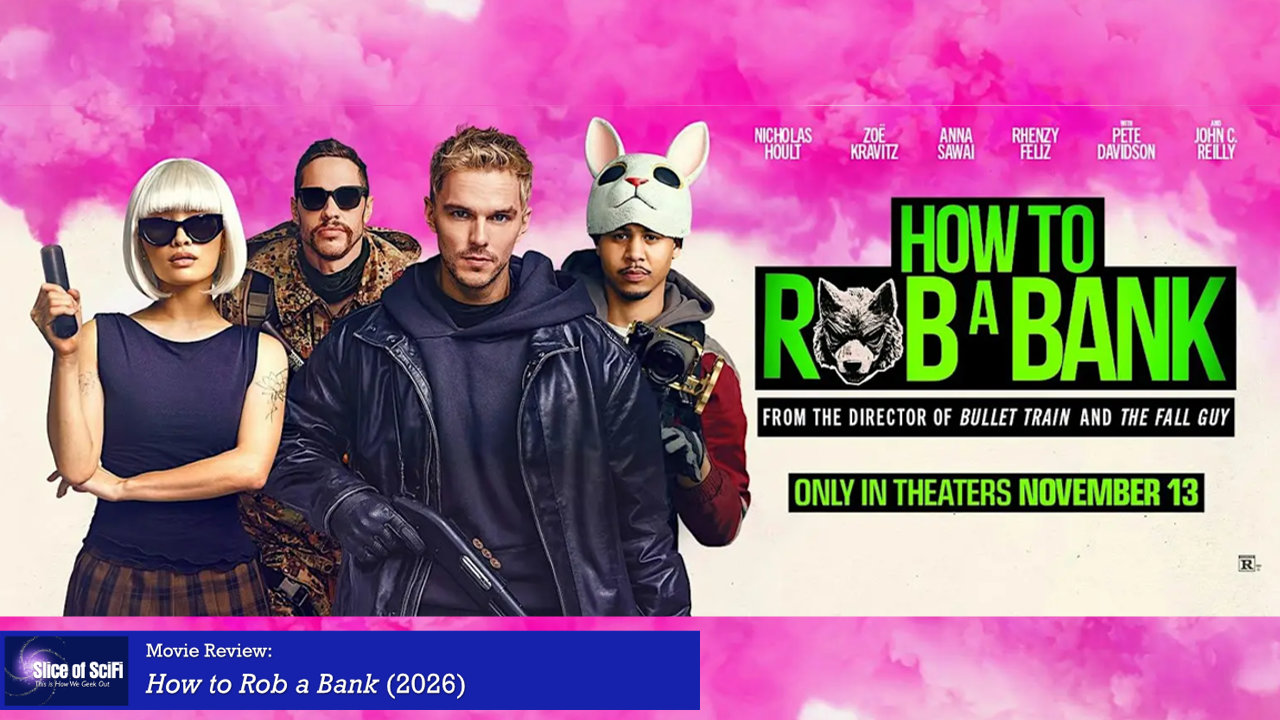
The intersection of modern digital media, economic inequality, and high-octane crime cinema takes center stage in Amazon MGM Studios’ latest feature release, How to Rob a Bank. Directed by filmmaker David Leitch and written by screenwriter Mark Bianculli, the film blends pulse-pounding action sequences with pointed social commentary about structural financial injustices in the United States. Starring an ensemble cast led by Nicholas Hoult, John C. Reilly, Zoë Kravitz, Anna Sawai, and Pete Davidson, the production has drawn attention not only for its kinetic stunt work but for its provocative narrative framing: a crew of bank robbers who stream their illicit operations live to the public, transforming felony heists into viral social media events.
Main Facts and Narrative Premise
At its core, How to Rob a Bank follows a tight-knit and ideologically driven crew operating out of Pittsburgh, Pennsylvania. Led by Ryan, portrayed by Nicholas Hoult, the group executes meticulously planned bank robberies while broadcasting their actions in real-time. Ryan dons a distinctive wolf mask, assisted by crew members including Hugo (Rhenzy Feliz), Emi (Anna Sawai), and Vince (Pete Davidson). Rather than operating purely for personal enrichment, the crew utilizes their platform to instruct viewers on perceived systemic failures, citing statistics on the high success rate of bank robberies while lambasting institutions for skyrocketing student-loan debt, medical expenses, structural barriers to homeownership, and stagnant cost-of-living wages.
The digital broadcasts actively target the socio-economic vulnerabilities of everyday citizens and low-level workers. In one notable instance, the Wolf team broadcasts a direct message to bank security guards, questioning why underpaid personnel should risk their lives to protect insured corporate assets. This blend of populist rhetoric and high-stakes criminality quickly captures the public imagination, sparking viral engagement across cell phones and digital platforms while frustrating federal authorities tasked with maintaining public order.
Chronology of the On-Screen Investigation
The narrative unfolds through a high-stakes cat-and-mouse game between the streaming criminals and a struggling federal law enforcement unit. The chronology of the operation accelerates rapidly following an opening sequence in Pittsburgh, where the crew stages a diversion using a bomb-like device on a bridge. While Emi calls a diversionary 9-1-1 report, the rest of the team secures their target, utilizing advanced tools such as DNA-eraser aerosol sprays to sanitize crime scenes.
As the broadcasts continue and public sympathy for the crew grows, veteran FBI agent John West (John C. Reilly) faces mounting pressure from superiors. With his standard investigative techniques yielding no results against the digitally savvy criminals, West turns outside the agency for assistance. He approaches Reagan (Zoë Kravitz), an ex-professor from Carnegie Mellon University currently serving a sentence of house arrest. Though Reagan was not directly culpable for a prior criminal act—her location-tracking software was misappropriated by third parties to target and burn down a judge’s home—West leverages his authority to commute her sentence in exchange for her technical expertise.
Reagan analyzes the digital footprints and commonalities across the Wolf team’s video transmissions, eventually triangulating their operational base. This breakthrough leads to a federal raid that uncovers critical hardware, as well as an inadvertent piece of physical evidence: an asthma inhaler bearing the name of crew member Vince. However, the criminals remain steps ahead, having prepared contingency broadcasts that include instructional videos on handling police interrogations, highlighting their preparedness for law enforcement intervention.
Supporting Data and Socio-Economic Context
The film’s thematic framework leans heavily on contemporary socio-economic realities, touching upon systemic financial pressures that disproportionately affect younger generations. Within the narrative, the characters articulate grievances centered around the American economic landscape:
- Student-Loan Debt: National figures indicate that cumulative federal and private student loan debt in the United States exceeds $1.7 trillion, heavily burdening graduates as they enter the workforce.
- Cost of Living and Housing: Median home prices relative to median household incomes have reached historic highs, creating structural barriers to homeownership for middle- and lower-income demographics.
- Healthcare Expenditures: Out-of-pocket medical expenses remain a leading cause of personal bankruptcy filings nationwide.
By weaving these statistics into the manifesto-style videos broadcast by Ryan and his crew, the screenplay attempts to ground its high-action premise in recognizable societal grievances. However, the narrative also questions the efficacy of fragmented digital consumption, noting how fast-paced social media feeds reduce complex economic realities into transient, digestible entertainment clips rather than driving profound intellectual inquiry.
Official Responses and Law Enforcement Perspectives
Within the context of the film’s universe, the response from law enforcement embodies a broader philosophical debate regarding the necessity of the social contract. FBI Agent John West represents the traditional institutional viewpoint: while acknowledging the validity of the economic frustrations voiced by the public and the robbers alike, West underscores the fundamental necessity of the legal system in preventing systemic anarchy.
The tension between order and justice forms a primary philosophical conflict. Law enforcement officials argue that regardless of systemic inequities, criminal vigilantism and high-profile thefts undermine public safety and erode the foundational rules that protect communities. Conversely, the film’s antagonists argue that institutional structures are already rigged against the working class, rendering conventional legal channels ineffective for achieving substantive reform.
Broader Impact and Implications
The release of How to Rob a Bank arrives at a time when the portrayal of anti-heroes and technologically enabled civil disobedience frequently dominates pop culture discourse. Industry analysts have noted the film’s structural lineage, drawing comparisons to director David Leitch’s previous action-centric works such as Bullet Train and The Fall Guy. Leitch’s signature style—characterized by fast pacing, integrated stunt choreography, and high-energy musical backing—ensures that the film functions effectively as an action thriller.
At the same time, cultural critics have debated the societal implications of centering a narrative around characters who broadcast illegal acts to a receptive digital audience. The film addresses the phenomenon of copycat behavior and the potential dangers of validating unlawful actions under the banner of populist justice. By examining how modern audiences consume, share, and react to viral media, the production holds up a mirror to contemporary information ecosystems, where deep societal issues are frequently commodified for online engagement.
Concluding Analysis
How to Rob a Bank successfully balances large-scale cinematic set pieces with character-driven performances, notably through Nicholas Hoult’s portrayal of a grief-stricken yet resolute leader, John C. Reilly’s grounded depiction of an outpaced veteran agent, and Pete Davidson’s emotionally resonant turn as an ex-military family man. While the screenplay occasionally simplifies complex sociological and economic challenges to fit within the runtime of an action-thriller format, the film nevertheless delivers a visually arresting and intellectually stimulating exploration of crime, media consumption, and institutional discontent in the digital age.