Broadway Brings Horror to the Parade Route: The Lost Boys and The Rocky Horror Show Join the 100th Macy’s Thanksgiving Day Parade

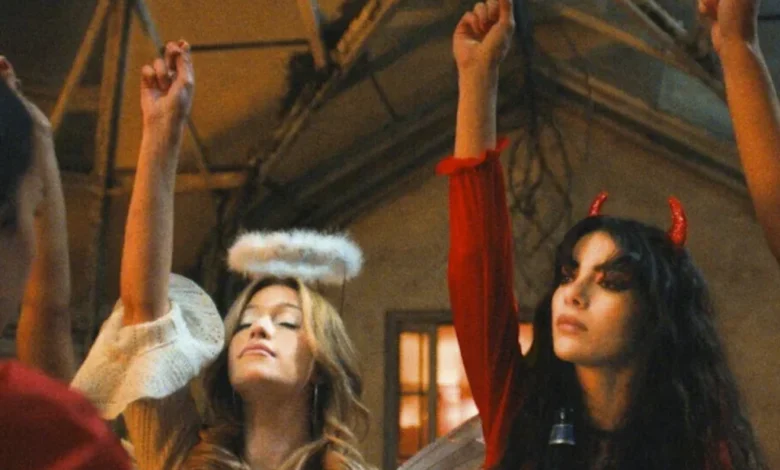
The 100th annual Macy’s Thanksgiving Day Parade is set to trade some of its traditional holiday wholesomeness for a touch of the macabre, as two cult horror favorites prepare to invade the streets of Manhattan. Organizers have confirmed that musical numbers from both The Lost Boys and The Rocky Horror Show will be featured as part of a high-profile television medley billed as the "All-Star Broadway Thanksgiving Day Celebration."

This inclusion marks a significant cultural milestone for horror-themed theatrical productions, integrating counterculture midnight movies and vampire lore directly into one of America’s most-watched traditional holiday broadcasts. The special segment will bridge generations of musical theater and horror fandom, pairing decades-old midnight-movie royalty with contemporary Broadway adaptations.
Main Facts of the Holiday Broadcast
Scheduled to air on Thursday, November 26, the milestone centennial parade will reach tens of millions of viewers tuning in via NBC and Peacock starting at 8:30 a.m. across all time zones. The theatrical segment itself will be introduced by actor Julianne Hough, offering home audiences a snapshot of the current Broadway landscape.
While producers have kept the specific setlist under wraps—keeping fans guessing as to which tracks from The Lost Boys and The Rocky Horror Show will echo past the skyscrapers of midtown Manhattan—the creative infrastructure behind the medley is substantial. The musical arrangements for the broad-scale performance are being handled by acclaimed composer Tom Kitt, working in tandem with creative producer Sarah O’Gleby.
The horror-tinged selections will not stand alone on the holiday stage. Instead, they are slated to anchor a densely packed medley alongside heavy-hitting mainstays of the Great White Way. Current and classic properties slated for the segment include Schmigadoon!, Wicked, Hamilton, Rent, Chicago, The Book of Mormon, and Disney’s Aladdin.
Chronology and Background of the Productions
The path of these two horror properties to the Macy’s Thanksgiving Day Parade route represents two very different trajectories in theatrical history. The Rocky Horror Show, created by Richard O’Brien, has spent the last five decades cementing its status as an international cultural phenomenon. Since its stage debut in 1973 and the subsequent 1975 midnight-movie adaptation The Rocky Horror Picture Show, the interactive musical has thrived on audience participation, prop-throwing, call-and-response dialogue, and costumed subcultures. Its longevity on stages worldwide makes its integration into a mainstream family holiday parade both a nod to its endurance and a testament to its mainstream normalization over the past fifty years.
Conversely, The Lost Boys arrives on the parade route with a much newer theatrical pedigree. Adapted from Joel Schumacher’s influential 1987 teen vampire cult classic, the musical adaptation officially reopened on Broadway earlier this year. Headlined by Ali Louis Bourzgui, the stage production successfully translated the neon-soaked, saxophone-heavy aesthetics of Santa Carla, California, into a contemporary theatrical score. The inclusion of The Lost Boys in the parade underscores the current commercial and critical viability of horror adaptations on Broadway, a sector that historically favored sweeping romance or historical drama over fangs and gore.
Supporting Data and Production Scale
The Macy’s Thanksgiving Day Parade remains one of the most logistically complex and widely consumed annual television events in the United States. Established in 1924, the centennial broadcast in 2026 represents a century of cultural curation by the department store giant. Historically, the parade attracts an estimated 3.5 million spectators lining the streets of New York City, paired with roughly 50 million television viewers nationwide.

Securing a performance slot within the "All-Star Broadway Thanksgiving Day Celebration" is widely considered a major promotional coup for theatrical productions. Shows chosen for the broadcast typically experience immediate bumps in box office sales and heightened national brand awareness just ahead of the lucrative holiday shopping and tourism season. For niche genres like horror, gaining access to this family-oriented platform demonstrates a shifting demographic among theatergoers, who increasingly embrace dark, subversive narratives in mainstream musical formats.
Industry Implications and Cultural Impact
The decision to feature horror-adjacent properties in a family-oriented national broadcast highlights a broader shift in mainstream entertainment. Historically, networks and parade organizers carefully curated selections to avoid alienating conservative or family audiences with overtly subversive, countercultural, or R-rated thematic elements. However, the commercial success of modern horror theater indicates that audiences have an appetite for darker motifs, even during traditional holidays.
Industry analysts note that bringing shows like The Lost Boys and The Rocky Horror Show to a broad morning television audience reflects the mainstreaming of fandom culture. By packaging these properties alongside institutional giants like Wicked and Hamilton, Broadway producers are signaling that horror musicals are no longer confined to the fringes or underground midnight screenings. They are viable, high-production-value commodities capable of sitting comfortably at the center of American popular culture.
As the floats roll down the parade route and the cameras capture Tom Kitt’s custom arrangements, millions of viewers at home will witness a unique cultural fusion: the traditional warmth of Thanksgiving morning colliding directly with the undead energy of Broadway horror.