Heart of the Beast highlights the bond between dog and man in rugged wilderness survival drama directed by David Ayer

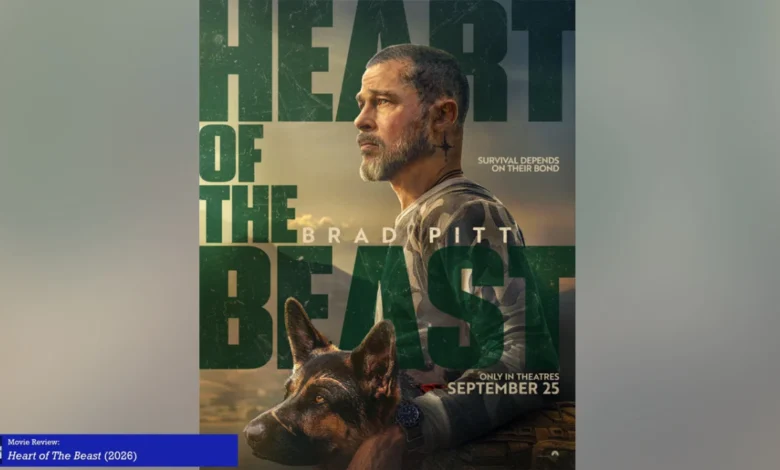
The cinematic landscape of wilderness survival dramas has welcomed a compelling new entry with the release of Heart of the Beast, a gripping feature film that examines the profound psychological and physical connection between a retired military veteran and his combat-scarred canine companion. Directed by acclaimed filmmaker David Ayer from a screenplay penned by Cameron Alexander, the movie stars Brad Pitt as James Belmont, a former Special Forces operative, alongside a remarkable team of four related German Shepherds—Uber, Ryker, Hondo, and Zika—who collectively portray Odin, a battle-tested military service dog.
Distributed against the backdrop of the Alaskan wilderness, though cleverly and meticulously shot across the diverse topography of New Zealand, the film blends high-stakes action with a quieter, more intimate exploration of trauma, rehabilitation, and loyalty. While critics note that the survival-adventure genre treads familiar narrative territory, the distinct inclusion of canine Post-Traumatic Stress Disorder (PTSD) and the striking non-verbal chemistry between the principal actors elevate the project above conventional studio fare. Alongside Pitt and the canine leads, the cast features Anna Lambe as Amber and J.K. Simmons in a mysterious supporting role as Watkins, contributing to a narrative that balances sweeping natural vistas with intense personal peril.
Main Facts and Production Overview
At its core, Heart of the Beast is an exploration of survival against overwhelming odds, anchored by the unique relationship between a man and a dog who share the invisible wounds of active combat service. James Belmont, an elite Special Forces veteran with deployments in Iraq and Afghanistan, struggles with the lingering psychological repercussions of his service, manifested through vivid and debilitating flashbacks. In a narrative choice that sets the film apart from standard man-versus-nature tropes, Odin is depicted as suffering from parallel trauma, reflecting the real-world mental health challenges faced by military working dogs upon retirement.
The production, spearheaded by prominent industry figures including executive producer Damien Chazelle—known for his collaboration with Simmons on Whiplash—relied heavily on physical realism and rigorous preparation. To authentically portray an experienced operative, Brad Pitt underwent an exhaustive training regimen designed to mirror the physical conditioning and tactical readiness of a modern Special Forces soldier. Meanwhile, the canine performances required a specialized approach, utilizing four closely related German Shepherds to handle the demanding physical choreography of the wilderness sequences without placing undue stress on any single animal.
The stunning visual language of the film is driven by high-end cinematography that captures both the grand scale of primeval landscapes and the quiet intimacy of the characters’ daily survival routines. Despite being filmed entirely in New Zealand, the production successfully recreates the atmospheric grandeur of the American North, complete with dense forests, glacial lakes, and sweeping mountain ranges. Visual effects were judiciously employed to construct realistic encounters with local wildlife, including hyper-realistic sequences featuring wolves, moose, and a formidable grizzly bear, which amplify the constant tension of the characters’ journey.
Chronology of the Narrative and Plot Development
The film establishes its narrative framework through a reverse-chronological framing device. The opening sequences introduce Amber, portrayed by Anna Lambe, driving a transport truck along a desolate highway. Spotting a large, solitary dog standing steadfastly in the middle of the road, she brings her vehicle to a halt, setting up a mystery that is resolved only in the film’s closing minutes.
The narrative then flashes back one week earlier to a remote region of Alaska. A Cessna pontoon aircraft navigates the skies above a lush, green valley framed by snow-capped peaks, eventually touching down smoothly on the surface of an isolated alpine lake. Disembarking from the aircraft are James and Odin. The German Shepherd bears visible signs of his service, including facial scarring and a prosthetic foreleg, underscoring the physical toll of his military career.
During the initial days of their expedition, James and Odin immerse themselves in the isolation of the backcountry. Their interactions establish a rhythm of mutual reliance; during a hunting excursion, James deliberately opts not to shoot a targeted moose, choosing instead to rely on traditional fishing methods in which Odin plays an active and successful role in securing their provisions.
The routine of their solitude is temporarily disrupted by the arrival of an eccentric stranger named Watkins, played by J.K. Simmons. Professing an appreciation for the tranquility of nature, Watkins nonetheless talks incessantly, eventually following James and Odin back to their established campsite to spend the night. By the following morning, Watkins departs as abruptly as he arrived, seen rowing a large canoe into the early morning mist before disappearing entirely from the remainder of the storyline—a narrative choice that has drawn both curiosity and critical debate regarding its structural necessity.
As meteorological conditions rapidly deteriorate, signaling the approach of a severe wilderness storm, James packs the campsite and pilots the Cessna into the air, successfully navigating the aircraft above the turbulent cloud cover. However, a sudden medical emergency abruptly alters the trajectory of the flight. James suffers a massive myocardial infarction, clutching his left arm in agony before losing consciousness at the controls.
Unpiloted, the aircraft loses altitude, clipping the upper branches of forest trees before crashing violently into a remote lake. Odin is violently ejected from the passenger-side door during the descent, while James remains trapped inside the sinking fuselage. Regaining consciousness just in time, James manages to locate an air pocket, escape the submerged aircraft, and initiate a frantic search for his companion. He discovers the unconscious dog ashore; aside from the shock of the impact, Odin revives and appears remarkably uninjured.
Facing a critical shortage of provisions, James forces himself back into the icy waters to salvage essential cargo boxes from the wreckage. He organizes a functional pack from the recovered supplies, arming himself with a topographical map, a magnetic compass, and survival gear. Joined by Odin, James embarks on a grueling trek across miles of unforgiving terrain to locate the nearest civilian roadway, navigating raging rivers, treacherous terrain, and predatory wildlife.
Supporting Data, Technical Execution, and Cinematic Craft
The technical execution of Heart of the Beast relies heavily on seamless editing, advanced sound design, and the integration of practical and digital effects. The transition sequences—ranging from the chaotic realism of the plane crash and the turbulent river descent to the calculated tension of predatory animal encounters—demonstrate a high level of post-production craftsmanship.
The visual effects team faced the challenge of populating the New Zealand shooting locations with fauna authentic to the North American wilderness. Close-up sequences involving wolf packs during hunting or defensive maneuvers were constructed with meticulous attention to detail, creating an immersive sense of peril. Similarly, background elements such as nocturnal auroras were rendered to enhance the atmospheric beauty of the setting without overshadowing the grounded nature of the survival narrative.
From a structural standpoint, the film’s pacing is designed to mirror the physical exhaustion and mental strain experienced by its human and canine protagonists. With minimal dialogue exchanged between James and Odin, the narrative relies entirely on visual storytelling, micro-expressions, and physical blocking to convey emotional stakes. This minimalist approach places a heavy burden on the lead performers, a challenge that Pitt and his canine co-stars successfully navigate through disciplined, understated performances.
Critical Analysis and Industry Implications
Upon its release, Heart of the Beast has generated thoughtful discourse among film critics and animal welfare advocates alike. The decision to center a mainstream adventure film around the psychological rehabilitation of a military working dog brings institutional visibility to an often-overlooked aspect of modern armed conflict. Military working dogs play critical roles in explosive detection, tracking, and tactical patrols, yet their post-service transition plans have historically received limited public attention. By humanizing Odin’s trauma and depicting the reciprocal healing process between him and his handler, the film contributes to broader public awareness regarding veteran advocacy and animal welfare.
However, the film has also invited analytical scrutiny regarding its narrative choices and adherence to realism. The inclusion of J.K. Simmons’ character, Watkins, has been a focal point for critics questioning screenwriting efficiency. Industry analysts note that Watkins functions primarily as an expositional device, allowing James to briefly vocalize his internal backstory before exiting the narrative permanently. Some reviewers have suggested that this subplot feels underdeveloped relative to the central survival arc, pointing to potential creative friction or structural compromises during the writing process.
Furthermore, certain survival sequences—such as James surviving a high-speed impact against a river rock and an asymmetric conflict with an aggressive wolf pack—have drawn skepticism from purists of the survival-adventure genre. While filmmakers frequently lean on the protagonist’s Special Forces training to justify improbable feats of endurance, these heightened moments occasionally test audience suspension of disbelief. Despite these minor narrative contrivances, the overarching emotional truth of the central relationship successfully anchors the production.
Broader Impact on the Survival-Adventure Genre
Heart of the Beast arrives at a time when audiences increasingly seek character-driven narratives that combine physical action with emotional depth. By subverting the traditional man-against-nature formula through the incorporation of an animal co-lead with equal psychological complexity, the film offers a blueprint for future entries in the survival-adventure genre.
The production’s success also highlights the viability of animal actors as emotional anchors in dramatic cinema. The nuanced performances delivered by Uber, Ryker, Hondo, and Zika demonstrate the advanced capabilities of animal handling and training in contemporary filmmaking, establishing a high benchmark for future collaborations between human actors and animal performers.
As the film continues its theatrical run, its resonance is expected to extend beyond traditional entertainment circles, engaging communities interested in military history, veteran support systems, and animal advocacy. Through its combination of rigorous physical action, stunning cinematography, and a heartfelt exploration of loyalty, Heart of the Beast secures its place as a notable addition to the cinematic exploration of the human-canine bond.