Philomena Cunk returns to tackle the history of the silver screen in the upcoming three-part series Cunk on Cinema

The BBC has officially confirmed the production of a new three-part documentary series, Cunk on Cinema, marking the latest expansion of the satirical franchise fronted by comedian Diane Morgan. Following the critical and international success of her previous historical deep dives, Morgan’s character, Philomena Cunk, will shift her focus from the broad strokes of British history, the planet, and the general human experience toward the medium of motion pictures. The series, created by long-time collaborator Charlie Brooker, promises to dissect the history of film from the invention of the camera to the contemporary landscape of artificial intelligence and CGI, all through the lens of Cunk’s uniquely obtuse questioning.
The Evolution of the Cunk Franchise
The Philomena Cunk character first gained prominence as a recurring segment on the satirical news program Charlie Brooker’s Weekly Wipe, which premiered on the BBC in 2013. Morgan’s portrayal of a misinformed, deadpan, and profoundly bewildered documentary host became a viral sensation, leading to a series of standalone specials.
The trajectory of these specials has been characterized by an increasingly ambitious scope:
- 2016: Cunk on Shakespeare explored the life and works of the Bard, establishing the format of interviewing genuine experts who are forced to grapple with Cunk’s non-sequiturs.
- 2018: Cunk on Britain expanded the format into a multi-part series, attempting to summarize the entirety of British history.
- 2022: Cunk on Earth brought the character to a global audience via a partnership with Netflix. The series became a massive international hit, particularly on social media, where clips of Cunk’s questioning of historians and scientists gained widespread traction for their juxtaposition of high-level academic discourse and complete intellectual vacancy.
- 2026: Cunk on Cinema continues this lineage, applying the established mockumentary structure to the specific history and technical evolution of the film industry.
Exploring the Scope of Cunk on Cinema
According to official BBC documentation, the three-part series will span a comprehensive timeline. The narrative arc is designed to move from the rudimentary origins of the camera—the physical device that allows for the mechanical capture of light and motion—to the emergence of the "New Wave" movement of the 1960s, which redefined visual storytelling. The series will conclude by examining the transition toward digital dominance, specifically focusing on the integration of Computer Generated Imagery (CGI) and the burgeoning role of artificial intelligence in modern filmmaking.
The thematic focus of the series is framed by Cunk’s inherent desire to "demystify" a subject that she fundamentally fails to grasp. The production notes highlight that the series will maintain the trademark aesthetic of the previous specials: Cunk will be seen sitting in mundane settings, such as aging cinema theaters with worn-out upholstery, attempting to reconcile the grand history of film with her own inability to understand why cinema exists or what its ultimate purpose might be.

Industry Experts and the Interview Process
A hallmark of the Cunk series is the inclusion of legitimate experts who treat the character’s inquiries with a degree of seriousness that underscores the absurdity of the dialogue. For Cunk on Cinema, the production has secured a wide array of talent from across the film industry. The list of participants includes:
- Directors: Michael Bay, known for his high-octane blockbuster aesthetic, and Mark Cousins, an acclaimed film historian and documentarian.
- Actors: Benedict Cumberbatch, whose presence provides a high-profile anchor for the segments.
- Technical Experts: Cinematographer Seamus McGarvey and composer Daniel Pemberton, both of whom bring deep technical knowledge to the table.
- Critical and Academic Voices: Mark Kermode (film critic), Helen O’Hara (Empire Magazine), Isabel Stevens (Sight and Sound), Catherine Bray (critic), and Bryony Dixon (BFI).
The process of filming these interviews remains largely shielded, but based on previous iterations, these professionals are provided no script for the host’s questions. The tension inherent in these interactions—the "hard-hitting" yet entirely misguided nature of Cunk’s queries—serves as the primary engine for the show’s humor. The participation of such a distinguished group of industry figures highlights the respect the project has garnered, despite its satirical premise.
Distribution and Global Reach
The distribution strategy for Cunk on Cinema mirrors the successful model established by Cunk on Earth. Within the United Kingdom and Ireland, the series will be broadcast on BBC Two and made available for streaming via BBC iPlayer. For the international market, Netflix has secured the rights to host the series, a move that reflects the platform’s commitment to British-produced comedy.
The global reach of the previous series has demonstrated that the "Cunk" brand is a rare commodity: a highly specific, culturally nuanced British satire that translates effectively across borders. Data from the previous release suggested that the show’s popularity on streaming platforms was driven by its "meme-ability"—the short, punchy nature of the interview clips making them ideal for viral consumption on platforms like TikTok and X (formerly Twitter).
Analysis: The Impact of Mockumentary on Film Criticism
The existence of Cunk on Cinema serves as a meta-commentary on the state of film history and criticism. By placing a character who is fundamentally uninterested in, or incapable of, understanding the nuances of cinema in front of industry titans, the show highlights the often self-serious nature of film discourse.
The series effectively satirizes the "documentary voice"—the authoritative, grave, and often overly dramatic narration found in educational and historical television. By subverting this tone, Brooker and Morgan create a product that is simultaneously a critique of the medium it explores and a parody of the medium in which it is presented.

Furthermore, the focus on the future of AI in film is particularly timely. As the industry faces existential questions regarding the role of generative AI in screenwriting, visual effects, and performance, the series arrives at a moment where the "mystery" of cinema’s future is a genuine topic of debate among professionals. Cunk’s naive, yet often pointed, questions may inadvertently touch upon the core anxieties currently felt by those working in the creative arts.
The Production Team and Creative Vision
The series is produced under the banner of Broke & Bones, the production company founded by Charlie Brooker and Annabel Jones. The creative partnership between Brooker and Morgan has become one of the most significant collaborations in contemporary British television. Brooker’s background in high-concept, cynical satire, combined with Morgan’s impeccable timing and ability to inhabit a character that is "confidently wrong," has provided the foundation for the series’ success.
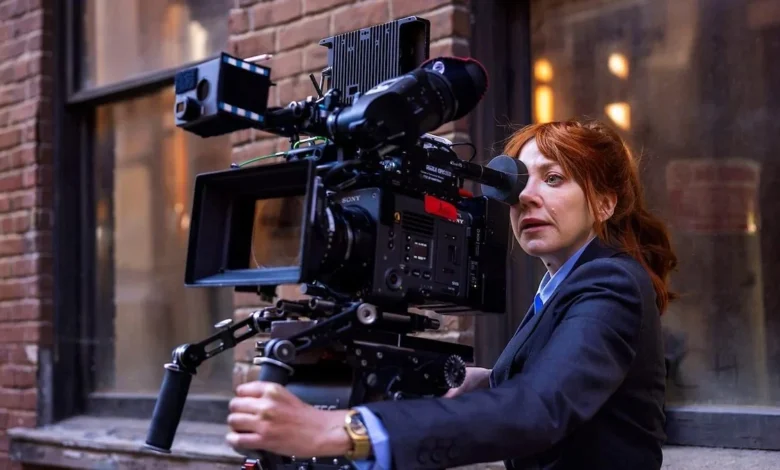
While the BBC has not yet announced a specific premiere date beyond a broad "coming soon" window, the release of the first official promotional image—showing Morgan peering through a massive, archaic cinema camera—has begun the promotional cycle. The image itself, featuring the classic Cunk expression of strained concentration, serves as a visual shorthand for the series’ premise: the attempt to capture and understand a vast, complex medium through a lens that is clearly misaligned.
In summary, Cunk on Cinema represents a continuation of a successful formula that balances educational breadth with comedic absurdity. By turning the camera on the very industry that produces such documentaries, the series is positioned to provide a fresh, if thoroughly bewildered, perspective on the history of the moving image. Whether it succeeds in "demystifying" cinema is irrelevant; its success will likely be measured by its ability to provoke laughter, confusion, and a renewed appreciation for the experts who were willing to sit across from Philomena Cunk.
Related posts: