A New Chapter for a Cinematic Icon
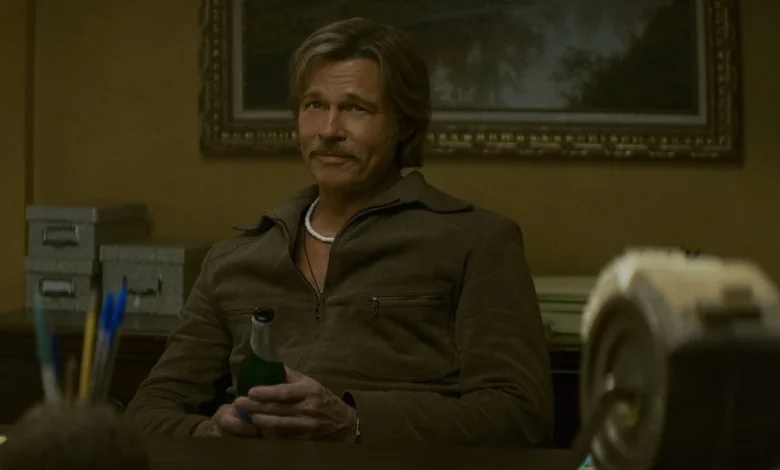
The narrative trajectory of the film places Cliff Booth in a professional position that acts as a logical, albeit unexpected, evolution for a man of his specific skill set. Having transitioned from the physically demanding role of a top-tier Hollywood stuntman to the more discreet, high-stakes profession of a "fixer," Booth finds himself entangled in a web of criminal intrigue that extends far beyond the studio backlots. The plot is set in motion when Booth receives an unexpected solicitation from high-powered talent agent Karen Crosby, portrayed by Elizabeth Debicki. Crosby seeks to leverage Booth’s unique ability to handle volatile situations on behalf of her client, Charlie Peters, a television megastar played by Scott Caan, whose reputation for performing his own stunts mirrors the very industry background Booth himself possesses.
As Booth navigates this assignment, the film introduces a secondary cast of characters that illustrates the multifaceted nature of the late-seventies entertainment industry. This includes the nuanced presence of Toni, played by Carla Gugino, and the professional athlete-turned-actor Roderick "Hot Rod" Harrison, played by Yahya Abdul-Mateen II. The central conflict shifts from the standard tropes of Hollywood vanity to a criminal investigation involving the Verdusco brothers, characters whose actions catalyze a transition from the fairytale perception of stardom to the harsh realities of organized crime within Los Angeles.
Production and Creative Pedigree
The collaboration between Brad Pitt and David Fincher is a significant industry milestone. Having previously worked together on seminal films such as Se7en, Fight Club, and The Curious Case of Benjamin Button, the pair shares a creative shorthand that has historically yielded critical acclaim and commercial success. The inclusion of Quentin Tarantino as a creative consultant ensures that the tonal DNA of the original Once Upon a Time in Hollywood remains intact, despite the shift in the director’s chair.
The ensemble cast represents a deliberate effort to blend seasoned veteran actors with contemporary talent. Beyond Pitt, the roster includes Peter Weller, adding a layer of genre-cinema credibility to the project. The decision to set the film in 1977 serves as more than a stylistic choice; it reflects a deliberate historical pivot. By 1977, the "New Hollywood" era was beginning to consolidate, and the industry was grappling with the rise of the blockbuster era, shifting focus from the auteur-driven projects of the early seventies to the high-concept, star-driven vehicles that would define the next decade.

Distribution Strategy and Exhibition Timeline
In a strategic move that reflects the evolving relationship between major streaming platforms and traditional theatrical exhibition, Netflix has opted for a tiered release strategy for The Further Mis-Adventures of Cliff Booth. Recognizing the visual scope of the film and its lineage, the studio has secured an exclusive two-week window in IMAX theaters, beginning on November 25. This limited theatrical release is designed to maximize the cinematic experience for audiences, particularly given the visual fidelity required for late-seventies period pieces, before the film transitions to the streaming platform on December 23.
This release pattern is indicative of a broader trend in the entertainment industry where high-profile films are utilized as "event" programming. By separating the theatrical debut from the streaming launch, the studio aims to generate both critical momentum and public anticipation, effectively utilizing the prestige of a theatrical run to boost the film’s profile before it becomes available for home consumption.
The Evolution of the "Fixer" Archetype
The thematic core of the film—the professional fixer—is a staple of noir literature and cinema that the creative team appears to be modernizing. Historically, the fixer in Hollywood served as the industry’s internal mechanism for managing scandal, suppressing negative press, and insulating high-value assets from the consequences of their public or private behavior. By casting Cliff Booth in this role, the film explores the intersection of blue-collar labor and white-collar corruption.
Booth’s character arc—from the stuntman who risks his life for the frame to the man who risks his life to maintain the image—offers a compelling social commentary on the expendability of labor in the film industry. The script, as described in official promotional materials released via TUDUM, emphasizes that the transition from stunt work to fixing is not merely a lateral move but a descent into a more dangerous, less transparent world. The "cocktail of violence, ambition, and desire" mentioned in the official synopsis suggests that the film will not shy away from the darker, more exploitative undercurrents of the late seventies entertainment landscape.
Historical Context and Industry Implications
The year 1977 was a pivotal moment in American cultural history, marked by the release of Star Wars, which fundamentally altered the economic landscape of Hollywood. By grounding the narrative in this specific year, the production team invites viewers to consider the tension between the dying embers of the old studio system and the birth of the modern franchise era. The characters, such as the professional football player transitioning into acting, reflect the era’s fascination with celebrity crossover and the commodification of personality.
From an economic perspective, the project represents a significant investment by Netflix in the intellectual property established by Tarantino. The film serves as a proof-of-concept for how legacy characters can be utilized in spin-offs that maintain creative integrity while expanding the reach of a franchise. Should this release prove successful, it may establish a blueprint for other studios to explore "side-quel" projects that focus on supporting characters rather than direct narrative continuations of a protagonist’s story.
Critical Analysis and Anticipated Reception
The anticipation surrounding The Further Mis-Adventures of Cliff Booth is driven by three primary factors: the established popularity of the source material, the reputation of the creative team, and the curiosity surrounding the stylistic departure. David Fincher’s directorial style is notoriously precise, often characterized by intricate camera work and a muted, atmospheric color palette. This is expected to contrast sharply with the warmer, saturated tones typically associated with Tarantino’s work, potentially resulting in a unique visual aesthetic that bridges the gap between the two filmmakers’ sensibilities.
The supporting cast, particularly the addition of Elizabeth Debicki and Yahya Abdul-Mateen II, suggests a narrative depth that prioritizes complex character dynamics over pure action-sequence spectacle. The inclusion of the Verdusco brothers as antagonists provides a localized, grounded threat, steering the film away from the more stylized, heightened violence that characterized the climax of the previous installment.
Conclusion: A Significant Addition to the Modern Canon
As the release date approaches, the industry is watching closely to see how audiences respond to a project that relies so heavily on the legacy of a prior work while attempting to carve out its own distinct identity. The combination of a high-profile theatrical rollout and a subsequent global streaming release positions The Further Mis-Adventures of Cliff Booth as one of the most anticipated titles of the year. By focusing on the "fixer" archetype, the film promises to provide a deeper, perhaps more cynical, look at the mechanisms that sustain the image of Hollywood, providing a fittingly gritty companion piece to the earlier, more idealized depiction of the city of dreams.
The film serves as a testament to the enduring appeal of the characters first introduced by Tarantino, and by placing them in the hands of a filmmaker as meticulous as Fincher, the project elevates the status of the "stuntman-as-protagonist" narrative. Whether this film will redefine the expectations for mid-budget, character-driven dramas in the era of massive blockbusters remains to be seen, but its arrival is undeniably one of the most significant events in the current Hollywood calendar. Through its blend of historical detail, star power, and strategic distribution, The Further Mis-Adventures of Cliff Booth is poised to spark a renewed conversation about the nature of fame, the burden of labor, and the ever-shifting landscape of the American film industry.