Star Trek Starfleet Academy Stars Address Online Toxicity and Production Challenges at Philadelphia Convention

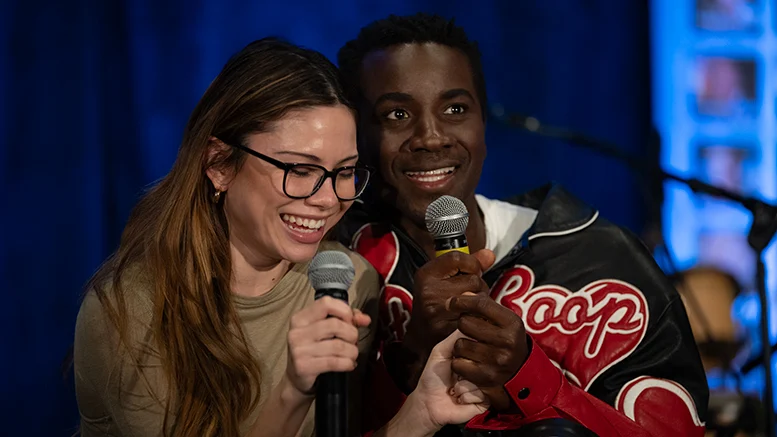
Earlier this month, the annual Trek to Philadelphia convention brought together a diverse cross-section of the Star Trek fan community, featuring a robust lineup of talent spanning from The Original Series to the modern era of the franchise. Among the most anticipated sessions was a panel dedicated to the newest entry in the Paramount+ lineup, Star Trek: Starfleet Academy. The discussion, moderated by Tamia Harper of the SyFy Sistas, featured cast members Karim Diané, who portrays Jay-Den Kraag, and Bella Shepard, who plays Genesis Lythe. The conversation moved beyond simple promotional remarks, offering a candid exploration of the intense digital discourse surrounding the series, the rigorous physical demands of high-concept science fiction production, and a glimpse into the narrative trajectory of the upcoming second season.
The event served as a critical touchpoint for the actors to connect directly with the fanbase, an interaction that both performers noted was essential for maintaining perspective amidst the often-caustic nature of modern online fandom. The panel took place against a backdrop of ongoing public discourse regarding the show’s creative choices, a conversation that has occasionally transcended traditional entertainment media to become a subject of mainstream political commentary.
Navigating the Landscape of Digital Hostility
A recurring theme during the panel was the cast’s collective experience with the intense online vitriol directed at the production. Both Diané and Shepard recounted the surreal nature of being on set—engaged in the complex, collaborative process of creating a television show—while simultaneously witnessing the emergence of aggressive online campaigns against the series.

Karim Diané provided a sobering look at the impact of this reception, noting that he frequently found himself the target of discriminatory commentary. The actor described a specific, jarring instance in which his likeness was featured on a news program as part of a segment debating his presence within the franchise. "I remember one time my friend texted me a picture of myself; my face was blown up on Fox News, and there’s a circle of men discussing whether I should exist or not," Diané shared with the audience.
Despite the severity of these attacks, the cast emphasized that they have adopted a strategy of detachment. Rather than engaging with bad-faith actors, they have prioritized their craft and the positive, tangible connections they make with fans at live events. Shepard echoed this sentiment, suggesting that the internet often creates a false sense of reality. For the actors, meeting fans in person—particularly those who have found deep personal meaning in the show’s themes of inclusion and representation—serves as an effective counter-balance to the volatility of social media.
The Human Element: Representation and Impact
The discussion of online hate was notably balanced by anecdotes regarding the show’s real-world impact. Diané shared a particularly poignant interaction from a recent convention, where a father approached him in tears to express how much the series, and specifically his character, had meant to his teenage son who had recently come out. These moments, the actors argued, are the true metrics of the show’s success.
This sense of purpose appears to be a driving force for the cast. As the first major project for many of the younger actors involved, the show carries a significant weight of responsibility. For Bella Shepard, the experience has been transformative. "This is the first project I’ve done that’s had such a cultural weight to it," she remarked. "Star Trek has always been about fighting for the people and giving space to everybody."

The Physical and Technical Rigors of Production
Beyond the social implications of the series, the panel shed light on the grueling physical realities of filming a show like Starfleet Academy. Science fiction production often involves extensive prosthetic applications, complex stunts, and long hours, all of which contribute to a demanding work environment.
Diané and Shepard provided detailed accounts of the physical toll of their roles. The process of applying and removing prosthetics on a daily basis led to significant skin irritation and discomfort, with both actors noting that their schedules often stretched to 20-hour days for five days a week, with additional rehearsals frequently encroaching on their weekends.
The technical requirements of the dialogue also presented a unique challenge. In a franchise known for its dense, pseudo-scientific "technobabble," the actors are required to deliver complex, often non-intuitive lines with the same conviction as emotional drama. Shepard explained that she frequently engages in "debriefs" with the writing staff to ensure she fully understands the mechanics behind her character’s lines. "If I can’t understand what my character is saying, I can’t deliver it well at all," she explained, adding that the process has left her feeling capable of handling almost any future role, including, as she joked, the ability to perform complex surgery.
Looking Toward Season 2: Narrative Expectations
While the panel focused heavily on the challenges of the first season, the actors offered tantalizing, if cryptic, hints about the upcoming second season, which is scheduled to premiere in March 2027.

When asked about the ongoing "romantic triangle" involving the characters Jay-Den, Kyle, and Darem, Diané confirmed that a definitive narrative resolution is on the horizon. "A decision will be made. That’s all I’ll say," he teased.
The conversation also touched on upcoming episodes, with Shepard mentioning a particularly significant sequence involving her character and fellow cast members Bob and Holly. The actors revealed that, due to post-production reordering, these pivotal scenes were moved from their original placement to the second episode of the new season. This structural shift, they suggested, will have a major impact on the viewing experience.
Broader Context and Industry Implications
The production of Star Trek: Starfleet Academy represents a significant investment by Paramount+ into the future of the Star Trek brand. With the series already greenlit for a second season and the announcement of high-profile guest stars such as Bill Nighy and Rosemarie DeWitt, the network is signaling a commitment to expanding the show’s scope and prestige.
The challenges faced by the cast of Starfleet Academy are not unique to the franchise; they reflect a broader trend in the entertainment industry where long-standing intellectual properties are subject to intense, often polarized scrutiny by fanbases. The shift toward a more inclusive, diverse cast and narrative focus has been a hallmark of the modern Star Trek era, a direction that has been praised by critics for its thematic resonance with the franchise’s origins, even as it has sparked friction among segments of the audience.

The decision to lean into these themes, as seen in the casting and character arcs of Starfleet Academy, serves as a testament to the franchise’s historical role as a mirror to contemporary social issues. By facilitating discussions like the one held in Philadelphia, the actors are actively participating in the process of shaping the show’s legacy, asserting that despite the digital noise, the primary objective remains the creation of compelling, human-centric science fiction.
Home Media and Future Availability
For viewers looking to revisit the first season before the premiere of season two, the series is slated for a home media release on December 1st, with both Blu-ray and DVD editions available for pre-order. This physical release will likely include behind-the-scenes content that provides further insight into the production challenges discussed during the panel, including the prosthetic work and the creation of the futuristic, academic environment of the show.
As the industry prepares for the 2027 premiere, the sentiment expressed by the cast remains one of resilience. The "shut up and work" ethos described by Shepard is not merely a professional mantra; it is a defensive posture against a digital environment that seeks to define the actors’ worth by the intensity of its criticism. By focusing on the tangible, positive impact their work has on audiences, the cast of Starfleet Academy is charting a path forward, proving that the vision of a more inclusive future, which Star Trek has championed for decades, continues to find relevance in the present day.