Zach Cregger’s New Resident Evil Film Delivers a Radical Departure by Borrowing Horror Elements from Inside and Left 4 Dead


Director Zach Cregger has breathed new life into the long-standing cinematic footprint of the Resident Evil franchise, delivering a feature film that stands entirely apart from any previous live-action adaptations or animated outings. While past cinematic iterations—most notably Paul W.S. Anderson’s six-film franchise starring Milla Jovovich, alongside subsequent reboots—attempted varying degrees of integration with Capcom’s iconic survival-horror video game chronology, Cregger’s latest entry charts a profoundly divergent path. Rather than relying on familiar narrative beats from the source material or leaning heavily on an established roster of legacy protagonists like Leon S. Kennedy or Jill Valentine, the film tells an isolated, high-stakes story that begins on the freezing, desolate roads outside Raccoon City.
The narrative centers on Bryan, played by Austin Abrams, an ordinary medical courier tasked with delivering a critical package to the municipal hospital—a package that later is revealed to contain a missing ingredient necessary for a localized outbreak cure. However, his routine transit is violently derailed when his vehicle strikes a lone pedestrian navigating the snow-covered asphalt. What follows is a relentless, harrowing struggle for survival as Bryan is thrust into a waking nightmare, pursued by bizarre, mutating entities that test the limits of human endurance. While the overall aesthetic and underlying biological horrors seamlessly align with the established lore of the Resident Evil universe, keen-eyed viewers and horror enthusiasts have noted that two of the movie’s most striking creatures draw direct conceptual and visual inspiration from entirely different video game properties: Playdead’s 2016 puzzle-platformer Inside and Valve’s cooperative zombie shooter Left 4 Dead.
The Evolution of Resident Evil Adaptations and Cregger’s Vision
To understand the magnitude of Cregger’s creative choices, it is necessary to examine the historical context of video game adaptations in Hollywood. For decades, transferring interactive horror into cinematic formats proved difficult, often resulting in critical backlash or narrative fragmentation. When Capcom released the original Resident Evil in 1996, it revolutionized the survival horror genre by blending fixed camera angles, resource management, and terrifying biological experiments engineered by the corrupt Umbrella Corporation.
When Hollywood first adapted the property in 2002 under the direction of Paul W.S. Anderson, the films opted for an action-heavy approach, introducing original protagonist Alice and gradually weaving in game characters like Claire Redfield, Chris Redfield, and Albert Wesker. Subsequent attempts, such as 2021’s Resident Evil: Welcome to Raccoon City, tried to hew closer to the chronological events of the first two games, yet struggled to balance ensemble character arcs with cinematic pacing.
Cregger’s approach bypasses the traditional ensemble structure entirely, focusing instead on a singular, vulnerable protagonist. Bryan is profoundly unequipped for the horrors he encounters, functioning less like an elite tactical operative (such as members of S.T.A.R.S.) and more like an everyday citizen trapped in an impossible scenario. This ordinary-man-in-extraordinary-circumstances framework gives the film a distinctly interactive tension, ironically making it feel more structurally aligned with the experience of playing a survival horror game than many of its cinematic predecessors.
The Main Antagonist Parallels: The Huddle From Inside
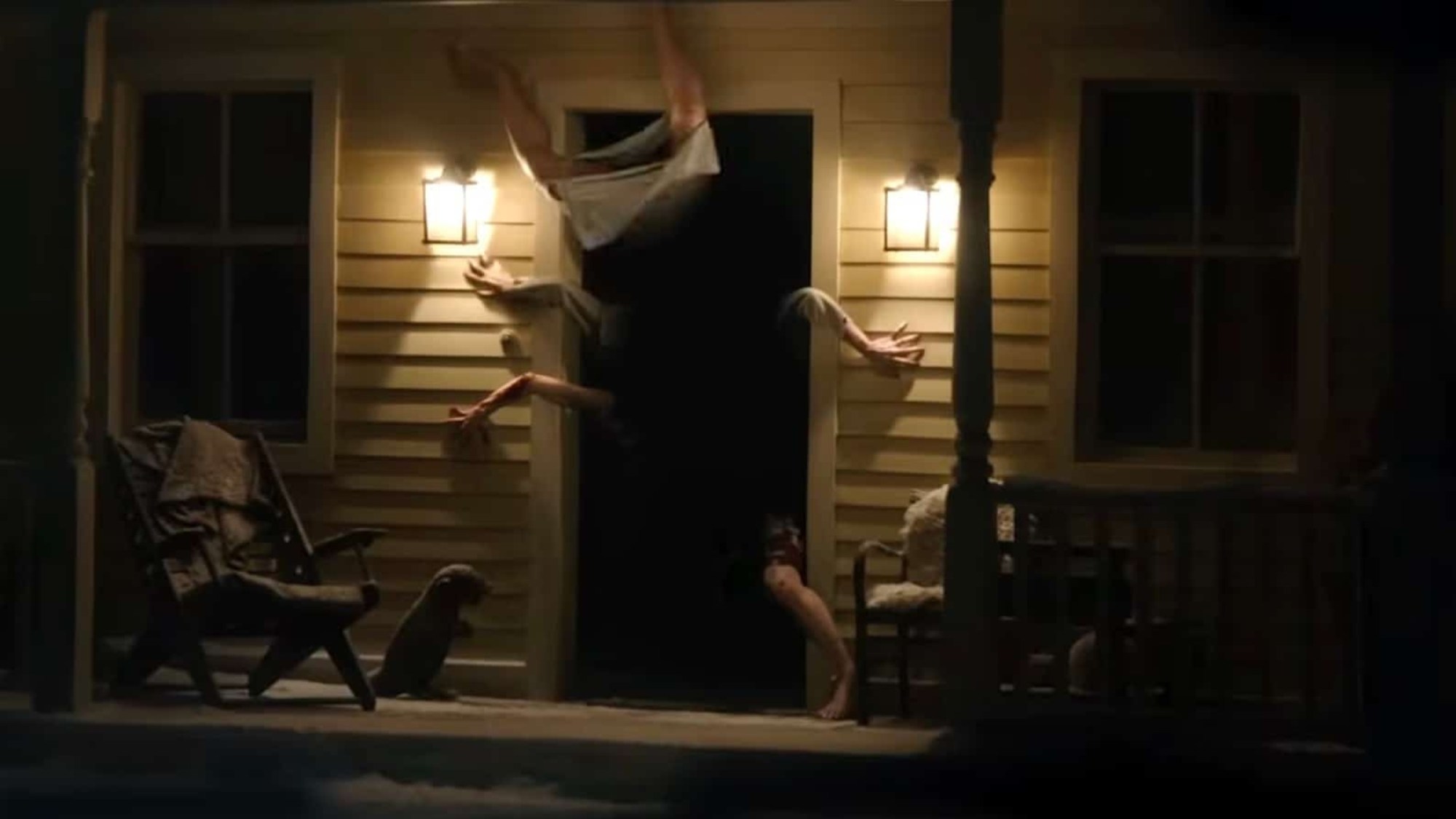
The primary entity hunting Bryan throughout the early acts of the film represents a departure from traditional Resident Evil monstrosities like the Tyrant or the Licker, though it firmly occupies the genre of body horror. The sequence begins immediately after Bryan accidentally hits a pedestrian on the snowy road. Fleeing the scene in terror, the injured woman attempts to kill him, eventually driving him to seek refuge in a nearby remote house. Inside the residence, Bryan is forced to kill a man in self-defense.
In a horrifying escalation, the biological infection manifests in a surreal, visceral manner: tendrils from the dead woman’s body physically connect with tendrils extending from the deceased man, fusing them together into a grotesque, shifting mass of flesh and limbs. As the film progresses and the entity claims more victims, it continues to grow in mass and volume, relentlessly pursuing Bryan through the desolate landscape and into the heart of Raccoon City.
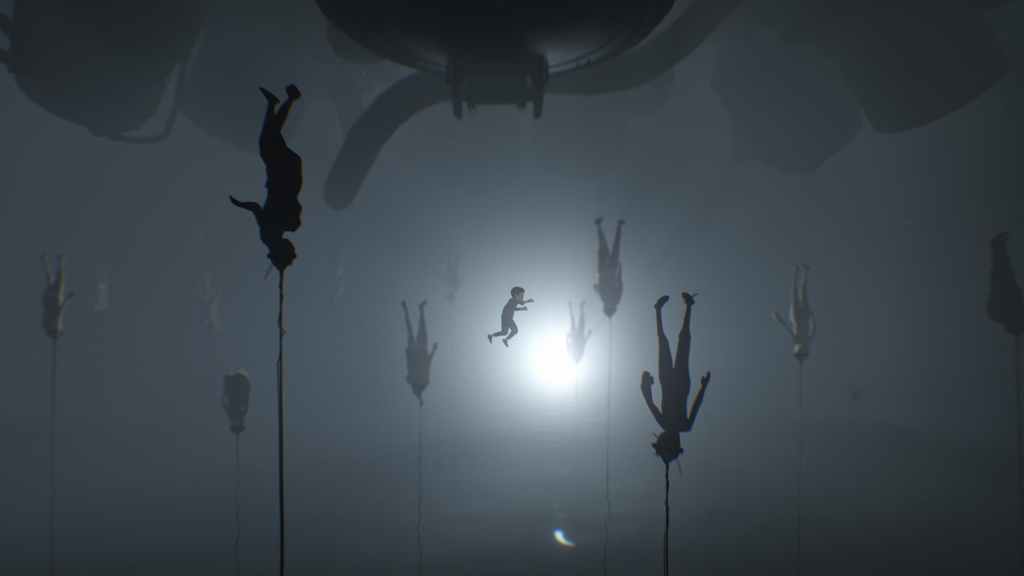
This rolling, agglomerated mass bears a striking resemblance to the final antagonist of Playdead’s critically acclaimed 2016 indie game, Inside. In that game, players navigate a bleak, dystopian dystopia before discovering a massive, grotesque amalgamation of human bodies known simply as the Huddle. At the climax of Inside, the protagonist is pulled into this writhing mass, becoming part of a collective consciousness that ultimately breaks free from its confinement, rolling down a forested hill into the sunlight.
While the Resident Evil video game series features numerous grotesque mutations—ranging from the plagas parasites in Resident Evil 4 and 5 to the mold-infected monstrosities of Resident Evil 7: Biohazard—a rolling, composite mass of fused human remains operating in this specific manner is absent from Capcom’s catalogue. Cregger’s adaptation utilizes this Inside-inspired creature to heighten the psychological terror, grounding the supernatural outbreak in visceral, tangible body horror that mirrors the bleak atmosphere of Playdead’s minimalist masterpiece.
The Elevator Encounter and Left 4 Dead Influences
As the narrative progresses, Bryan reaches Raccoon City Hospital, desperate to deliver the outbreak’s missing cure component to the upper floors. Due to extensive structural damage sustained during the initial stages of the catastrophe, facility staff advise him to utilize the stairwell. After climbing four grueling floors, physical exhaustion forces Bryan to abandon the stairs and step into an elevator—a decision that triggers a near-fatal confrontation.
Shortly after the car begins its ascent, corrosive acid strikes the roof of the elevator. Looking upward through a breach in the shaft, Bryan discovers a monstrous human mutation positioned on a floor above. The creature vomits a highly concentrated, acidic bile that eats rapidly through metal and structural supports, threatening to completely dissolve the elevator car around him.
Industry analysts and horror film critics have quickly linked this specific set piece to Valve’s seminal multiplayer shooter Left 4 Dead, specifically drawing comparisons to the "Boomer" and "Spitter" Special Infected. In Left 4 Dead, the Boomer is a bloated, highly volatile mutation that produces massive quantities of internal bile, which it projectiles onto survivors to attract hordes of common infected. Meanwhile, the Spitter possesses a mutated metabolism that allows it to eject pools of corrosive gastric acid capable of creating localized environmental hazards.
The hospital creature in Cregger’s film merges these two distinct archetypes: possessing the bloated, grotesque physique of the Boomer while deploying the devastating acid-spitting projectile capabilities of the Spitter. This sequence highlights Cregger’s willingness to cherry-pick iconic horror mechanics from contemporary gaming culture rather than restricting the film’s creature design strictly to Capcom’s official bestiary.
Balancing Homage and Franchise Continuity
Despite drawing clear visual and conceptual inspiration from Inside and Left 4 Dead, these creative deviations do not feel out of place within the broader framework of the Resident Evil universe. Industry insiders and early reviewers have noted that Cregger’s monster designs complement the established lore of the franchise, particularly the parasitic and viral mutations explored in later franchise entries.
Furthermore, the film is careful to include direct Easter eggs and canonical nods for long-time fans. The very first canine attacker Bryan encounters is modeled directly after the iconic Cerberus dogs infected with the T-virus, a staple of the 1996 original game. Additional background elements—such as a mutated young girl and a rat-hybrid variant—satisfy expectations for anyone deeply familiar with Umbrella’s illicit underground experiments.
By integrating these nods alongside external influences from Inside and Left 4 Dead, Cregger demonstrates a comprehensive understanding of what makes survival horror effective across different mediums. Rather than attempting a slavish, frame-by-frame recreation of a video game cutscene, the production utilizes cinematic pacing and atmospheric tension to evoke the emotional terror of interactive gaming.
Implications for Future Video Game Adaptations
The release and reception of Cregger’s Resident Evil film arrive at a pivotal time for Hollywood’s relationship with gaming intellectual property. In recent years, high-profile adaptations like HBO’s The Last of Us, Amazon’s Fallout, and Illumination’s The Super Mario Bros. Movie have redefined commercial and critical expectations, proving that fidelity to source material—or a smart, reverent reimagining of its themes—can yield massive financial and critical success.
By charting an independent course that abandons the baggage of the previous six cinematic outings while cherry-picking the psychological dread of indie titles like Inside and the frantic survival mechanics of Left 4 Dead, Cregger has established a new benchmark for horror adaptations. Analysts suggest that this success may encourage studios to grant filmmakers greater creative autonomy, moving away from rigid adherence to established continuity in favor of atmospheric storytelling that captures the authentic spirit of interactive horror. As audiences continue to embrace genre-blending storytelling, this bold adaptation demonstrates that the true essence of Resident Evil lies not in specific character rosters, but in the universal dread of human vulnerability facing unbridled biological catastrophe.