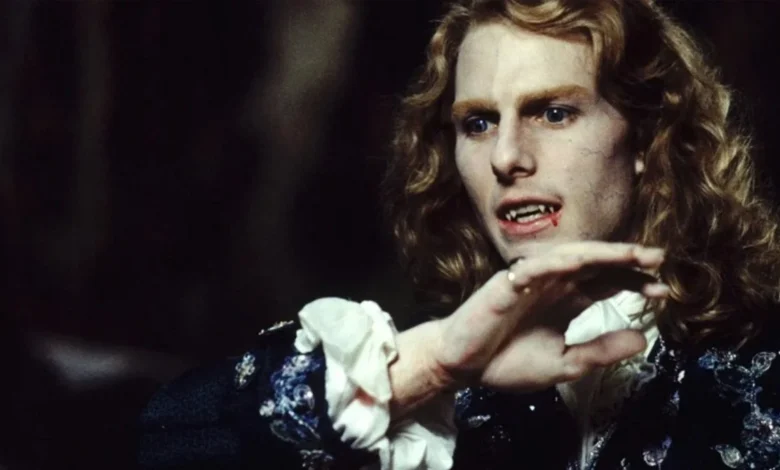
When the film adaptation of Anne Rice’s Interview with the Vampire premiered in 1994, it arrived under a cloud of intense skepticism. Despite the commercial success of the source material, the production faced significant backlash from Rice’s dedicated fanbase, primarily regarding the casting of Tom Cruise as the iconic vampire Lestat de Lioncourt. However, the finished product proved the critics wrong, earning widespread critical acclaim—particularly for Kirsten Dunst’s breakout performance as the child vampire Claudia—and cementing its place in the gothic horror canon. Following the film’s financial triumph, grossing over $223 million worldwide against a $60 million budget, Warner Bros. immediately sought to capitalize on the momentum by commissioning a sequel based on the second book in The Vampire Chronicles, The Vampire Lestat.
The Development Timeline and The Creative Pivot
In the immediate aftermath of the 1994 release, Warner Bros. moved to secure the rights to a franchise. The studio’s objective was to transition from the melancholic, character-driven narrative of Interview with the Vampire toward the more expansive, myth-heavy scope of the follow-up novels. Neil Jordan, who directed the first film with a distinctively lush, atmospheric sensibility, was tasked with penning a draft for the sequel.
The primary hurdle in the early production phase was the hesitation of the original cast. Tom Cruise, who had eventually won over both the author and the audience with his performance, expressed reservations about returning to the role. This hesitation effectively stalled the momentum of the planned franchise continuation. While the studio eventually moved forward years later with the unrelated 2002 adaptation, Queen of the Damned, that production famously ignored the continuity established by Jordan’s film, leaving the narrative thread of the 1994 original dangling.
Neil Jordan’s Unseen Script: A Departure from the Rockstar Trope
In a recent revelation, Neil Jordan disclosed the creative direction he intended for his unproduced sequel. Contrary to the later adaptations—which leaned heavily into the rock star persona Lestat adopts in the latter half of the novel—Jordan expressed a fundamental lack of interest in that specific aesthetic.
"I was never in love with the idea of Lestat as a kind of David Lee Roth figure," Jordan stated. "I was never in love with the image of him as a rock star."

Instead, Jordan’s script aimed to ground the sequel in the historical trauma and early development of the character. His vision focused on the 18th-century French origins of Lestat: his life as a member of a Commedia dell’arte troupe, his abduction by a mysterious benefactor, and the harrowing struggle for survival in the wilderness. By anchoring the narrative in the past, Jordan intended to explore the formative years of the vampire, effectively creating an origin story that balanced the grandiosity of the novels with the intimacy of his previous film.
The Narrative Framing Device: An Undead Road Trip
Perhaps the most intriguing element of Jordan’s proposed screenplay was its structural integration of the first film’s cliffhanger. Interview with the Vampire concludes with a modern-day sequence in San Francisco, where a resurrected Lestat encounters the journalist Daniel Molloy (Christian Slater) in his car, biting him and initiating a transformation.
Jordan’s script planned to utilize this moment as a framing device. The narrative would have oscillated between the 18th-century flashbacks—detailing Lestat’s transformation and his early education in the undead arts—and a contemporary "road trip" sequence. In this version, the audience would have followed Lestat and a newly turned Molloy on a journey from New Orleans to Los Angeles. This structure would have provided a direct, logical bridge from the 1994 ending to the broader mythology of The Vampire Lestat, maintaining the same continuity that fans have debated for three decades.
Contextualizing the Source Material: Book vs. Screen
To understand the scope of the missed opportunity, one must look at the source text. Anne Rice’s The Vampire Lestat is a massive, multi-generational epic. The "rock star" phase that most audiences associate with the character actually occupies a relatively small fraction of the novel’s page count—roughly the first and last 20 pages. The vast majority of the book is a dense, historical account of the vampire’s maturation.
By focusing on the 18th-century narrative, Jordan was essentially attempting to capture the thematic heart of the book rather than its most sensationalist elements. This approach aligns with the critical consensus that the most successful adaptations of Rice’s work are those that prioritize her prose’s gothic, melancholic atmosphere over the superficial trappings of the vampire genre.
Implications for Modern Adaptations and Franchise Continuity
The absence of a direct sequel to the 1994 film remains one of the more significant "what ifs" in horror cinema history. The legacy of the film is now complicated by the emergence of the AMC television series, which provides a fresh, modern interpretation of the source material. While the series has successfully updated the narrative for a contemporary audience, it exists in a separate continuity from Jordan’s vision.

The failure to produce a sequel in the late 1990s highlights the inherent difficulties in adapting long-form literature. Film studios often prioritize "brand-friendly" imagery—such as the rock star aesthetic—which can sometimes clash with the more grounded, character-focused scripts drafted by directors like Jordan.
Broader Impact and Future Outlook
The revelation of Jordan’s script provides valuable insight into the creative tension between studio expectations and directorial vision. For many, the ending of the 1994 film remains a lingering question mark; it transformed a standard literary adaptation into an original cliffhanger that promised a future the industry was not yet ready to deliver.
While the "ship has sailed" on a legacy sequel featuring the original cast, the interest in such a project remains high. The concept of an "undead road trip" film, as explored in Jordan’s draft, offers a compelling template for future adaptations. Should the rights to the franchise shift or should a studio look to expand the cinematic universe beyond current iterations, the narrative potential of a direct, legacy-based sequel remains a viable and attractive prospect for fans.
As the landscape of genre media continues to evolve, the documentation of these "lost" films serves as a reminder of how close the cinematic history of The Vampire Chronicles came to a very different outcome. Whether or not this specific vision is ever realized, Jordan’s approach to the material stands as a testament to the importance of character depth in the adaptation process. The history of the vampire on screen is one of constant reinvention, but for many, the 1994 iteration remains the benchmark—making the details of its planned continuation a permanent footnote in the history of gothic cinema.