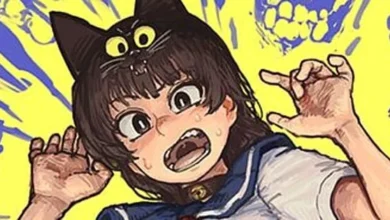
The announcement, made on Friday alongside a pair of celebratory illustrations crafted by the original author, marks a significant milestone for the burgeoning franchise. Since its debut in Kadokawa’s Comic Cune magazine in early 2024, the series has garnered a distinct niche following, characterized by its unconventional premise that blends standard educational comedy tropes with absurd, high-stakes fantasy dilemmas. As production gears up for the television broadcast, industry watchers and fans alike are turning their attention to how the unique stylistic elements of the manga will translate to animation, as well as what this greenlight signifies for the broader publishing ecosystem surrounding niche comedic properties.
Background Context and Manga Origins
To understand the trajectory of Elf-sensei no Toilet wa Doko desu ka? (known in English as Where Is the Elf Teacher’s Toilet?), one must examine its origins within the landscape of modern Japanese manga serialization. Written and illustrated by Chizuna Nakajima, the series officially commenced its serialization in Media Factory’s Comic Cune in January 2024. Comic Cune, a magazine historically known for publishing four-panel (yonkoma) and lighthearted slice-of-life manga, provided an ideal environment for Nakajima’s comedic sensibilities to flourish.
The narrative premise of the series revolves around Eruru, an ethereal elf who travels from an alternate fantasy realm to complete her teaching practicum at an all-boys school in the human world. While the premise sets up standard fish-out-of-water comedic scenarios, Nakajima introduces a remarkably specific and absurd central conflict: strict elven traditional laws dictate that Eruru is legally and spiritually forbidden from relieving herself anywhere except in locations with abundant, untamed nature. Placed squarely in the middle of a concrete-and-asphalt urban all-boys institution, Eruru’s daily existence transforms into a high-stakes, suspenseful trial of endurance.
This juxtaposition of mundane school life and pseudo-environmental panic forms the bedrock of the series’ ecchi and comedy elements. Following its initial reception, Kadokawa collected the chapters into tankōbon volumes, publishing the second compiled volume in February 2025.
Chronology of Events
The journey from a print serialization to a greenlit television anime production spans roughly a year and a half, defined by steady publication milestones and a temporary hiatus.

- January 2024: Chizuna Nakajima launches the serialization of Elf-sensei no Toilet wa Doko desu ka? in Kadokawa’s Comic Cune magazine.
- February 2025: Kadokawa publishes the second compiled tankōbon volume of the manga, signaling solid commercial viability and sustained reader interest.
- January 2025: The manga series enters a scheduled publication hiatus, prompting temporary concern among fans regarding the continuation of Eruru’s scholastic adventures.
- September 26, 2025 (Scheduled): The manga is officially slated to resume its serialization in Comic Cune, aligning closely with the promotional wave of the newly announced anime adaptation.
- Friday (Announcement Date): WWWave Corporation’s Deregula animation label publicly announces the television anime adaptation. The announcement is accompanied by two commemorative illustrations drawn by Chizuna Nakajima, distributed via official PR channels, the newly launched official X (formerly Twitter) account (@elfsensei_anime), and the Kadokawa ComicWalker special portal site.
Production Structure and Industry Positioning
The choice of WWWave Corporation’s Deregula label as the production home for the project sheds light on the studio’s strategic positioning within the modern anime landscape. WWWave Corporation has historically carved out a notable presence in producing short-form, late-night, and niche-targeted anime adaptations, often leveraging source material that relies heavily on comedic, romantic, or ecchi tropes designed to capture dedicated otaku demographics.
By entrusting the adaptation to the Deregula label, the production committee signals an understanding of the source material’s intrinsic tone. The series does not strive for sprawling epic fantasy world-building in the vein of high-fantasy blockbusters; rather, it thrives on intimate, situational comedy where the tension is derived entirely from the protagonist’s physiological predicament within a mundane setting.
The release of commemorative illustrations by Nakajima serves a dual purpose in the modern anime marketing playbook. First, it reassures the existing readership that the original creator remains actively involved in celebrating the adaptation’s milestone. Second, it provides early visual benchmarks for character designs, allowing the studio to test audience reception before the rollout of official key visual posters, teaser trailers, and primary voice cast announcements.
Broader Impact and Market Implications
The greenlighting of Elf-sensei no Toilet wa Doko desu ka? highlights several ongoing trends in contemporary anime production committees. Publishers like Kadokawa increasingly look toward relatively young manga titles—those with only a handful of compiled volumes—for swift anime adaptations. This strategy, often referred to as "early serialization adaptation," aims to amplify manga sales, boost digital chapter reads on platforms like ComicWalker, and capitalize on the synergistic relationship between print media and broadcast television.
Furthermore, the simultaneous timing of the anime announcement with the impending return of the manga from its hiatus on September 26 points to a carefully orchestrated promotional schedule. For a manga that experienced a multi-month break starting in January 2025, maintaining audience engagement can pose a challenge. By injecting the massive visibility of a television anime confirmation right as the series prepares to resume publication, the publisher effectively mitigates readership attrition and revitalizes interest across both domestic and international markets.
As details regarding the primary voice cast, animation staff, studio sub-contractors, and broadcast premiere windows remain forthcoming, the immediate focus shifts to the official channels established for the project. With a dedicated X account and a specialized ComicWalker portal now active, the production committee has laid the groundwork for an unfolding marketing campaign. Whether Eruru’s quest for natural sanitation will resonate with television audiences on a broader scale remains to be seen, but the initial announcement undeniably establishes the property as one to watch in the upcoming wave of comedic anime adaptations.