Nvidia CEO Jensen Huang admits to extramarital affair amid federal scrutiny of potential security breaches

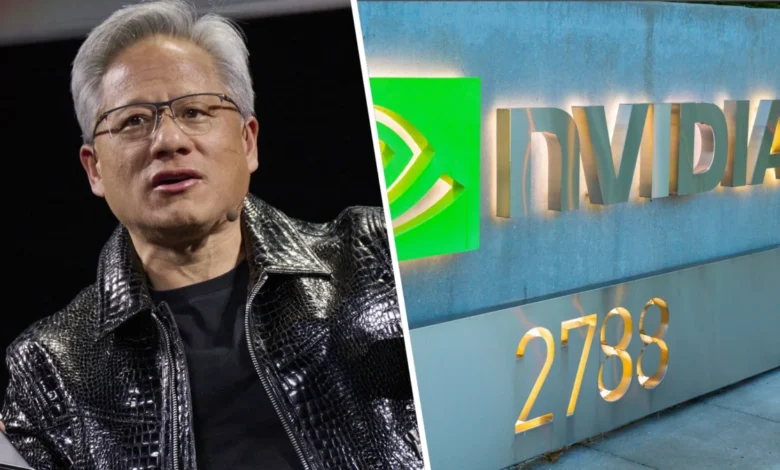
In a significant corporate and geopolitical development, Nvidia CEO Jensen Huang has officially confirmed his involvement in an extramarital affair with Alice Huang, an executive at the China-based artificial intelligence firm Megaspeed. The disclosure, which follows months of persistent reporting and initial denials from the chip giant, has prompted the Nvidia board of directors to initiate an independent investigation into the matter. While the board has signaled that it does not intend to remove Mr. Huang from his leadership position, the revelation has intensified federal concerns regarding the intersection of high-level technology executives and foreign intelligence operations.
Chronology of the Disclosure
The controversy began to take shape earlier this year when international news outlets, including the Financial Times and The New York Times, published reports suggesting that the Nvidia CEO was engaged in a personal relationship with an executive linked to a Chinese AI competitor. At the time, Nvidia issued formal statements characterizing all interactions between Jensen Huang and Alice Huang as strictly professional.
However, the situation escalated significantly when reports emerged that the Trump administration had identified Alice Huang as a person of interest in an ongoing counter-intelligence investigation. Federal authorities are currently probing allegations that she may have served as a conduit for sensitive information passed to China’s Ministry of State Security. While the Chinese government has issued formal denials regarding these espionage allegations, the proximity of the Nvidia CEO to a subject of such a high-stakes inquiry has created a precarious environment for one of the world’s most valuable technology companies.
Following the mounting pressure, Jensen Huang issued a draft apology to Nvidia employees, which was subsequently obtained by Axios. In the correspondence, Mr. Huang acknowledged the infidelity, stating, "I owe my family and all of you an apology. I was unfaithful to my wife. My actions hurt her and our children. There is no excuse for what I did." He further expressed his intention to remain in his role, adding that he is "fully committed to Nvidia" and is focused on regaining the trust of his staff and stakeholders.
The Scope of the Independent Investigation
The board of directors at Nvidia has moved quickly to establish an independent committee tasked with reviewing the nature of the relationship. The primary objective of this investigation is to determine whether any proprietary technology, trade secrets, or national security-sensitive information was compromised during the course of the affair.
Industry analysts suggest that while a CEO’s personal life is typically viewed as distinct from corporate governance, the specific nature of the allegations—involving a competitor operating within a jurisdiction subject to stringent U.S. trade restrictions—elevates the issue to a matter of corporate risk management. To date, the board has indicated that its internal assessment has not uncovered evidence of a breach of company or national security secrets. Nonetheless, the formation of an independent committee serves as a necessary mechanism to satisfy regulatory requirements and maintain shareholder confidence in the face of intense public scrutiny.
Geopolitical Context and Technological Sovereignty
The timing of this revelation is particularly sensitive given the current state of U.S.-China relations. For the past several years, Washington has adopted an increasingly hawkish stance toward China, specifically regarding the development of artificial intelligence and the proliferation of advanced computing hardware. Nvidia, as the leading manufacturer of high-end AI graphics processing units (GPUs), sits at the center of this geopolitical tug-of-war.
The U.S. government has implemented rigorous export controls designed to limit the access of Chinese firms to cutting-edge AI chips. These policies are rooted in the belief that AI development is a primary driver of future military and economic superiority. Consequently, any association between the leadership of a critical American infrastructure company like Nvidia and a Chinese AI executive is viewed by federal intelligence agencies as a significant vulnerability.

The broader implications of this scandal extend to the public perception of the AI industry. In the United States, there is growing skepticism regarding the rapid, and sometimes unchecked, expansion of data centers and the massive energy consumption associated with large-scale AI training. This political climate, combined with the news of the CEO’s personal conduct, may lead to increased calls for federal oversight of AI corporations, further complicating Nvidia’s legislative and public relations landscape.
Impact on Market Stability and Corporate Governance
Nvidia has long been considered a bellwether for the broader tech sector, and the current volatility surrounding its leadership has sent ripples through the investment community. Market analysts note that while the company’s technological moat remains deep, the reputational risk associated with the CEO is non-trivial.
Historically, companies that have navigated similar leadership scandals often see a period of suppressed stock performance as investors weigh the potential for government intervention or leadership distraction. In this instance, the board’s decision to retain Mr. Huang suggests that they believe his vision and operational expertise are indispensable to the company’s continued growth, despite the personal controversy. However, if the federal investigation into Alice Huang yields evidence of technology transfer or national security risks that directly involve the CEO, the board’s current stance may become untenable.
Analysis of the Relationship’s Implications
The intersection of personal conduct and national security represents a modern challenge for the C-suite. In an era where CEOs of major technology firms are frequently treated as geopolitical actors, their private lives are subject to a higher degree of surveillance and public interest.
The investigation into the relationship will likely focus on three key areas:
- Information Access: Did the relationship provide Alice Huang with unauthorized access to Nvidia’s product roadmaps, chip architecture, or strategic partnerships?
- Regulatory Compliance: Did any communication between the two parties violate U.S. sanctions or export control laws regarding the transfer of technology to foreign nationals?
- Disclosure Requirements: When did the board become aware of the relationship, and did management fail to disclose a material conflict of interest in a timely manner?
If the investigation finds that no corporate secrets were compromised, the company may succeed in framing the issue as a private matter. However, the political atmosphere ensures that this will not be a simple transition. The bipartisan consensus in Washington regarding the necessity of decoupling high-tech interests from Chinese influence means that any perceived lapse in judgment by a key industry figure will be met with severe scrutiny from congressional oversight committees.
Future Outlook
As Nvidia moves forward, the company faces the dual challenge of maintaining its dominance in the global AI market while navigating a complex regulatory and political environment. Jensen Huang has been the face of the AI revolution, transforming Nvidia from a gaming-focused hardware company into the essential provider of infrastructure for the modern AI economy.
The coming months will be critical for the company as the independent committee completes its findings and the federal government concludes its assessment of the intelligence risks. For now, the company remains focused on its primary business objectives, including the deployment of its next-generation architecture and the expansion of its global datacenter footprint.
The situation serves as a stark reminder of the responsibilities that accompany leadership in the 21st-century tech landscape. As the line between personal life and national security continues to blur, corporate governance frameworks are being tested in ways that were largely unanticipated even a decade ago. The resolution of this inquiry will likely set a precedent for how American corporations manage the risks associated with the personal lives of their most vital executives in an increasingly interconnected and polarized world.
Related posts: