A quarter of a century has elapsed since the catastrophic terrorist attacks of September 11, 2001, permanently altered the sociopolitical landscape of the United States and shifted the trajectory of global modern history. In the intervening twenty-five years, technological revolutions have reshaped human communication—spanning the widespread adoption of smartphones, the ubiquity of social media platforms, and the coming of age of generations who possess no living memory of that Tuesday morning. Yet, as contemporary public discourse grapples with shifting generational perspectives, cultural artifacts from the immediate aftermath of the tragedy continue to serve as vital touchstones for understanding the collective psychic state of a nation plunged into sudden trauma.
While pop culture historians frequently point to the box-office dominance of 2000s superhero franchises—such as Sam Raimi’s Spider-Man trilogy and Christopher Nolan’s Dark Knight trilogy—as direct manifestations of post-9/11 anxiety and the yearning for security, narrative cinema aimed far deeper into the raw grief of the era. Among the cinematic releases that attempted to process the catastrophe, Spike Lee’s 2002 drama 25th Hour stands out not merely as a period piece, but as an authentic, haunting time capsule of New York City in its deepest hour of collective mourning.
Main Facts and Origins of the Production
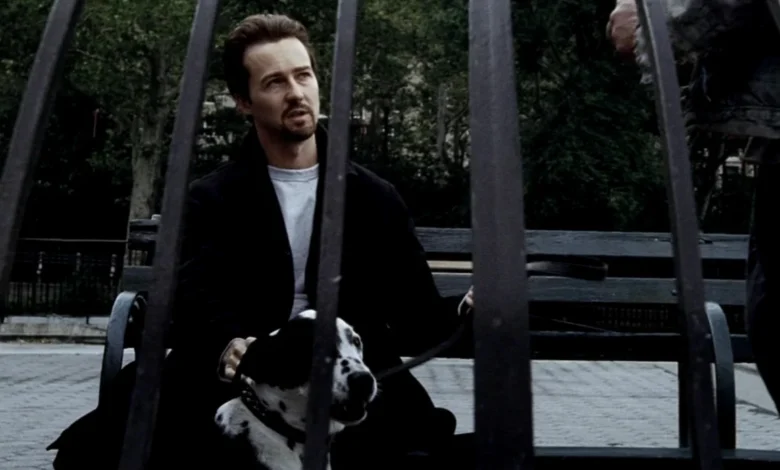
Adapted by David Benioff from his own critically acclaimed debut novel, 25th Hour originally bore no thematic connection to terrorism or national tragedy. Benioff, a Manhattan native and a graduate of Dartmouth College and Trinity College Dublin, constructed a narrative centered on privilege, moral failing, and accountability in the urban environment. The plot follows Monty Brogan, played by Edward Norton, a charismatic outer-borough drug dealer facing a mandatory seven-year federal prison sentence after being betrayed to law enforcement. The narrative unfolds over Monty’s final 24 hours of freedom as he reckons with his impending incarceration alongside his long-time friends, his family, and his girlfriend, Naturelle Riviera, portrayed by Rosario Dawson.
However, the production schedule placed the project directly into the path of history. Pre-production and principal photography occurred in the immediate aftermath of the September 11 attacks, transforming a localized crime drama into a profound exploration of grief. Director Spike Lee, widely recognized as one of the preeminent cinematic chroniclers of late-20th and early-21st-century urban life in New York, found his vision of the city irrevocably altered by the catastrophe. As the cameras began rolling in early 2002, the atmosphere across the five boroughs was defined by an unutterable, palpable sorrow.
Chronology of the Era and Cinematic Transformation
To understand the cultural weight embedded within 25th Hour, it is necessary to examine the timeline of artistic and societal responses that immediately followed the attacks:
- September 11, 2001: Commercial airliner hijackings destroy the World Trade Center towers in New York City, damage the Pentagon, and result in 2,977 fatalities, triggering a national emergency and immediate mobilization.
- May 2002: Sam Raimi’s Spider-Man is released in theaters, featuring hastily added patriotic imagery and communal resilience that established a template for escapist superhero cinema in the decade to follow.
- Early 2002: Principal photography commences on 25th Hour in a wounded New York City, where Lower Manhattan remains blanketed in debris and searchlights at Ground Zero serve as nightly vigils.
- December 2002: Touchstone Pictures releases 25th Hour to theaters, where it receives critical acclaim but struggles at the box office due to its uncompromising, melancholic tone.
- Subsequent Decades: Cultural analysis increasingly elevates the film from a standard crime drama to the definitive artistic document of post-9/11 melancholy.
The Visual and Auditory Landscape of Grief

The imprint of 9/11 is visible from the opening moments of 25th Hour. During the title sequence, composer Terence Blanchard delivers a sweeping, elegiac score that complements sweeping shots of twin vertical beams of light shooting into the night sky from the site of the fallen World Trade Center. In early 2002, these floodlights were not yet historical commemorations or tourist tributes; they were an agonizing, nightly reminder of lives lost and bodies unrecovered.
This sense of overarching doom permeates the character arcs. Monty Brogan’s impending confinement to Otisville Federal Prison mirrors the confinement felt by a citizenry realizing their traditional illusions of safety had vanished. In a key sequence, characters played by Philip Seymour Hoffman and Barry Pepper stand in a Tribeca apartment overlooking the smoldering debris of Ground Zero, discussing their personal grievances against the backdrop of a radically altered skyline. Similarly, the local pub owned by Monty’s father, James—a retired firefighter portrayed by Brian Cox—displays folded American flags, memorials, and photographs of first responders lost in the line of duty, capturing a rawness that transcends conventional screenwriting.
The Central Soliloquy and Societal Implications
The emotional centerpiece of the film occurs during a mirror monologue, adapted from Benioff’s novel and heavily influenced by Lee’s prior masterwork, Do the Right Thing (1989). In the scene, Monty works himself into a furious, self-loathing tirade, directing explicit condemnation at nearly every demographic, neighborhood, and institution across New York City—from the penthouses of Park Avenue to the housing projects of the Bronx.
In Benioff’s original text, the speech functioned as an expression of urban nihilism and isolated bitterness. Under Lee’s direction, however, the montage shifts as Monty lists the city’s neighborhoods. The camera tracks not just an alienated individual, but the diverse population of everyday New Yorkers. The sequence transforms from a bitter screed into a lamentation for a community whose fragility had just been violently exposed. The underlying implication of the scene reflects the broader American psychological shift of late 2001: a sudden, fierce appreciation for neighbors, social fabrics, and urban infrastructure only fully realized after an existential threat forces a confrontation with loss.
Broader Impact and Legacy
From a analytical perspective, 25th Hour avoided the patriotic jingoism or overt political posturing that characterized much of the mainstream media and cinema produced during the height of the War on Terror. While subsequent years would yield high-profile media properties—such as the television series Homeland or cinematic thrillers focusing on intelligence operations—these later works operated with the assumption that audiences had already internalized the psychic transformation of the nation.
Spike Lee’s film remains unique precisely because it captured the immediate, disoriented transition period. It documented a city and a country standing on the precipice of an uncertain era, paralyzed by grief yet bound together by a shared tragedy. Twenty-five years later, as new generations attempt to contextualize the historical weight of September 11 through digital archives and retrospective analyses, 25th Hour endures as an uncompromised artistic artifact—a celluloid time capsule preserving the exact texture of a nation mourning what it had suddenly lost.