Microsoft Rolls Out Major Overhaul to Xbox PC App, Promising Up to 60% Faster Performance and Streamlined Navigation for Insiders


Microsoft has officially initiated the rollout of a comprehensive performance and interface overhaul for the Xbox app on Windows, aiming to address long-standing user complaints regarding sluggishness and cumbersome navigation. Beginning today, members of the Xbox Insiders program can download and test the revamped client, which introduces substantial speed increases across startup times, page transitions, and in-app rendering. Alongside the desktop application upgrades, Microsoft is also expanding its updated cloud gaming architecture to web browsers, smart TVs, and virtual reality headsets, signaling a broad push to modernize its ecosystem across multiple hardware form factors.
The push for a more responsive PC application comes at a critical time for Microsoft’s gaming division, which has faced sustained criticism over the years regarding the reliability, speed, and overall user experience of the Xbox PC app compared to dominant competitors like Valve’s Steam. By focusing heavily on backend optimization, the software giant is attempting to position its Windows client not merely as a necessary launcher for Xbox Game Pass titles, but as a snappy, competitive digital storefront and community hub.
Performance Metrics and Technical Enhancements
According to official data released via Xbox Wire, the core architecture of the Xbox PC app has been re-engineered to significantly reduce latency. Microsoft reports that the updated application boots up to 60 percent faster than its predecessor. Furthermore, navigating between different sections of the store and library has been accelerated, with several pages launching up to 50 percent faster, while internal pop-up windows and modal dialogs open up to 65 percent faster.
Naturally, these efficiency gains come with standard technical caveats. Microsoft has acknowledged that real-world performance will inevitably vary depending on a user’s specific hardware configuration, internet bandwidth, background processes, and device specifications. Nevertheless, initial testing by early adopters within the Insider rings suggests that the reduction in input lag and transition stutter is immediately noticeable, transforming an interface that historically felt bloated into a leaner, more responsive utility.
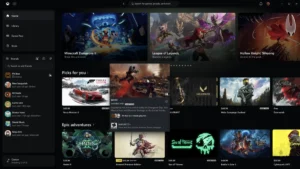
In tandem with raw speed improvements, the update introduces a heavily revised user interface designed to declutter the user experience. The application now features simpler top-level navigation, updated filtering options for game libraries, and flexible new tools to help players organize their digital collections. Crucially, social features—such as friend lists, party chats, and messaging—have been elevated and integrated directly into the primary navigation menu. This structural change allows users to initiate multiplayer sessions, join parties, and communicate with friends with fewer clicks.
Furthermore, Microsoft has overhauled the app’s internal search algorithms to make finding specific titles or genres more intuitive. The visual presentation has also been refined through updated game cards, smoother animations, and the introduction of distinct light and dark viewing modes, lending the platform a cleaner and more modern aesthetic.
Leadership Acknowledges Ongoing Challenges
Despite the enthusiasm surrounding the performance gains, Microsoft leadership remains candid about the work that still lies ahead. Speaking on social media, Xbox executives acknowledged that while the current patch represents a meaningful leap forward, the platform still has ground to cover before it can match the feature richness and deeply ingrained ecosystem of established PC storefronts.
Industry analysts note that while Game Pass remains a powerful value proposition for subscribers, the accompanying PC application has historically acted as a friction point. Features standard on competing platforms—such as comprehensive user review systems, robust modding support frameworks, and advanced community hubs—remain either underdeveloped or entirely absent from the Xbox desktop client. By addressing foundational performance first, Microsoft is laying the groundwork required to support more complex features in future iterations.

Cloud Gaming Expansion and Multi-Platform Reach
Beyond the desktop application, Microsoft is concurrently advancing its cloud gaming initiatives. The redesigned cloud interface, which mirrors the streamlined design philosophy of the new PC app, is expanding its footprint to a wider audience of web browser users over the coming weeks.
This rollout is not restricted to traditional desktop and laptop computers. Supported smart televisions and select virtual reality headsets are also slated to receive the updated cloud streaming experience. By decoupling high-end gaming from local hardware requirements, Microsoft continues to execute its long-term strategy of making Xbox content accessible across virtually any internet-connected screen, lowering the barrier to entry for casual gamers and hardware-constrained consumers alike.
Context and Recent Ecosystem Milestones
The current application overhaul follows a series of significant strategic pivots by Microsoft throughout the year regarding its PC and multi-platform presence. In an effort to bridge historical console divides and expand its software catalog, the company notably brought a curated selection of classic legacy titles to personal computers for the first time. Iconic games such as Blinx: The Time Sweeper, Conker: Live and Reloaded, Crimson Skies: High Road to Revenge, and Fuzion Frenzy formed the vanguard of this archival PC migration.
Concurrently, Microsoft has sought to unify the player achievement experience across ecosystems. The rollout of Mythic Achievements—serving as an equivalent to platform milestones like PlayStation’s Platinum Trophies—has successfully gone live for the broader Xbox user base, fostering increased engagement among completionist gamers.
Broader Implications for the PC Gaming Market
The modernization of the Xbox PC app holds considerable implications for the competitive dynamics of the digital distribution market. For years, PC purists have favored standalone launchers like Steam or GOG, frequently citing performance issues and DRM complexities associated with Microsoft’s Universal Windows Platform (UWP) legacy and early iterations of the Xbox app.
By addressing the core technical grievances—specifically boot times and navigation responsiveness—Microsoft is actively attempting to retain subscribers who use PC Game Pass as a secondary or primary gaming platform. While winning over hardline loyalists of competing storefronts will require sustained, long-term feature development, a faster and more stable foundation removes the primary operational friction that has plagued the app.
As the update transitions from the Xbox Insiders program to the general public in the coming weeks, the ultimate measure of its success will lie in consistent performance across diverse consumer hardware. If Microsoft can maintain these speed enhancements while continuing to iterate on community-requested features, the Xbox PC app may finally shed its reputation as a mere utility launcher and evolve into a compelling destination for PC gamers worldwide.
Related posts: