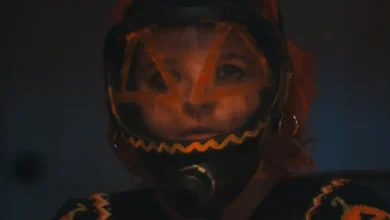
Christmas at the Kringles arrives on screens with a premise that theoretically holds immense promise for fans of festive horror-comedy. Directed by Kevin Lewis, best known for helming the cult-favourite amusement park nightmare Willy’s Wonderland, the film attempts to blend the acerbic, dysfunctional family dynamics of National Lampoon’s Christmas Vacation with high-body-count holiday carnage. Supported by a remarkably stacked ensemble cast of comedic veterans and recognizable character actors, the project seemed destined to become a seasonal cult classic. However, a closer examination of the final product reveals a cinematic stocking filled almost entirely with lumps of coal. Despite the committed efforts of performers like Thomas Lennon, Ron Livingston, and Rachel Bilson, the movie collapses under the weight of lackluster direction, sub-par technical execution, and an abysmal failure to balance genuine frights with dark humour.
Plot Overview and Premise
The narrative initiates when a weary city-dwelling family, Mark and Julie Severson—portrayed by Ron Livingston and Rachel Bilson respectively—relocate to an idyllic, quaint suburb alongside their young son, Bobby, played by Jack Jewkes. The move occurs mere weeks before the winter holidays. While Mark is a classic workaholic who prefers to remain isolated from community affairs, the residents next door refuse to be ignored. The Kringle family—led by an aggressively cheerful patriarch, Nick, played by Thomas Lennon, and his wife Carol, played by Arden Myrin—arrive in a convertible while belting out Christmas carols alongside their three children, aptly named Rudolph, Merry, and Elf.
While Mark finds the relentless, forced cheer overbearing and suspicious, Julie and Bobby quickly succumb to the welcoming hospitality of their neighbors. As Mark retreats further into his work-from-home obligations, his family spends increasingly more time enveloped in the Kringles’ perpetual winter wonderland. It soon becomes apparent to the audience, long before it registers for the characters, that a family celebrating Christmas 365 days a year harbors deeply sinister, cultish intentions. What follows is a descent into a suburban nightmare where Mark must ultimately fight to extract his family from the clutches of tinsel-tossing maniacs.
A Wasted Ensemble and Misused Talent
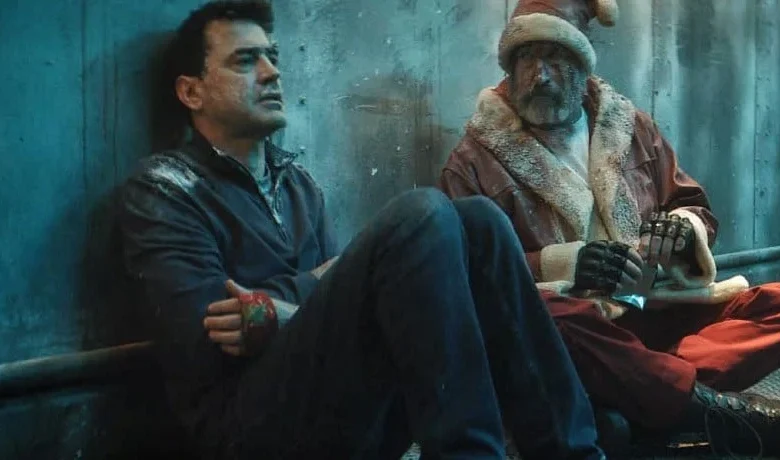
On paper, the casting choices for Christmas at the Kringles represent an embarrassment of riches for any genre filmmaker. The production secured a roster of comedic talent capable of elevating even the most fragile material. Rob Riggle appears as a cigar-chomping, intoxicated mall Santa who doubles as a member of a clandestine society of lethal Saint Nicks. David Wain features via television broadcasts as Noah Tannebaum, the unhinged leader of a Yule-themed cult advocating for absolute joyful purity. Furthermore, Thomas Lennon tackles a rare villainous turn, weaponizing a toxic brand of toxic positivity that oscillates seamlessly between disarming charm and chainsaw-wielding menace.
Additional supporting players include Donald Faison as Mark’s exasperated bachelor confidant, and genre royalty Beverly D’Angelo, who makes a memorable appearance introducing a holiday-themed gimp named Jingle. Yet, despite this formidable lineup, the actors are frequently left stranded by an overarching absence of cinematic cohesion. While performers like Lennon and Riggle inject fleeting moments of energy into the proceedings—channeling shades of aggressive holiday satire reminiscent of Violent Night—their efforts are continuously undermined by a script and a directorial vision that fail to provide them with structural support.
Production Quality and Technical Shortcomings
The fundamental failing of Christmas at the Kringles lies in its bafflingly low-tier production values. Industry insiders and attentive viewers will likely deduce that the vast majority of the production budget was siphoned directly into securing the recognizable names populating the cast list, leaving virtually nothing for behind-the-scenes execution. Director Kevin Lewis relies heavily on high-school-level dramatic workarounds and uninspired framing techniques that would appear amateurish even within the constraints of an independent student film.
Cinematographically, the film leans awkwardly on split-diopter shots, yet this single recurring trick fails to mask an otherwise flat, uninspired visual palette. The lighting feels harsh and television-grade, stripping the suburban setting of any atmospheric dread or warm holiday glow. Practical effects fare little better. Although the prop department clearly attempted to inject a sense of macabre fun by designing custom weapons like "Frosty" cannons and modified chainsaws, the execution of violence on screen lacks basic verisimilitude. Gore sequences are frequently telegraphed, poorly hidden, and occasionally comical for all the wrong reasons—such as unconvincing close-quarters stabbings where blades are awkwardly jammed into actors’ armpits. Even the basic title card overlays bear the unmistakable aesthetic of default word-processing software fonts, signaling early on that budgetary corner-cutting plagued the entire production pipeline.
Chronology of the Production and Distribution Landscape
The journey of Christmas at the Kringles to the streaming and video-on-demand marketplace reflects a broader trend within modern genre cinema, where holiday-themed horror has become an increasingly crowded subgenre. Following the commercial and critical successes of films like Violent Night, Better Watch Out, and Terrifier 3, studios and independent financiers have rushed to capitalize on the lucrative intersection of festive nostalgia and extreme violence.
Director Kevin Lewis, who gained significant industry attention following the chaotic, non-verbal action-horror of Willy’s Wonderland (2021) starring Nicolas Cage, was initially viewed as an ideal candidate to helm a high-concept Christmas slasher. Principal photography took place under tight schedules, a common constraint for independent genre releases relying on name-actor cameo appearances. However, unlike Willy’s Wonderland, which leaned entirely into its silent protagonist’s surreal absurdity to bypass narrative shortcomings, Christmas at the Kringles attempts a conventional comedic narrative structure that requires genuine tonal balance—a balance that ultimately eludes both the screenwriter, Zack Imbrogno, and the director.
Analysis of Genre Missteps and Tonal Shifts
The primary miscalculation of Christmas at the Kringles is its fundamental misunderstanding of the horror-comedy equilibrium. Successful entries in this hybrid space must either anchor their horror in visceral tension that makes the comedy land as relief, or weave the satire so tightly into the bloodletting that the violence itself becomes the punchline. Here, Lewis attempts to joke his way into holiday horror infamy while completely neglecting the foundational requirements of suspense and terror.
The film’s most glaring structural flaw is established in its opening sequence: the movie features a relatively gnarly, high-concept slasher kill right out of the gate, yet virtually all subsequent gore is relegated to off-screen ellipses or masked by inept editing. By shying away from the very visceral carnage that gore-hounds seek in a R-rated holiday slasher, the film alienates horror enthusiasts. Simultaneously, the domestic drama involving Mark’s curmudgeon-like alienation of his family is written with all the subtlety and emotional resonance of a low-tier daytime soap opera, making the character’s eventual redemption arc far too tedious to care about. The social commentary regarding the toxic enforcement of mandatory holiday happiness—a rich thematic vein explored brilliantly in prior satirical horror—is entirely squandered, reduced to a generic chase sequence through a suburban winter wonderland.
Critical Reception and Audience Implications
Upon its release, Christmas at the Kringles has faced an uphill battle among critics and genre aficionados alike. While audiences occasionally find ironic enjoyment in the sheer absurdity of Thomas Lennon’s unhinged performance or Donald Faison’s frantic reactions, the overall consensus points to a profoundly frustrating cinematic experience. It serves as a textbook example of a "paycheck movie"—a project where talented artists assemble for a quick payday without a shared creative vision to unify the output.
Ultimately, Christmas at the Kringles earns a disappointing 1.5 out of 5 stars. For a film boasting such an impressive roster of comedic talent, the final result is bafflingly bland, frigidly forgettable, and devoid of the seasonal cheer or genuine terror it attempts to peddle. Rather than offering a delicious slice of dark holiday entertainment, the film delivers an unseasoned, oversteamed cinematic pudding that is destined to be swiftly forgotten among the countless direct-to-streaming titles populating holiday queues. Viewers seeking genuinely entertaining festive horror would be well-advised to look elsewhere, leaving the Kringles safely tucked away on Krampus’ permanent naughty list.
Related posts: