Mind-Bending Indie Horror Film Log 15 Unleashes Found-Footage Terror on Tubi, Headed to Blood Stream Next

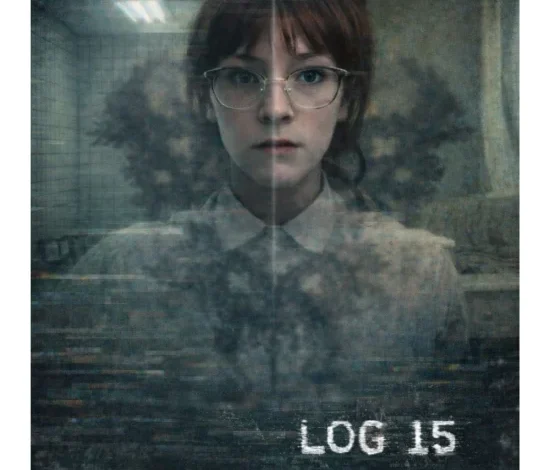
The landscape of independent horror cinema has long been defined by its ability to innovate within the confines of limited budgets, often relying on the found-footage subgenre to ground fantastical premises in a sense of urgent, raw realism. The latest entry into this space, the psychological thriller Log 15, has officially arrived on Tubi, marking a significant milestone for its production team. Directed by Sebastian Dove and penned by screenwriter Vincent J. DeVito, the film explores the harrowing intersection of terminal illness, experimental medical technology, and the breakdown of objective reality. As of October 30, 2026, the film is accessible to a broad audience via free ad-supported streaming, with a secondary, specialized launch scheduled for November 1, 2026, on the platform Blood Stream.
Narrative Premise and Thematic Depth
At the core of Log 15 is a narrative that moves beyond the jump-scare tropes typically associated with low-budget horror. The plot centers on a protagonist driven by a singular, desperate mission: to reverse the cognitive decline of her mother, who is suffering from the advanced stages of Alzheimer’s disease. In her pursuit of a cure, she engages in a series of clandestine, high-risk experiments.
The film’s central conceit—and the source of its "mind-bending" classification—arises when the protagonist begins to document her progress. The recordings do not merely capture her research; they appear to interact with the environment in which they are filmed. As the narrative progresses, the footage she captures begins to actively rewrite the physical laws of her immediate reality. This meta-narrative layer forces the audience to question the reliability of the narrator and the nature of the medium itself, positioning Log 15 as a successor to films that utilize the found-footage format to explore ontological dread rather than simple creature-feature thrills.
The Production and Creative Team
The film represents a collaborative effort between seasoned independent filmmakers and a cast tasked with carrying the weight of a highly insular, performance-driven script. Sebastian Dove’s directorial vision is supported by the tight, suspense-laden screenplay of Vincent J. DeVito, who has focused on creating a claustrophobic atmosphere that reflects the protagonist’s mental state.
The ensemble cast features Meg Moynahan in the lead role, supported by Jeanne Scurek, Stephen R. Miller, and Jeff Ronan. The performances are critical to the film’s success, as the limited scope of a found-footage production necessitates a high level of emotional authenticity to sustain viewer engagement. By focusing on the intimate, often agonizing process of caring for a loved one with a neurodegenerative disease, the film anchors its more speculative, cosmic-horror elements in a relatable human experience.
Chronology of Distribution
The distribution strategy for Log 15 reflects the evolving nature of digital content consumption. The release timeline is as follows:
- October 30, 2026: Official wide release on Tubi. This move allows the film to reach the platform’s massive, genre-hungry user base, providing high visibility for an independent production.
- November 1, 2026: Launch on Blood Stream. This secondary release is notable for its technical departure from standard cinematic presentations. The film will be presented in a vertical format, specifically designed for mobile devices and modern tablets.
This two-tiered strategy highlights a growing trend among independent horror distributors: the use of established AVOD (Advertising-Based Video on Demand) services for mass reach, followed by niche platform releases that experiment with the physical form of the content itself.
Technical Innovation: The Vertical Format
The decision to release Log 15 on Blood Stream in a vertical format is more than a novelty; it is an acknowledgment of how contemporary audiences consume digital horror. By stripping away the horizontal widescreen format, the creators are forcing the viewer to engage with the frame in a manner that mirrors a smartphone screen—the very tool often used in the film’s diegetic narrative to record the protagonist’s descent.
This vertical presentation is expected to enhance the "found-footage" aesthetic, as it removes the traditional cinematic barriers between the viewer and the recorded content. By making the viewing experience feel like a direct feed from a personal device, the production aims to increase the immersion of the audience.
The Found-Footage Market: Data and Context
The found-footage subgenre, popularized in the late 1990s by The Blair Witch Project, remains one of the most profitable sectors of the horror industry. According to industry analysis, low-budget found-footage films consistently achieve the highest Return on Investment (ROI) of any horror sub-genre, often due to their lean production costs and the inherent "viral" nature of their marketing.
In 2026, the demand for "elevated" horror—films that tackle social, psychological, or medical themes—continues to rise. Log 15 fits into this category by utilizing the Alzheimer’s narrative as a vehicle for horror. This approach allows the film to resonate with audiences who are familiar with the tragedy of memory loss while introducing the "cosmic dread" element that distinguishes it from a standard medical drama.
Industry Implications and Future Outlook
The release of Log 15 signals a shift in how independent horror films are marketed. By leveraging Tubi’s reach to establish a baseline of brand recognition, the producers are then able to funnel specific, tech-savvy audience segments toward the experimental viewing experience offered by Blood Stream.
From an industry standpoint, the success of this project could encourage further experimentation with non-traditional aspect ratios. If the vertical format proves effective in maintaining viewer retention and engagement, it is likely that other production houses will follow suit, particularly for projects that rely heavily on "self-recorded" or "surveillance-style" narratives.
Furthermore, the involvement of platforms like Blood Stream indicates a specialized market for "format-first" horror. As the barrier to entry for content creation continues to lower, the differentiator for independent films is increasingly found in the delivery mechanism. Log 15 does not merely present a story; it presents an experience that is physically tailored to the way modern viewers interface with their digital environments.
Final Assessment
Log 15 enters a crowded market, yet its combination of a grounded, emotionally heavy premise and a forward-thinking distribution strategy sets it apart. By addressing the psychological impact of terminal illness through the lens of a reality-distorting horror story, the film succeeds in maintaining the intensity required by the genre.
As of November 1, the availability of the vertical cut will be the true test of the film’s experimental ambition. For fans of the genre, the film offers a synthesis of classic tropes and modern anxieties, potentially cementing the reputations of Sebastian Dove and his team in the competitive independent circuit. The project serves as a case study for future filmmakers looking to maximize the impact of their work through a combination of accessible streaming and innovative presentation formats.
For those interested in witnessing the intersection of medical tragedy and cosmic, reality-bending horror, Log 15 is currently accessible via Tubi, with the unique vertical experience arriving on BloodStreamTV.com this coming November. Whether the film ultimately influences a wider shift in cinematic standards remains to be seen, but its arrival is undeniably a highlight of the 2026 horror calendar.
Related posts: