The Search for the Lost Cut
The rumors surrounding an extended version of Interview with the Vampire began shortly after its theatrical release on November 11, 1994. The film, which grossed approximately $223.7 million worldwide against a budget of roughly $60 million, was a significant critical and commercial success, earning Academy Award nominations for Best Art Direction and Best Original Score. Because the film was adapted from a highly popular and dense novel, fans immediately noted discrepancies between the source material and the finished product.
Over the years, the "shooting script" became a primary point of reference for fans. When comparing the written dialogue and scene descriptions to the final edit, it became evident that significant segments had been excised. This discrepancy led to a long-standing belief that these scenes had been assembled into a coherent "director’s cut" for initial test audiences—a common practice in Hollywood studio productions of that era. When Warner Bros. announced a high-fidelity 4K Ultra HD restoration of the film, expectations reached a fever pitch, with many anticipating that the studio would leverage the opportunity to finally present Jordan’s original vision.
Neil Jordan’s Clarification
The reality of the situation, as stated by Neil Jordan, is far more mundane than the legends suggested. In a candid interview, the director revealed that he personally conducted an exhaustive search of the Warner Bros. vaults in anticipation of the 4K release. Despite his efforts to locate the specific cut screened for early test audiences, the physical media—whether it be the original workprint or a master edit—could not be found.
"I tried to track down my original cut of the movie," Jordan stated. "And I was going to deliver what they would call a director’s cut, but I could not find it in the vaults of Warner Bros. And I hadn’t kept a version of it myself."
Jordan’s admission serves as a stark reminder of the archival challenges inherent in the film industry during the mid-1990s. While digital preservation has become standard, the transition period between analog and digital workflows often resulted in the loss of intermediate cuts, alternative takes, and unused footage. Jordan noted that while the primary goal of a comprehensive director’s cut proved unattainable, his team did manage to recover specific deleted scenes. However, he cautioned that these fragments were not the "missing link" fans had hoped for. Many of these scenes were discarded for legitimate pacing and narrative reasons, as a significant portion of the unused footage lacked the polish of the final theatrical release.
Analysis of the Recovered Footage
The scenes salvaged for the 4K release provide a fleeting glimpse into the creative process of 1994, though they remain, by all accounts, incomplete. Among the recovered materials are two sequences that align closely with the thematic depth of Anne Rice’s prose:

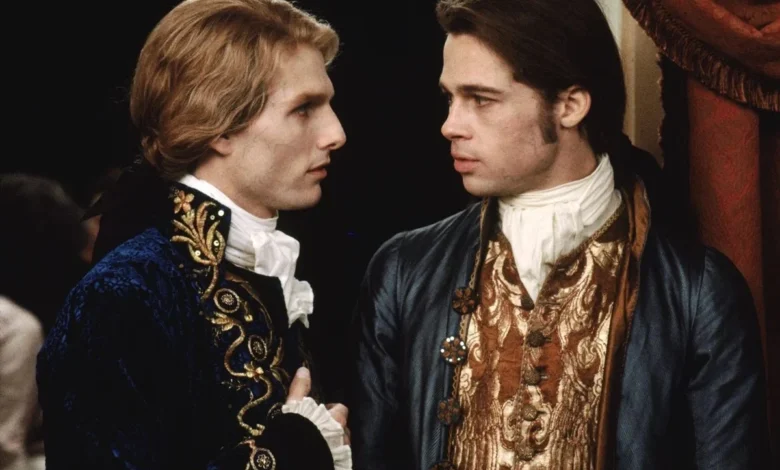
- The Burden of Mortality: A brief but poignant dialogue exchange between Louis de Pointe du Lac (Brad Pitt) and his child-vampire ward, Claudia (Kirsten Dunst). In this interaction, Claudia confronts her creator regarding his secrecy, specifically questioning why he denies her the opportunity to witness his hunts. This scene adds a layer of emotional complexity to their strained domestic dynamic.
- The Sacrament of Sin: A sequence directly adapted from the novel in which a spiritually tormented Louis attempts to seek absolution through Catholic confession. The scene concludes with a violent confrontation, as Louis murders the priest, highlighting his inability to reconcile his vampiric nature with his lingering human morality.
These scenes represent the most significant narrative additions available to the public. Despite their historical interest to fans of the Vampire Chronicles, they do not constitute a "lost film," but rather a set of excised character beats that clarify specific motivations already present in the theatrical version.
Archival Practices and the Industry Context
The inability to locate the original edit of Interview with the Vampire highlights a broader issue in cinematic preservation. In the 1990s, the priority for studios was the distribution of the final, theatrical edit. Once a film reached its locked state, the "cutting room floor" material was often relegated to secondary status. Unlike modern productions, where every frame is meticulously backed up in high-resolution digital formats, the mid-90s film vaulting system was susceptible to degradation and mislabeling.
Film historians point out that this is not an isolated incident. Many seminal films from the late 20th century suffer from similar archival gaps. The loss of such footage often leaves a permanent void in the historical record of a director’s creative process. For Neil Jordan, the process of searching for his own work served as a sobering realization of the impermanence of film history.
The Broader Impact on Film Fandom
The conclusion of the search for a director’s cut of Interview with the Vampire marks a transition in the film’s legacy. While the disappointment among the fanbase is palpable, the focus has shifted toward the technological preservation of the theatrical cut itself. The 4K Ultra HD release represents the highest visual fidelity the film has ever achieved, offering audiences an opportunity to experience the cinematography of Philippe Rousselot and the production design of Dante Ferretti in a format that finally does justice to the original aesthetic.
The industry response to this development has been largely pragmatic. Film preservationists emphasize that while the loss of the director’s cut is regrettable, the theatrical version of Interview with the Vampire remains a highly successful and critically respected piece of work that requires no "restoration" to maintain its status. By accepting that the theatrical version is the definitive version, fans are encouraged to appreciate the film’s established narrative and visual achievements rather than focusing on a phantom edit that may never have been fully realized.
Conclusion and Future Outlook
As of the September 22 release of the 4K Ultra HD Blu-ray, the discourse surrounding the "lost" version of the film has effectively reached a close. While the dream of an extended cut provided a decade of speculation and engagement for the fan community, the reality is that the film in its current state is the only one intended for the public record.
For future researchers and archivists, the Interview with the Vampire case study serves as a critical lesson in the importance of proactive documentation. As physical film media ages, the window for recovering such materials narrows, making the lessons of the 1994 production an essential narrative for modern filmmakers. Ultimately, the film remains a landmark achievement in the gothic genre, and its legacy is now firmly cemented in its original, theatrically released form. Fans are left with the definitive version of a classic, accompanied by the salvaged fragments that serve as a testament to the complexity of the story and the realities of the Hollywood archival process.