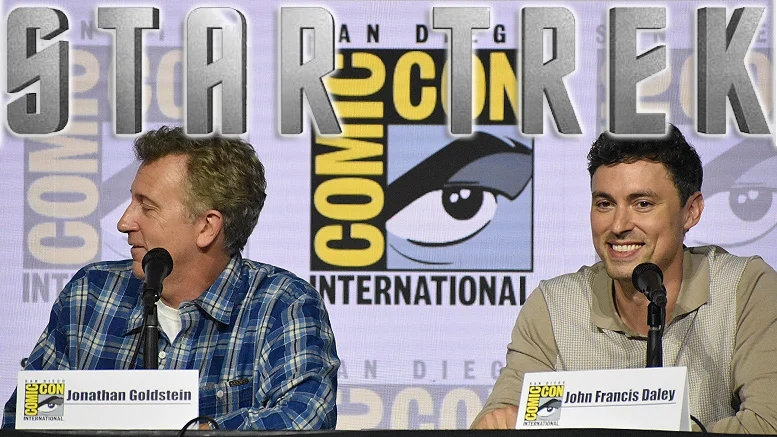
San Diego, CA – November 14, 2025 – After a period of relative silence since its announcement last November, Paramount Pictures’ ambitious new Star Trek feature film project has finally broken its quiet streak. At the prestigious San Diego Comic-Con in Hall H on Thursday, writer-directors Jonathan Goldstein and John Francis Daley, the creative minds behind the critically acclaimed Spider-Man: Homecoming and the fan-favorite Dungeons & Dragons: Honor Among Thieves, offered the first substantive public update on the highly anticipated film. This marks a significant moment for the venerable science fiction franchise, signaling renewed momentum after a decade of stalled efforts to bring Star Trek back to the big screen.
The new leadership at Paramount, under the Skydance umbrella, took decisive action last summer, reportedly ceasing development on all previously active Star Trek film projects. This included the long-gestating, yet ultimately shelved, fourth installment of the Kelvin Timeline series. The studio then entrusted the critical task of revitalizing the Star Trek cinematic universe to Goldstein and Daley, a duo known for their ability to blend humor, heart, and impressive storytelling. Their appearance at Comic-Con, as part of Collider’s "Directors on Directing" panel alongside Zach Cregger (Weapons), provided a much-needed glimpse into the future of Starfleet on film.
Trekking into Uncharted Territory: Script Progress and Future Horizons
The panel, hosted by Collider’s Steven Weintraub, quickly turned to the pressing question of the Star Trek film’s development. John Francis Daley, when prompted for a progress report, shared an update that confirmed the project is actively moving forward. "I think we can say the script is in progress, and that we’re very excited about it," Daley told the assembled crowd in Hall H. "And I think people will be surprised. I really can’t say anything else, other than that."
This statement, while intentionally coy, offers a crucial confirmation that the foundational elements of the film are taking shape. The excitement conveyed by Daley suggests a creative team deeply invested in the material.
Jonathan Goldstein further elaborated on the film’s intended direction, shedding light on key aspects that are likely to generate considerable discussion among the dedicated Star Trek fanbase. "I think we’ve said in the past, and it’s been reported, that it won’t be the characters that you’ve seen previously in your Star Trek movies," Goldstein revealed. "So there’ll be a new sort of take on that, and I think it’ll probably be a little further into the future than we’ve been before."
This declaration is particularly significant. It confirms that the new film will not be a continuation of any previous cinematic iteration of the franchise, whether it be the original series cast, the Next Generation crew, or the Kelvin Timeline actors. Instead, Paramount and the creative team are opting for a fresh start, potentially introducing entirely new characters and exploring uncharted narrative territory within the vast Star Trek canon.
The mention of a setting "a little further into the future" warrants careful consideration. Historically, the Star Trek feature films have predominantly been set in the 23rd and 24th centuries, encompassing the eras of The Original Series (TOS) and The Next Generation (TNG). While the recent surge of Paramount+ series, such as Star Trek: Picard (25th century) and Star Trek: Discovery and Star Trek: Starfleet Academy (32nd century), have pushed the franchise’s timeline significantly forward, Goldstein and Daley’s comment seems to be framed within the context of the filmography. This suggests a future that might extend beyond the established cinematic timelines but perhaps not as far as the most recent television endeavors. The precise temporal location remains a tantalizing mystery, but the implication is a departure from familiar historical touchstones within the film series.
The "Why Trek?" Rationale: A Fresh Spin on a Beloved Universe
The decision for Goldstein and Daley to undertake the challenge of rebooting a cinematic Star Trek franchise, especially given Paramount’s recent struggles in this arena, is a question many have pondered. Goldstein addressed this directly during the panel, articulating their creative philosophy. "Everything we take on, what draws us to it, is the opportunity to do a different spin on something that you’ve seen done before," he explained to the Comic-Con audience. "And that’s our hope with this: is to satisfy the fans, but also bring people in who may not consider themselves lovers of Star Trek and surprise them."
This statement underscores a strategic approach: to honor the core tenets of Star Trek—exploration, optimism, and the pursuit of knowledge—while infusing the narrative with a contemporary sensibility and a unique perspective. The goal appears to be twofold: to engage the deeply loyal existing fanbase and to broaden the appeal of Star Trek to a new generation of viewers who may not have a prior connection to the franchise. Their success with Spider-Man: Homecoming and Dungeons & Dragons demonstrates their proficiency in capturing the essence of beloved properties and making them accessible and exciting for wider audiences.
Paramount’s Commitment to the Big Screen Frontier

The confirmation of the Star Trek movie’s active development comes at a pivotal moment for Paramount Pictures. In April of 2026, the studio’s new leadership outlined their strategic vision for theatrical releases, explicitly mentioning the Star Trek film as a key project in active development. At the time, CEO David Ellison, who served as an executive producer on the last two Star Trek films, reiterated the company’s commitment to increasing its theatrical output to 15 films annually, with a potential expansion to 30 if a proposed deal with Warner Bros. materializes.
Ellison has consistently highlighted Star Trek as a cornerstone franchise within his vision for a revitalized Paramount. His repeated references to the property since Skydance assumed control of the studio over a year ago underscore its perceived importance in the future landscape of the company, potentially as part of a larger media conglomerate. This indicates a strong executive backing for the franchise’s cinematic resurgence.
A Glimpse into the Creative Team’s Current Endeavors
Goldstein and Daley are currently engaged in post-production for their upcoming Cold War action-comedy, Mayday, starring Ryan Reynolds and Sir Kenneth Branagh, slated for an early September release. This prior commitment naturally leads to questions about the timeline for the Star Trek film. If Mayday concludes its production and promotional cycle smoothly, an optimistic outlook would suggest the possibility of the Star Trek script moving beyond its current stage and potentially entering pre-production by the end of 2026. This would position the film for a production start in the following year, aligning with Paramount’s stated goals for its film slate.
The involvement of Goldstein and Daley on Mayday also provides a relevant benchmark for their working methods. Their ability to manage multiple high-profile projects and deliver successful results is well-documented. The success of Mayday could further solidify their position and potentially accelerate the timeline for their Star Trek venture.
Broader Implications for the Star Trek Universe
The revitalized cinematic presence of Star Trek is not occurring in a vacuum. The franchise has experienced a significant resurgence on television in recent years, with Star Trek: Discovery, Star Trek: Picard, Star Trek: Strange New Worlds, and Star Trek: Lower Decks all contributing to a vibrant and expanding universe. The new film project has the potential to serve as a powerful anchor for this expanded narrative, reaching a global audience that might not be as engaged with streaming television.
The decision to forge a new path with new characters rather than continuing existing storylines allows for a more cohesive and potentially less continuity-burdened cinematic experience. This could be a strategic move to attract a broader demographic, as the complexities of certain long-running television series can sometimes be a barrier to entry for casual viewers.
Furthermore, the involvement of Goldstein and Daley, known for their accessible yet intelligent filmmaking, suggests a Star Trek film that could effectively balance the franchise’s inherent intellectual depth with engaging, character-driven storytelling. Their track record indicates an understanding of how to translate complex concepts into universally appealing narratives, a skill that is crucial for a franchise aiming to capture both dedicated fans and newcomers.
San Diego Comic-Con: A Hub for Franchise Updates
The choice of San Diego Comic-Con for this significant announcement is fitting. The convention is the premier global gathering for fans of science fiction, fantasy, and popular culture. It provides a direct channel for creators to engage with their audience and generate palpable excitement for upcoming projects. The "Directors on Directing" panel, in particular, offers a platform for filmmakers to discuss their craft and their passion projects in an environment that is both informative and celebratory.
TrekMovie.com, a prominent source for Star Trek news, was on the ground at Comic-Con, providing extensive coverage of the event. Their reporting from Hall H, including visual documentation of the panel, underscores the importance of these in-person updates for the dedicated Star Trek community. Further coverage from the convention is expected to include insights from the major Star Trek Universe panel, merchandise reveals, and interviews with key figures involved in the franchise’s various television and film endeavors. This sustained engagement with the fanbase is vital for maintaining momentum and fostering anticipation.
The path forward for the new Star Trek film is still being charted, but the updates from San Diego Comic-Con have undeniably injected a fresh wave of optimism and clarity into the project. With a script in progress and a clear vision for a new cinematic era, Star Trek appears to be charting a course toward a bright and exciting future on the big screen. The journey ahead promises to be one of exploration, innovation, and, as the filmmakers hope, pleasant surprises for fans old and new.