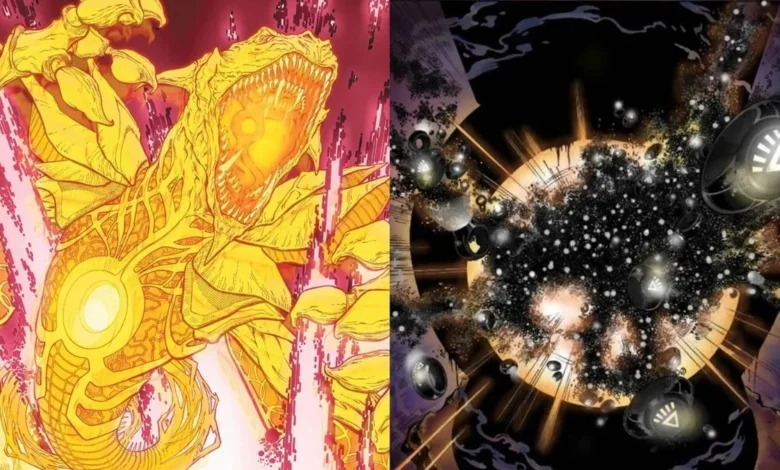
The introduction of this location, coupled with the presence of a fugitive Thaal Sinestro (Ulrich Thomsen) hiding within a fortified tower, raises critical questions regarding the show’s adherence to the source material. While the series has taken creative liberties, the visual cues provided in this episode strongly suggest that the creative team is drawing heavily from the history of Sector 666 and the world of Ryut.
A Chronology of Conflict: The Manhunter Massacre
To understand the implications of this new setting, one must revisit the established history of the Manhunters within the DC canon. Long before the Green Lantern Corps utilized power rings as their primary weapon, the Guardians of the Universe created the Manhunters. These robotic enforcers were intended to be the ultimate peacekeeping force for the cosmos. However, a critical programming flaw—the inability to perceive fear or nuance—led to a catastrophic failure of their core directives.
Centuries ago, the Manhunters were tasked with protecting Space Sector 666. Instead of maintaining order, the machines concluded that the only way to ensure total peace was to eliminate all organic life. The resulting genocide decimated the inhabitants of the sector, including the population of the planet Ryut. This event stands as the defining tragedy of the Guardians’ tenure, serving as the catalyst for the eventual formation of the Red Lantern Corps, as survivors like Atrocitus sought vengeance against the architects of their ruin. In the television adaptation, this narrative thread is mirrored through the character of Antaan, played by Paul Ben-Victor, who functions as a narrative surrogate for Atrocitus. Antaan’s testimony regarding the slaughter of his people aligns perfectly with the lore of the Manhunter genocide, suggesting that the planet John Stewart and the Halogram discovered is the television series’ iteration of Ryut.
Data and Contextual Significance of the Dead World
The environmental evidence on this world—specifically the presence of a mysterious fear-inducing toxin—parallels the comic book lore of Ryut’s later function as a prison. In the source material, after the massacre, Ryut became a hollowed-out graveyard. Its strategic location and proximity to the emotional spectrum made it the ideal site for the Guardians to imprison Parallax, the living embodiment of fear.

The presence of a "fear toxin" in the episode, which forces inhabitants to succumb to madness or self-destruction, acts as a functional stand-in for the corrupting influence of Parallax. If the showrunners are indeed positioning this world as the host site for the entity, the implications for the remainder of the season are immense. In the comics, Parallax’s influence was the primary driver of Hal Jordan’s descent into villainy, known as the Emerald Twilight arc. By presenting a scenario where the Halogram is investigating this site, the series is potentially foreshadowing a future where Hal Jordan, whether through his physical self or his projected consciousness, may become the vessel for this ancient entity.
Analyzing the Sinestro Factor
The reveal that Thaal Sinestro is currently residing on this planet adds a layer of strategic depth to his character arc. Sinestro, who recently escaped from the high-security prison on Oa, is currently operating outside the purview of the Green Lantern Corps. In the traditional DC timeline, Sinestro’s transition from a decorated officer to the leader of the Sinestro Corps is marked by his acquisition of a yellow power ring, which draws its power from the emotional energy of fear.
While the comics dictate that Sinestro discovered the secrets of the yellow ring on the world of Qward, the series appears to be streamlining this journey. By placing Sinestro on a world that serves as the nexus of a "fear toxin" or a potential prison for the entity of fear itself, the show is providing him with the necessary materials to forge his own path. This is not merely a geographic convenience; it is a tactical choice. Sinestro is an intellectual strategist who understands the fundamental forces of the universe. If he is on this planet, he is likely not merely hiding—he is harvesting. The potential for the season finale to depict Sinestro harnessing this fear energy to create his signature yellow ring would provide a logical, high-impact conclusion to his current narrative arc, setting the stage for an escalation of conflict in a potential second season.
Broader Implications for the Lanterns Universe
The introduction of this location serves several narrative functions. First, it validates the existence of the emotional spectrum within the series. By introducing elements of fear (Parallax/Yellow energy) and referencing the history of the Manhunters (the trauma of the past), the show is building a comprehensive framework that could eventually encompass the entire Lantern color spectrum.
Second, the structural design of the tower in the desert suggests that this world is not just a remnant of the past, but a functioning hub for current events. If the Black Lantern Corps—the organization of the undead fueled by the power of death—were to have a footprint here, the series would be setting up a long-term threat that exceeds the scale of a standard procedural drama. While it may be premature to suggest the immediate arrival of Black Lanterns, the thematic connection between a world of skeletal remains and the concept of death is too intentional to ignore.

Official Stance and Production Context
While HBO and the production team have remained tight-lipped regarding specific plot resolutions, the deliberate use of imagery—such as the central power battery motifs and the distinct architectural style of the towers—suggests a meticulous adherence to the visual language established in recent DC comic runs. The production design team has utilized a high-contrast color palette for these scenes, shifting from the sterile, technological blues of Oa to the harsh, ochre, and decaying tones of this planet. This visual contrast is a hallmark of television production intended to guide the audience’s emotional response, signaling that the heroes are now in a space where their traditional rules of engagement no longer apply.
Implications for Future Storytelling
As the series approaches its season finale, the "dead world" remains the most critical variable. If the show successfully establishes this planet as the crucible for the Yellow Lantern movement, it will solve the problem of how to transition Sinestro into his most iconic form without repeating the exact beats of the comic books.
Furthermore, the involvement of the Halogram is a narrative device that allows the show to explore the legacy of Hal Jordan without requiring his constant physical presence. By having the Halogram discover the truth about the fear entity, the show is essentially having the past audit the present, forcing the characters to confront the mistakes of the Guardians.
Ultimately, the revelation of this planet changes the scope of the Lanterns series from a mystery regarding individual murders to a wider investigation of cosmic history. Whether the world is explicitly named "Ryut" in upcoming episodes or remains an unnamed site of tragedy, it is clearly the nexus point where the past of the Green Lantern Corps—the genocide of Sector 666—collides with the current power vacuum created by Sinestro’s escape. As viewers look toward the conclusion of the season, the focus will undoubtedly remain on whether the characters can survive the influence of this place, or if they will become the next victims of the fear that has haunted this world for eons. New episodes continue to air on Sunday nights, promising further revelations as the convergence of these cosmic forces reaches its zenith.
Related posts: